

























































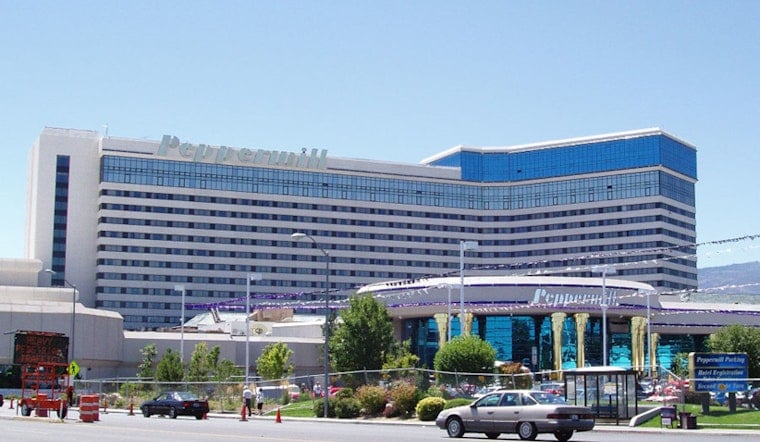
Jason Killinger spent about 11 hours in the Washoe County Jail in 2023 after facial recognition software at Peppermill Casino in Reno declared him a 100% match to a man previously banned from the property for sleeping on the premises. He had a Nevada ID, a Peppermill player card, a debit card, a UPS pay stub, a vehicle registration, and a union card on him at the time. None of it stopped the arrest.
Now Killinger wants the names of 168 other people the same AI system flagged, arguing they could be witnesses to a pattern of wrongful detentions stretching well beyond his own case. According to Gambling News, the City of Reno has turned over more than 1,000 pages of documents in the case but redacted the identities of those arrestees without first seeking a protective order from the court, a move Killinger's lawyers say has blocked them from reaching potential witnesses.
The physical mismatch between Killinger and the man the system was supposed to be looking for is stark. Court filings show the banned patron, Michael Ellis, stands 5-foot-9 and weighs 235 pounds, while Killinger is 6-foot-1 and 200 pounds, according to Casino.org. Officer Richard Jager took Killinger into custody anyway, and Jager wrote in his report that Killinger had shown him a fabricated ID that conflicted with the ID shown to Peppermill security, an allegation Killinger disputes.
Bodycam Footage Shows Officer's Reasoning in Real Time
Bodycam footage released in December showed Jager acknowledging the software's 99.9% match on camera and speculating that Killinger must have used a contact at the DMV to obtain a fake driver's license, per Casino.org's reporting cited by Wide Open Country. Police never charged Killinger with use of a fake ID. During a deposition, Jager apologized and admitted that more facial-recognition training beforehand could have helped him avoid the wrongful arrest.
Killinger was booked under the name John Doe or as Michael Ellis and kept in handcuffs for four hours of his roughly 11-hour detention, which he says caused bruising and shoulder pain before a fingerprint scan finally confirmed who he actually was. He has since sued Jager, and the case has grown from there: the City of Reno was added as a defendant in 2026 after U.S. District Judge Miranda Du granted a motion in April allowing the city to be brought in on claims that it failed to train officers on the limitations of AI facial recognition, the same account notes.
Amended Suit Alleges a Pattern Beyond One Arrest
Killinger's amended federal lawsuit, filed in April, alleges that Reno police officers have conducted thousands of unlawful arrests tied to facial-recognition misidentifications because of insufficient department training, as reported by the Reno Gazette Journal. His attorneys say identifying the 168 other flagged individuals is necessary to build and expand that broader case.
Peppermill Resort Spa Casino settled its portion of the wrongful arrest lawsuit out of court in November for an undisclosed amount, before the city was added to the federal civil rights action. The city is now fighting to keep the 168 names sealed. In its August court filings, Reno argued that releasing unredacted records would violate the privacy of those individuals and pointed out that only 16 of the 168 facial-recognition incidents occurred before Killinger's 2023 arrest, according to Casino.org.
A Fight That Has Also Turned on the Press
The dispute has spilled beyond the courtroom. Court documents from February showed the Reno City Attorney's Office accusing local news outlet This Is Reno of conspiring with Killinger's attorney, a claim detailed by This Is Reno itself in its own coverage of the filing.
The case lands amid growing scrutiny of facial recognition's reliability nationwide. Research from the National Institute of Standards and Technology has found that facial recognition algorithms can produce false-positive match rates up to 100 times higher for Black and Asian individuals than for white individuals, depending on the software tested, according to Biometric Update. Civil liberties groups including the ACLU have documented more than a dozen cases nationwide in which police treated a probabilistic facial-recognition match as immediate probable cause rather than a lead requiring independent verification, the outlet reports.
For now, the discovery fight over the 168 names remains unresolved in federal court, with Killinger's team arguing the records could reveal how widespread the misidentifications truly were and the city maintaining that most of those flagged were never connected to his arrest in the first place.





