

























































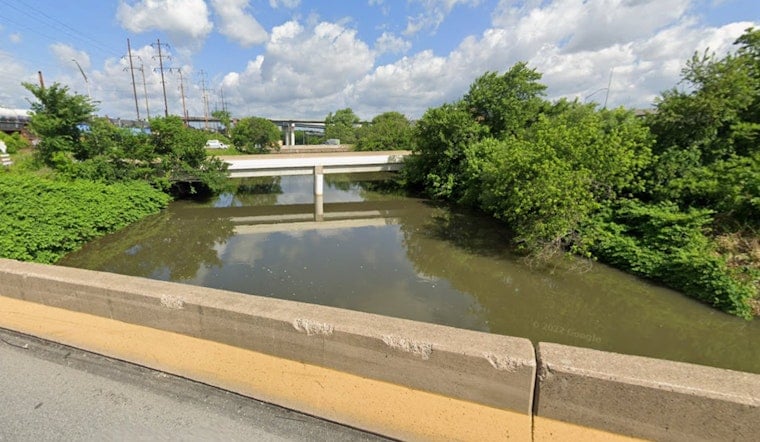
Philadelphia emergency crews spent about an hour Friday evening pulling a woman from Frankford Creek near Bridge and Almond streets in Bridesburg, deploying a rescue boat and a ladder placed directly into the water to reach her. Firefighters initially tried to get her into the boat before rescue crews moved her over to the ladder to bring her to safety.
The water rescue assignment, first reported by NBC10 Philadelphia, drew a heavy response from Philadelphia Fire Department units including Battalion 10, Rescue 1, Squad 72, Ladder 15 and Medic 45, according to dispatch logs reviewed by Nycfire.net. SkyForce10 captured aerial footage of emergency personnel working to get the woman to safety as the operation played out over the creek. NBC10 Philadelphia described the incident as a developing story as of Friday night.
A Waterway With a History of Turning Dangerous
The rescue site sits along the lower stretch of Frankford Creek, a 3.1-mile urban waterway that winds through lower Northeast Philadelphia before emptying into the Delaware River, forming a natural boundary between Bridesburg and neighboring Frankford, per Wikipedia. Bridesburg itself is a compact, historically industrial and residential neighborhood bordered by the creek and the Delaware River, falling under the jurisdiction of the Philadelphia Police Department's 15th District, as Hoodline has previously reported in its coverage of a Bridesburg contractor who was robbed of 10 guns in the neighborhood this week.
Frankford Creek looks calm on a clear evening, but it carries a reputation among meteorologists and water officials for extreme volatility. National Weather Service data cited by the Washington Post shows stream levels there can surge more than 7 feet in 20 minutes during heavy summer downpours, with flow rates multiplying by as much as 350 times and local flooding triggered once water flow exceeds 2,200 cubic feet per second. Those dynamics trace back to decades of engineering: city and federal authorities re-shaped the creek during the 1930s and 1950s, straightening horseshoe oxbow bends near Bridge Street and encasing lower sections in concrete channels to fight recurring floods and industrial pollution that once threatened local textile mills, according to the PhillyHistory Blog.
Specialized Units and a Prohibited Waterway
Units like Rescue 1 and Squad 72 are built for exactly this kind of call. Firefighters assigned to Philadelphia's technical rescue units complete nearly 500 hours of specialized training through the department's Technical Rescue School, covering swiftwater, surface water, rope and confined space rescue operations, and only about one-third of applicants are accepted into the program, per the City of Philadelphia. Swimming, wading or entering non-designated open waterways anywhere in Philadelphia is strictly prohibited by public safety officials because of hidden underwater hazards, zero visibility, unpredictable currents and submerged debris, according to CBS Philadelphia.
It remains unclear how the woman entered Frankford Creek Friday, whether by accident, due to runoff, or otherwise, and her medical status following the hour-long operation had not been disclosed as of Friday night. The creek corridor is also currently the site of a $10 million Pennsylvania Department of Transportation rehabilitation project on the historic Frankford Avenue Bridge, which began in March and has routed traffic detours along Torresdale and Castor avenues through March 2027, according to the Commonwealth of Pennsylvania.
Part of a Broader Pattern of Water Emergencies
Friday's rescue follows a string of open-water emergencies across the Philadelphia region this year. In June, a multi-agency search unfolded on the Delaware River near the Linden Avenue boat ramp after a swimmer vanished in Torresdale. And in May, emergency responders had to deploy technical rope haul systems to pull a victim from steep embankments along Little Neshaminy Creek in nearby Bucks County, illustrating how often these waterways demand specialized equipment beyond a simple shoreline grab.



