

























































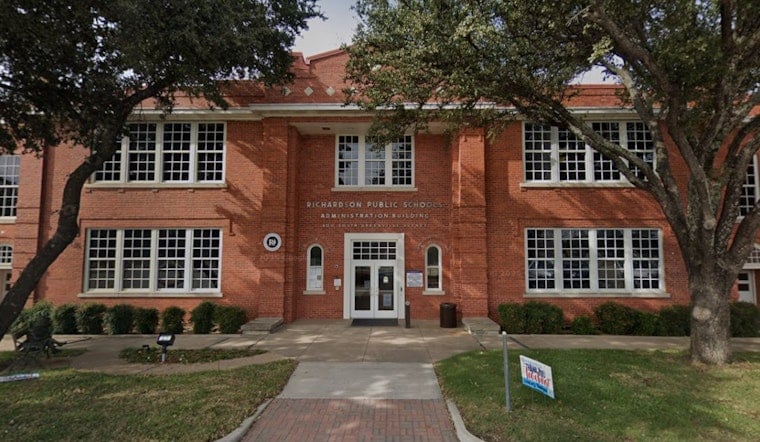
A 14-year-old Richardson ISD student identified in court records only as C.W. can no longer attend a public school after a disciplinary process his family says spiraled far beyond what his disabilities warranted. C.W., who has ADHD and an emotional disorder, was placed in in-school suspension, then a district disciplinary alternative campus, and finally a Dallas County juvenile justice program before a state hearing officer ordered the district to bring him back.
The family's attorney filed a federal civil rights lawsuit against Richardson ISD last Thursday in the U.S. District Court for the Northern District of Texas, according to the Dallas Observer. The suit, brought on behalf of C.W. and his mother, alleges the district discriminated against him through repeated failures to provide required supports and accommodations, and that it failed to offer the free and appropriate public education guaranteed under the federal Individuals with Disabilities Education Act. Richardson ISD has acknowledged C.W.'s disability status but declined to comment further because of the ongoing litigation, a district spokesperson told the outlet.
C.W. enrolled at a Richardson ISD middle school in fall 2023, and the district recognized that year, during an initial evaluation, that he had ADHD and an emotional disability, according to the same report. His Individualized Education Program included counseling, classroom accommodations, and the ability to take a break or move around when his attention waned. It also authorized social skills and study skills education in a special education setting, intended to address behavioral disabilities that included verbal and physical aggression and inappropriate interactions.
A November 2024 IEP Change and a Bus Altercation
In November 2024, Richardson ISD changed C.W.'s IEP, reducing his counseling hours, removing classroom accommodations including movement breaks, and eliminating social and study skills instruction, per the lawsuit's account as reported by the Dallas Observer. That same month, C.W. had a physical altercation on a school bus. He went on to complete seventh grade at that middle school before moving to another campus.
A state hearing officer later found that an IEP amendment cannot be used when a student's allocation of time in general and special education settings changes — a finding that undercut the district's process for altering C.W.'s services, the paper reported. The hearing officer also found that the social skills class discussed with C.W.'s parent did not appear to be implemented appropriately, and described the district's evidence that the IEP amendment was properly enacted as dubious.
The September 2025 Incident and Escalating Discipline
C.W. had a physical altercation with a classmate in August 2025. The following month, he asked an in-school suspension teacher to escort him to the bathroom; the teacher alleges C.W. pushed her inside the bathroom, an incident that became the basis for his removal from regular school. That teacher testified she received no training or information on C.W.'s behavioral needs or strategies, according to the Dallas Observer's account of the case.
Richardson ISD placed C.W. in in-school suspension for 15 days, then in its Disciplinary Alternative Education Program for 40 days — the district's DAEP campus operates out of the Thurgood Marshall Student Success Academy in Dallas, which served roughly 140 students in grades 2 through 12 during the 2024-25 school year, according to Richardson ISD. During that 40-day placement, C.W. had four additional behavior incidents and received failing grades, the lawsuit alleges, after failing to complete assignments during in-school suspension. From there, the district sent him to a Dallas County-administered Juvenile Justice Alternative Education Program for 90 days — a county-managed facility operated by the Dallas County Juvenile Board rather than a typical district campus, according to Dallas County. C.W. ultimately completed the remainder of the 2024-2025 school year from home.
Hearing Officer Sided With the Family
C.W.'s mother appealed the matter in January 2026. The following month, a state hearing officer ruled that Richardson ISD mishandled the disciplinary process and found that the September 2025 incident was the direct result of C.W.'s disabilities — contradicting the district's own determination that the behavior was unrelated to his disabilities, per the hearing decision as reported by the Dallas Observer. The hearing officer further found that district staff selected incident and IEP information to support denying the disabilities' role in the incident, and concluded the incident was a direct result of the district's improper addition of the social skills class. The officer ordered Richardson ISD to return C.W. from the juvenile program, and the mediation process that followed was resolved in April 2026.
Federal special education regulations under 34 C.F.R. § 300.530 require that when a district's failure to implement a student's IEP directly causes disciplinary conduct, the district must take immediate corrective steps and return the child to his regular setting. Under Texas Education Code Section 37.004 and federal IDEA rules, districts are also required to conduct a Manifestation Determination Review within 10 school days of any decision to change a special education student's placement for disciplinary reasons, to determine whether the misconduct stemmed from the student's disability, according to FindLaw's explanation of the statutory process.
Lawsuit Seeks Damages Beyond What IDEA Allows
The lawsuit alleges Richardson ISD's actions traumatized C.W. and caused lasting negative effects, and that his mental health deteriorated because of how the district handled the September incident and his resulting isolation from peers. It also alleges C.W. was abused by a teacher as early as 2024. The petitioners are seeking monetary relief unavailable under IDEA for expenses tied to the alleged mishandling, along with monetary damages for past expenses and attorney fees.
Arlington attorney Mark Whitburn, who is litigating the suit on behalf of C.W. and his mother, told the Dallas Observer that public school districts struggle to retain and adequately train staff, and said the child's trauma shaped his difficulty learning in the public school environment. Last Friday, a federal judge issued a procedural order outlining rules for sealing sensitive documents in the case, an early marker in litigation that is now moving forward in federal court.
A Pattern of Scrutiny Over Special Education Practices
This is not the first time Richardson ISD's handling of students with disabilities has drawn legal scrutiny. In October 2024, Disability Rights Texas and pro bono attorneys filed a Texas Education Agency administrative complaint against the district in a separate case, J.J. v. Richardson ISD, alleging illegal restraint of a student with disabilities that caused physical and emotional harm. And a 2009 Fifth Circuit U.S. Court of Appeals ruling involving another Richardson ISD student established precedent on a district's obligations to provide a free appropriate public education when public schools cannot manage a child's severe behavioral and emotional disabilities, as WFAA reported at the time.
The district's special education caseload is substantial: roughly 19% of Richardson ISD's more than 35,000 students qualify for services under IDEA or Section 504, according to the district. Richardson ISD reported an estimated $8 million shortfall in 2024 between state and federal special education funding and the actual cost of delivering those services, forcing it to tap general operating funds, with officials citing nationwide and regional shortages of qualified special education staff. In August 2026, the district earned an overall state accountability rating of B, up from a C in prior years, with leadership identifying special education performance and achievement gaps as areas still needing improvement, per Richardson ISD.





