

























































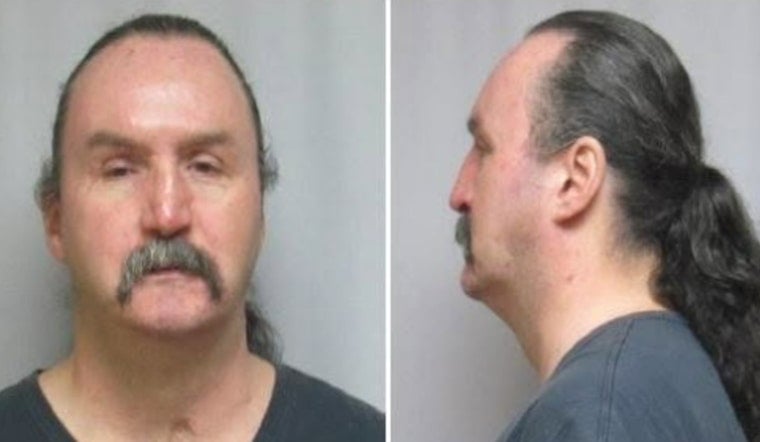
Richfield police are notifying residents that a Level 2 predatory offender, 52-year-old Steven Frederick Jack, has moved into the 6900 block of Queen Avenue South, a single-family neighborhood in Northwest Richfield near local schools and commercial transit corridors. The address change was recorded Wednesday, the same day Jack was provisionally discharged from the Minnesota Sex Offender Program after more than two decades in state custody.
According to a public notification from the Richfield Police Department, Jack was committed to the program on September 8, 2004, and has now served the sentence imposed on him by the court. He is registered under Minnesota Statute 609.345, which the department's notification traces to a conviction for criminal sexual conduct or another offense requiring registration under Minnesota Statutes 243.166 or 243.167. Fourth-degree criminal sexual conduct under that statute covers non-consensual sexual contact — distinct from penetration — involving coercion, force, positions of authority, or minor victims, according to JS Defense.
The department's notification describes a history in which Jack sexually assaulted adolescent female acquaintances between the ages of 11 and 15, using alcohol and force to gain compliance. The Hennepin County Sheriff's Office investigated Jack, and his case was originally documented on a fact sheet dated November 28, 2024, ahead of this week's release.
What a Level 2 Designation Actually Means
Jack's Level 2 classification reflects an assessment under Minnesota Statute § 244.052 by the Department of Corrections' End-of-Confinement Review Committee, which found he poses a moderate risk of reoffending, according to the City of Coon Rapids. Minnesota sorts registered offenders into three tiers, with Level 1 signaling low risk and Level 3 signaling high risk. That distinction matters for how the public actually learns about a case like Jack's: the state's Community Notification Act directs law enforcement to share Level 2 offender information with schools, daycares, and other organizations serving potential victims near the registrant's home, while the broad public town-hall meetings some residents may expect are typically reserved for Level 3 registrants, per policy language cited by Richfield Public Schools.
Richfield police say the notification is meant to inform, not alarm. The department has stated that an informed public helps keep the community safer, and it noted that abusing this information to threaten, harass, or intimidate a registered person is unacceptable and could itself be charged as a crime. Notably, the department also made clear it cannot direct where Jack lives, works, or attends school — a limitation rooted in state law rather than local policy, since predatory-offender registration statutes are built around tracking movement and enabling public notification, not residential exclusion, according to the City of Richfield.
From Prison Sentence to Civil Commitment
Jack's path illustrates a distinction that often confuses the public: completing a criminal sentence is not the same as leaving state custody. Civil commitment in Minnesota is indefinite and non-criminal, and under Minnesota Statute § 253D, a committed predatory offender can only reach provisional discharge after a Special Review Board and a Judicial Appeal Panel determine that secure confinement is no longer necessary and that a discharge plan offers a reasonable degree of public safety, according to the University of St. Thomas Law Journal.
That is the process Jack went through before his release this week. Even now, he remains under intensive state supervision. Provisionally discharged clients are subject to strict oversight from designated reintegration agents, including 24/7 GPS tracking, unannounced visits, and monitoring of internet-capable electronic devices, per the Minnesota Department of Human Services. Jack's supervision agent is identified in the department's notification as MSOP Reintegration Agent Anthony Larson.
A Costly, Rarely-Ending Program
Jack's release adds to a small but closely watched population. As of mid-July, the Minnesota Sex Offender Program was housing 758 civilly committed clients in secure facilities in Moose Lake and St. Peter, while 73 provisionally discharged clients were living under community supervision statewide and another 12 were awaiting placement, according to program statistics. Full, unconditional discharge remains rare — fewer than two dozen committed individuals have achieved it since 1995 — making provisional discharge like Jack's the primary route back into Minnesota communities, per reporting relayed by KROC-AM News.
That reintegration model is not cheap. Running the program costs roughly $560 per client per day, with a total operating budget of $131 million set for fiscal year 2027, according to program figures. Richfield residents with questions can reach the Richfield Police Department at 612-861-9800, while any suspected criminal activity should be reported directly to 911.





