

























































A 736-acre stretch of Richland County that once served as a winter refuge for P.T. Barnum's circus animals has sold for $13.8 million, in a deal that scraps approved plans for a 22-lot subdivision and instead folds the property into a protected landscape. The buyer, a national conservation nonprofit, plans to work with South Carolina's state park and wildlife agencies on the property's future, while a portion of the sale proceeds is headed toward a new children's trauma center.
The Conservation Fund purchased the property known as Goodwill Estate, which had been listed for $17.5 million before selling for $13.8 million, according to Greenville Business Magazine. The nonprofit plans to work with the South Carolina Department of Parks, Recreation and Tourism and the South Carolina Department of Natural Resources on the property's future, per the outlet's report.
Sellers Larry and Jerry Faulkenberry bought Goodwill in 1994 and undertook restoration and improvements to the property, which includes historic buildings, a working mill and wildlife habitats, according to Connie Maxwell Children's Ministries. The brothers have supported Connie Maxwell for 50 years, the outlet's report states, and Julie Breedlove and Tammra Granger, the Premier Sotheby's International Realty agents who listed the property, said the Faulkenberrys viewed Goodwill as something larger than themselves.
A Landscape Shaped by More Than Two Centuries
Goodwill's roots stretch back to 1795, when Daniel Huger II established the plantation; by 1854 it had grown to 7,465 acres, according to the South Carolina Department of Archives and History. The 736 acres now preserved represent the historic core of that much larger antebellum footprint. The property still contains a millpond and canal irrigation system built around 1827, which state preservation records recognize as one of South Carolina's earliest engineering efforts to drain and reclaim low-lying river swamps for commercial agriculture.
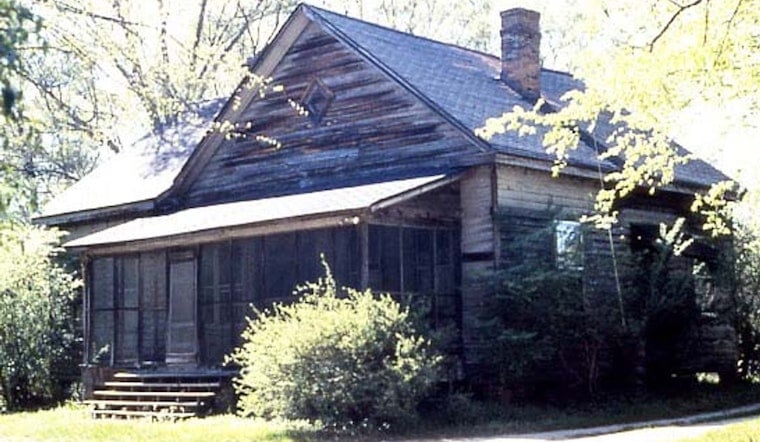
During the Civil War, owner Edward Barnwell Heyward relocated enslaved laborers from his lowcountry estates to Goodwill, growing the resident enslaved population to an estimated 976 people at the height of the conflict, tax records cited by the state archives agency indicate. The Heyward House on the property has since been converted into a private museum housing artifacts and antiques associated with the estate. The estate's national register listing on March 27, 1986, documented 10 contributing buildings and two contributing structures, including rare surviving circa-1858 slave cabins and an overseer's house.
From Circus Winters to a Working Preserve
Showman P.T. Barnum purchased Goodwill on October 18, 1888, for $100,000 as a gift for his granddaughter, ushering in an era when the property served as a winter retreat for Barnum & Bailey circus animals for six years, according to Transylvania County Library. The property later became a private hunting and fishing preserve, and today it still supports quail fields, wild turkey and white-tailed deer, along with an island rookery and pine timber forests.
Colonel's Creek, which includes a waterfall, runs through the property alongside roughly 173 acres of wetlands and a private 35-acre lake. Goodwill still holds an operational grist mill and sawmill powered by an original water wheel, plus historic structures, including a blacksmith shop, a corn crib, a silo, barns and a hunting lodge connected by 12 miles of trails. The main residence, an 8,400-square-foot home completed between 2009 and 2010 and designed in the Charleston architectural tradition, incorporates heart pine flooring harvested from the estate itself; a second, 5,500-square-foot residence also sits on the grounds.
Blocking a Subdivision, Expanding a Preserve
Before the sale, Goodwill had approval for subdivision into 22 lots — a suburban future that Richland County residents and local advocates worked alongside state officials to avoid, pursuing a conservation outcome instead, per the Greenville Business Magazine report. The acquisition will expand the Wateree River Wildlife Habitat Preserve, adding to land already surrounded by more than 3,600 acres of preserved territory. That adjacent Wateree River Heritage Preserve was established as part of an environmental mitigation package tied to the Haile Gold Mine.
According to Richland County, its Board of Zoning Appeals guides development in accordance with existing and future needs, suitability and the Comprehensive Plan. Richland County says its subdivision plan review process ensures that subdivision plans meet code requirements. The State, citing the 2020 Census, reported that Eastover's population was 4,772 and that the Lower Richland communities of Eastover, Gadsden and Hopkins shrank even as Richland County grew overall.
The lower Richland County corridor surrounding Goodwill forms part of the COWASEE Basin, where protected lands help safeguard river watersheds and provide land-use buffers for nearby military facilities including Fort Jackson, according to the Congaree Land Trust. Breedlove and Granger said Goodwill's history and natural landscape have endured for more than two centuries, and called its permanent protection and incorporation into the surrounding conservation landscape an extraordinary outcome.
According to the South Carolina Conservation Bank, 486 properties totaling nearly 389,000 acres had been protected across the state through June 30, 2024.
Sale Proceeds Head to a New Healing Center
A portion of the proceeds from the sale has been designated for Connie Maxwell Children's Ministries' new healing center, which will provide trauma-informed therapy, counseling and restorative care for children and families. Connie Maxwell, which provides residential and foster care services, has a “Decade of Dreams” campaign that includes plans for a healing center, according to the South Carolina Department of Health and Human Services. The center is intended to support trauma treatment, research and interventions.
The deal ties together two distinct public-benefit outcomes: a working conservation landscape safeguarded from development in Richland County, and a child welfare project taking shape more than an hour away in Greenwood. Community interest in preserving and interpreting Goodwill's African American history — from the enslaved laborers who shaped its canals and cabins to the families who lived there for generations — remains part of the ongoing conversation around the property's future, even as its ownership shifts from the sellers to The Conservation Fund.





