

























































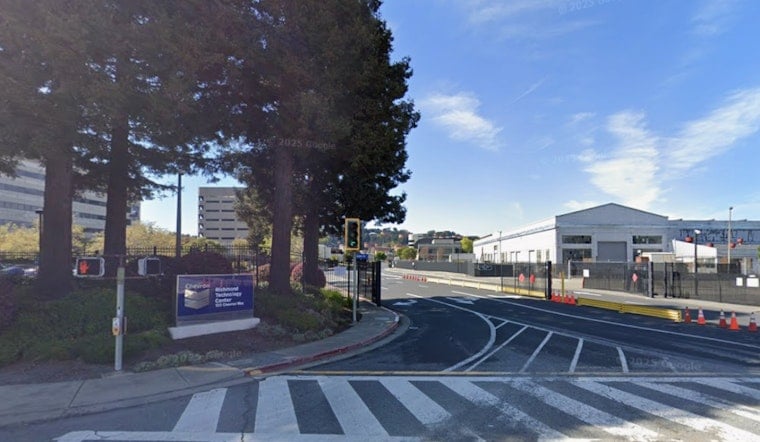
Residents living near the Chevron Richmond Refinery face a lifetime cancer risk of 37 in a million from the facility's toxic air emissions, according to a preliminary health risk assessment released by regional air regulators. That figure is more than three times higher than the Bay Area Air Quality Management District's mandatory action threshold of 10 in a million, the level at which the district requires facility-wide risk reduction plans.
The finding, first detailed by KQED, comes from a health risk assessment BAAQMD conducted under Rule 11-18, a regulation adopted in November 2017 specifically to reduce toxic air contaminants from existing industrial facilities. CBS News, which also covered the report, aired the finding as part of its ongoing coverage of the refinery, with reporter Katie Nielsen detailing the emissions and associated health risks. According to CBS News, the district's report attributes 74 percent of the estimated cancer risk to benzo[a]pyrene leaking from pipe fittings and storage tanks across the facility.
Where the Risk Is Coming From
The same report found that elevated short-term, non-cancer health risks stem mainly from benzene evaporating out of the refinery's wastewater treatment systems, the outlet reported. Both compounds are hazardous air pollutants long associated with petroleum refining operations, and their identification gives regulators a specific target for any required fixes at the Richmond facility.
Chevron has pushed back on the district's methodology. The company claims the air district's emissions model relies on worst-case modeling assumptions and includes disused equipment that no longer reflects actual refinery operations, per the same report. Chevron also noted that neighboring air districts set considerably higher cancer risk action thresholds — 25 in a million in the Los Angeles basin and 100 in a million in the San Joaquin Valley — arguing that BAAQMD's 10-in-a-million standard is the strictest in California.
A Regulatory Clock Now Running
The preliminary assessment opens a public comment period running through November 23, before regulators finalize any risk reduction requirements, according to the Bay Area Air Quality Management District. Rule 11-18 was updated this year to accelerate the review and comment timeline for facility risk assessments like this one, giving both Chevron and Richmond residents a window to weigh in before any mandated changes take effect.
This isn't the first time Chevron has clashed with the district over refinery emissions. In February 2024, the company settled litigation with BAAQMD tied to Regulation 6, Rule 5, agreeing to install wet gas scrubbers, cut particulate matter emissions, and fund community air quality projects in Richmond, according to Chevron Richmond. That settlement addressed the refinery's catalytic cracking units specifically.
A Refinery With a Fraught History
Richmond's relationship with the refinery has been shaped for over a decade by an August 2012 disaster, when a major pipe rupture and fire sent toxic smoke across the East Bay and drove an estimated 15,000 residents to seek emergency medical treatment, according to Environmental Health News. Chevron later pleaded no contest to criminal charges tied to that fire and paid $2 million in fines and restitution in 2013. That disaster helped drive stricter regional monitoring mandates, including BAAQMD Regulation 12, Rule 15, which required refineries to install open-path fenceline monitoring systems using 500-meter light beams to track real-time chemical concentrations along facility perimeters, per fenceline monitoring resources tracked at richmondairmonitoring.org.
Hoodline has covered a string of more recent incidents at the refinery as well. In a small spill at Long Wharf in July, Chevron reported less than 42 gallons of hydrocarbon liquid leaking into San Francisco Bay during maintenance work, an incident that drew oversight from the California Department of Fish and Wildlife's Office of Spill Prevention and Response. Earlier this year, the refinery also triggered a Level 1 community warning alert tied to flaring, and a 2023 power loss at the facility sparked visible flaring and dozens of air quality complaints.
Why the Refinery Matters to the Region
The Chevron Richmond Refinery has operated since 1902 and now spans 2,900 acres along San Francisco Bay, processing roughly 245,000 barrels of crude oil daily, according to the California Energy Commission. The facility supplies about 60 percent of the jet fuel used at Bay Area airports and roughly 20 percent of the motor gasoline burned on Bay Area roads, making it one of the state's most consequential energy assets.
That economic weight comes as California's refining capacity is shrinking statewide. The commission's 2026 data shows the state's overall refining capacity of 1.34 million barrels per day is tightening as about 17 percent of that capacity undergoes conversion or shutdown by late this year, driven by planned refinery conversions in Rodeo and closures elsewhere. As fewer refineries remain in operation, regulatory scrutiny of major facilities like Chevron's Richmond plant carries outsized weight for both public health policy and the state's energy markets.





