

























































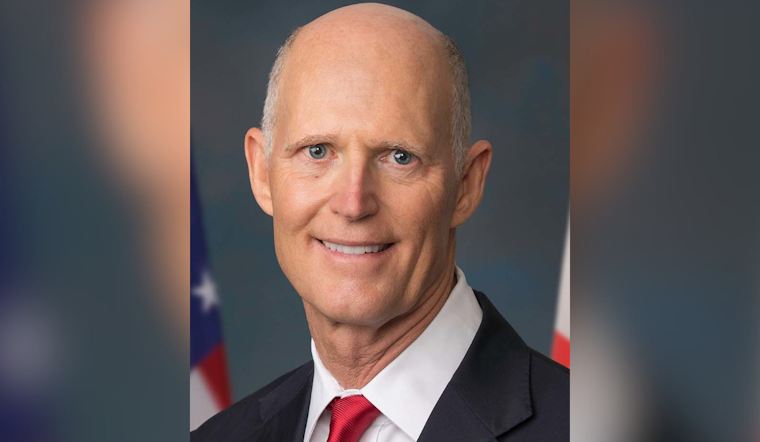
Florida Sen. Rick Scott wants schools to teach kids that AI chatbots are tools—not therapists, oracles, or digital substitute teachers. His Safeguard Kids Act would add AI-risk lessons for K-12 students and make counseling tied to chatbot-related mental-health issues an eligible use of existing federal school grants. The proposal arrives as schools are still trying to write rules for a technology students are using faster than many districts can regulate.
The measure was introduced July 14 and received fresh Florida coverage Tuesday from West Orlando News. In a release, Scott’s office described the bill as an effort to teach American students about AI’s dangers while helping schools provide specialized support.
What The Safeguard Kids Act Would Change
As written, the bill would amend the federal Elementary and Secondary Education Act to define an AI chatbot and add instruction on the technology’s dangers, limitations and responsible use to eligible school-support activities. The measure would also allow Student Support and Academic Enrichment grants to help fund AI-literacy programs and counseling for mental-health issues arising from chatbot use, according to the bill text.
That means the proposal is not an outright ban on ChatGPT or similar tools. It is aimed at giving schools a federal framework for teaching students when AI can be useful, when it can produce convincing nonsense, and when a human counselor needs to enter the conversation.
The Mental-Health Concern Behind The Proposal
Scott’s argument leans heavily on concerns about students treating chatbots like mental-health professionals. A study led by Brown University researchers identified 15 ethical risks in AI chatbot behavior in mental-health settings, including false empathy, reinforcement of negative beliefs and poor crisis management, according to Brown University.
The study did not conclude that AI should be kept out of education or mental-health care altogether. Instead, its researchers called for stronger educational, ethical and legal standards—an approach that closely mirrors Scott’s emphasis on teaching students what these systems are and what they are not.
Schools Are Already Playing Catch-Up
Federal education data suggest many schools are still building the basics. The National Center for Education Statistics reported that 69% of public-school leaders viewed teacher use of AI favorably, while only 31% said their school or district had a written policy governing students’ AI use; 47% said their schools taught some or all students about AI, according to Department of Education data.
A 2026 RAND report found that growing shares of middle schoolers, high schoolers and college students used AI for homework during 2025, while many remained unsure how to use it without replacing their own thinking. The report surveyed 1,214 young people and said the uncertainty should push educators to create clearer guidance, as summarized by ERIC’s RAND record.
The Bill Is A Proposal, Not A New School Mandate
For now, S. 4958 is only an introduced bill. The official congressional record shows that it was read twice and referred to the Senate Health, Education, Labor and Pensions Committee, with no vote or implementation date listed.
If it advances, the measure would work through existing federal education grants rather than impose a single national AI class. The immediate political message is simpler: Washington is beginning to treat AI literacy as basic school safety, alongside the increasingly familiar work of teaching students how to spot misinformation, protect their privacy and know when a machine is dangerously out of its depth.





_official_Senate_portrait_(cropped-1).jpg)