

























































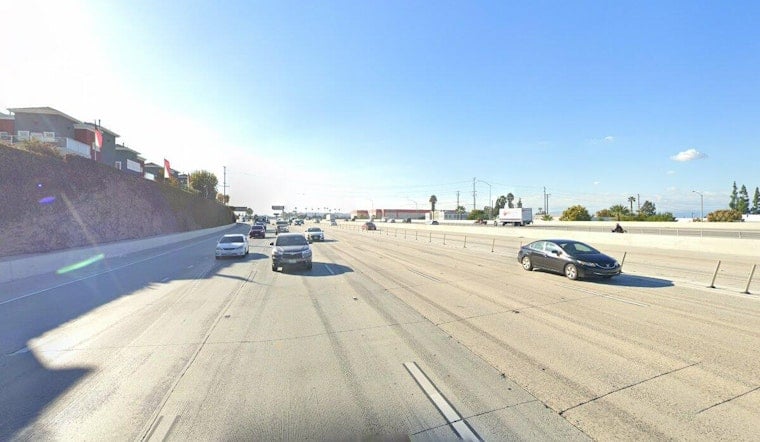
Riverside County's transportation commission has landed a $25 million federal grant to help pay for a $178 million overhaul of one of Southern California's most congested freeway stretches, where more than 300,000 vehicles squeeze through the Riverside-Orange county line every day. The money will go toward the SR-91 Eastbound Corridor Operations Project, known as 91 ECOP, which adds a three-mile nontolled auxiliary lane between the SR-241 connector and SR-71 near Green River Road.
The U.S. Department of Transportation awarded the funding through its BUILD grant program, a nationally competitive discretionary program that targets transportation infrastructure with significant local or regional impact, according to the Record Gazette. Riverside County Transportation Commission Chair Raymond Gregory said continued investment in the SR-91 corridor is needed to keep communities moving, and he thanked the U.S. Department of Transportation for backing the project through the grant program. Gregory also credited Representatives Ken Calvert and Young Kim for supporting the project's grant application, saying the award recognizes the importance of the work.
What the Widening Actually Fixes
Beyond the new auxiliary lane, the project includes constructing retaining walls, widening two bridges, replacing overhead signs, and adding rockfall mitigation measures along the corridor. RCTC is advancing the work in partnership with Caltrans and the Orange County Transportation Authority, and officials say the improvements are meant to improve traffic flow, enhance travel reliability across the region, and support economic development. Construction on the 91 ECOP is expected to begin in 2028 and will be funded through a mix of federal, state, and local dollars along with toll revenues.
RCTC has already been laying administrative groundwork this month. In August, the commission considered a cooperative agreement worth up to $5.656 million with Caltrans covering construction work on the eastbound project, per Civic IQ. RCTC adopted a progressive design-build delivery model for the project in late 2025, a strategy that folds design, environmental monitoring, permitting, and construction into a single contractor process, according to filings reviewed by HigherGov.
Part of a Two-Decade Master Plan
The 91 ECOP is not a standalone fix. It's part of broader work along the State Route 91 corridor. The eastbound work builds directly on recent progress nearby: RCTC opened a two-mile nontolled general lane on westbound SR-91 between Green River Road and SR-241 in Anaheim Hills back in January 2022, and by June 2025 the commission was nearing completion of a separate $137 million project replacing a single-lane loop connector between eastbound SR-91 and northbound SR-71 with a new two-lane direct connector ramp in Corona, according to footage posted by RCTC on Facebook.
The bottleneck sits at a genuine chokepoint for three counties. The 71/91 interchange serves as a critical junction for commuters moving between Riverside, Orange, and San Bernardino counties, and the corridor as a whole is a vital link for commuters, businesses, and goods movement. Just across the county line, the Orange County Transportation Authority selected engineering firm Jacobs in July to manage its own upgrades along SR-91 between La Palma Avenue and SR-55, including an added eastbound lane on the same stretch, as Hoodline reported. Orange County's authority has also reinvested toll revenue from the 91 Express Lanes into regional freeway work.
Local Tax Dollars Underpin the Federal Match
The federal grant doesn't stand alone financially either. Riverside County's Measure A, a half-cent sales tax first approved by voters in 1988 and renewed in 2002, has generated more than $3.1 billion for transportation projects and services, and the renewed measure is estimated to generate approximately $280 million annually for highway expansions, transit, and road repairs, according to Patch. That local funding base helps bring additional state and federal dollars into the county. With Measure A set to expire in 2039, RCTC voted in June to place its renewal on the November ballot, meaning Riverside County voters will weigh in on the corridor's long-term funding just as the 91 ECOP moves toward its planned 2028 groundbreaking.
RCTC has also been experimenting with technology to squeeze more capacity out of the existing lanes while the widening project advances. Last year the commission launched an automated Occupancy Detection System on the 91 Express Lanes, using median gantries and high-resolution cameras to catch carpool toll cheaters and lower rates for compliant drivers, as Hoodline detailed in its coverage of the camera crackdown. Between the physical widening, the interagency contracting, and the funding fight now headed to voters, the SR-91 corridor remains one of the most closely watched infrastructure fronts in the Inland Empire.





