

























































Kristina Andrews was hanging lights on her balcony when she fell four stories, an accident that left the 32-year-old Riverview mother paralyzed from the neck down and now relearning to walk from inside a Dunedin nursing home. She spent about a month paralyzed entirely, unable to move, before slowly regaining motion in her arms and fingers. Today she attends rehabilitation three times a week, chasing a goal that once seemed unreachable: standing on her own two feet to hold her 3-year-old daughter, who lives in Texas.
Andrews was uninsured when she fell, according to Tampa Bay 28, which first reported her story. She spent roughly a month in the hospital undergoing surgeries and fighting to stay alive, the station reports. According to the Tampa Bay Times, Andrews sustained an ASIA B spinal cord injury at the C6 vertebra after striking the pavement at an estimated 50 mph on June 18, 2025, an impact that also broke her ribs, shoulder, hip and pelvis.
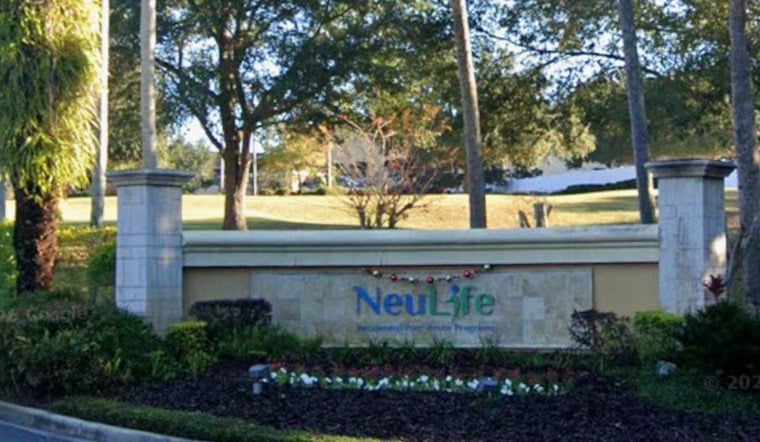
Her path through the healthcare system since the fall has been anything but smooth. Per her own GoFundMe campaign, Andrews spent a month at Tampa General Hospital before receiving two months of hospital-funded intensive therapy at NeuLife Rehabilitation Center in Mount Dora — only to be mistakenly transferred for 10 days to a Miami psychiatric facility that offered no spinal cord rehabilitation at all. She was eventually moved to a nursing facility in Dunedin, where the station's report notes she is now the youngest resident in the building.
A $280-a-Session Fight, One Workout at a Time
Andrews is covered by Medicaid, but the program only covers a certain amount of acute intensive rehabilitation, and patients must meet specific criteria to qualify, per the same account. Dr. Bill Hennessey said one key criterion is that the patient must be expected to go home. On days without scheduled therapy, Andrews works out on her own in her bedroom, determined not to lose ground. She currently pays around $280 for each rehabilitation session, funded by a grant from the nonprofit Walking With Anthony, which is covering her sessions for now.
Walking With Anthony was founded by Anthony Purcell after he suffered a C5-C6 spinal cord injury in 2010 and lost health insurance coverage after just 20 days, according to GoodRx. The organization now provides average grants of $10,000 to help spinal cord injury survivors afford ongoing rehab costs — a lifeline for patients like Andrews, who is also raising money through her own GoFundMe campaign to keep paying for treatment. Specialized post-acute centers like NeuLife charge roughly $1,000 a day for room and intensive physical therapy, according to Florida Politics, a cost far beyond what most uninsured or Medicaid-dependent patients can sustain on their own.
A Councilman's Push, and a Statewide Coverage Gap
Andrews' case has drawn political attention in Tampa. Tampa City Councilman Luis Viera launched a public campaign in November calling on Governor Ron DeSantis and state legislators to reform Medicaid coverage for post-acute spinal cord rehabilitation, highlighting that Andrews had accumulated more than $1.5 million in medical debt, Florida Politics reported. Florida does operate a Brain and Spinal Cord Injury Program as a payer of last resort under state law, serving 859 eligible individuals in the 2025-2026 fiscal year with community reintegration, rehabilitation and adaptive technology services, according to the Florida Department of Health. Whether that program, or any legislative reform, can close the gap for patients like Andrews remains unresolved.
The nursing home where Andrews now lives, Lake Haven Nursing and Rehab Center in Dunedin, is a 104-bed facility rated “much below average” overall and in health inspections by Medicare as of this month, according to Medicare's Care Compare database. Florida has 691 licensed nursing centers housing roughly 71,000 residents statewide, with Medicaid paying for about 60% of all long-term care spending, according to the Florida Health Care Association. Nationally, about 15.5% of nursing home residents are under 65, a demographic research compiled in a study published via PMC notes often lacks access to age-appropriate, specialized post-acute programming in standard facilities.
Relearning Everything, One Session at a Time
Andrews needs the most help of anyone in her nursing home, but she is working toward small, specific victories: transferring herself in and out of a wheelchair, going to the bathroom independently, and eventually cooking and cleaning on her own. She has said she cannot imagine spending another five years, or the rest of her life, in the nursing home. Being reunited with her daughter, she has said, is what keeps her going, and she plans to eventually return home and become strong enough to live independently.
Andrews' injury is far from an isolated case. The National Spinal Cord Injury Statistical Center estimates that roughly 18,421 new traumatic spinal cord injuries occur across the country each year, with falls and vehicle crashes as the leading causes. For Andrews, the numbers are secondary to the daily grind of rehabilitation — three sessions a week, plus solo workouts at home, all aimed at a single goal: standing up and walking back into her daughter's life.





