

























































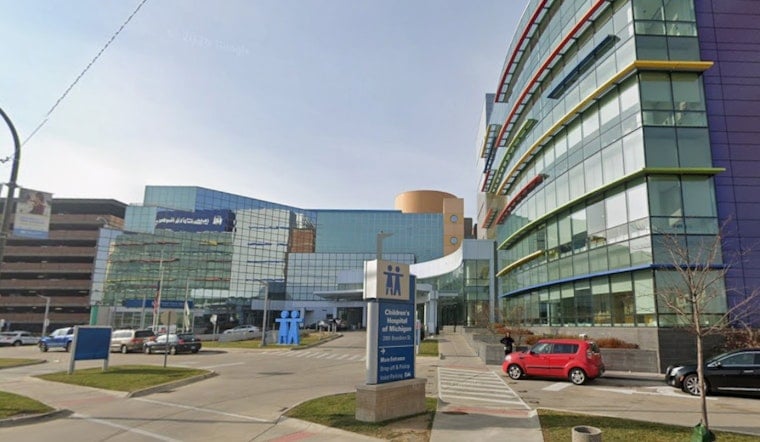
Kim Waatti was holding her infant son against her chest when she felt something was wrong — his heartbeat was racing out of control. That moment set off a chain of events that would send Edison Waatti, now a 1-year-old from Rochester Hills, into emergency care at Children's Hospital of Michigan, where doctors would place him on a machine that kept him alive while they fought to control his heart.
Edison was diagnosed with Wolff-Parkinson-White syndrome, a condition involving an extra electrical pathway for signals through the heart, according to The Detroit News. The syndrome can cause the heart to beat out of control and create abnormal blood flow through the body. A community hospital called Children's Hospital of Michigan cared for Edison, and the Detroit hospital sent an ambulance for him.
At six months old, doctors placed Edison on an extracorporeal membrane oxygenation machine, commonly known as ECMO, while treating his fast heartbeat and dangerously low blood pressure. He stayed on the machine from January 29 to February 3, 2026. ECMO functions as an external artificial heart-lung system, maintaining blood flow and oxygen to a patient's organs when medications alone cannot immediately bring a life-threatening heart rhythm under control, according to the Journal of Innovations in Cardiac Rhythm Management.
Why an Infant Heart Can't Wait
An infant's heart has limited muscle reserve, and an incessant, excessively fast rhythm can quickly tip a baby into tachycardia-induced heart failure and cardiogenic shock, according to research published in PMC. That is essentially what happened to Edison — his racing heart could not fill properly, driving down his blood pressure until doctors needed mechanical support just to keep his organs supplied with blood while they worked to stabilize him.
Doctors did not turn to invasive catheter ablation to fix the extra electrical pathway. For infants under a year old with Wolff-Parkinson-White syndrome, antiarrhythmic medications remain the standard first-line treatment, while ablation is typically delayed until age 5 or older because the procedure carries a higher risk of damaging small, still-developing heart tissue, according to guidance published by AAP Publications. Edison takes medications, and the same research notes that roughly one-third of infants diagnosed with the syndrome see their abnormal pathway resolve or go dormant on its own by their first birthday as the heart's conduction system matures.
A Regional Hub Built for This Emergency
Children's Hospital of Michigan, located in Midtown Detroit, operates metro Detroit's only dedicated pediatric cardiac intensive care unit, according to the Detroit Medical Center. The hospital conducts around 200 pediatric cardiovascular surgeries a year and holds a Center of Excellence designation from the Extracorporeal Life Support Organization for its pediatric ECMO program — a credential reserved for institutions meeting strict international benchmarks for training, protocols, and outcomes, per ELSO.org. A single-center study at the hospital examined 232 pediatric patients treated with ECMO between 2016 and 2025, one of the largest such datasets in the country, even as nationwide pediatric ECMO survival to discharge averages around 50 percent.
Doctors at the hospital ultimately resolved Edison's heart issues, and he was discharged on February 23, 2026. Edison turned 1 on August 5, and the Waatti family celebrated his first birthday at home in Rochester Hills. Days later, Edison and his family returned to Children's Hospital of Michigan in Detroit — this time not for emergency care, but to thank the staff who saved him and to deliver gifts.
Cake, Gifts, and a Thank-You a Year in the Making
Hospital staff sang Happy Birthday to Edison during the visit, and the Waatti family and hospital staff shared birthday cake together. Edison's relatives and friends donated gifts for other families staying at the hospital, and the family delivered toys and supplies for those families as well. The Waattis also donated seats for babies and a device called Sequence for Kids to the hospital, continuing their support beyond the single visit.
“We are thankful to be able to celebrate Edison's first birthday and want to acknowledge the hospital staff,” Paul Waatti said, according to The Detroit News. Kim Waatti said Edison is thriving, and he now has no activity restrictions.
Putting Edison's Case in Context
Wolff-Parkinson-White syndrome is estimated to affect between 0.1% and 0.2% of newborns, yet it accounts for 70% to 80% of all supraventricular tachycardia cases diagnosed in infants, according to the NCBI Bookshelf. Congenital heart defects more broadly affect nearly 1 in 100 births in the United States, or around 40,000 infants a year, with roughly a quarter classified as critical defects requiring intervention within the first year of life, according to the CDC. Advances in critical care and mechanical support have pushed one-year survival for critical congenital heart defects above 85 percent nationally.
In Michigan specifically, 2,134.7 infants per 10,000 live births in 2022 were diagnosed with a birth defect within their first year, and congenital heart defects remain the leading cause of birth-defect-related infant deaths statewide, according to the Michigan Department of Health and Human Services. It's within that landscape that Edison's recovery, and his family's return to say thank you, stands out — a reminder of both how fragile an infant's heart can be and how far specialized pediatric care has come in giving families like the Waattis a happy ending.





