

























































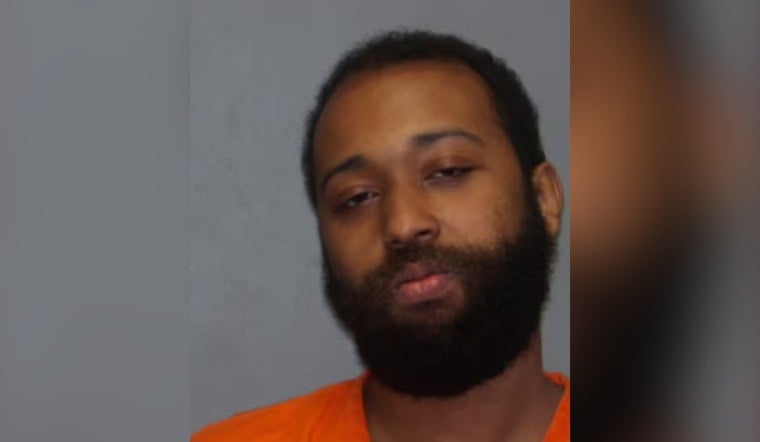
A Rocky River man has pleaded guilty to aggravated vehicular homicide in the death of a 42-year-old woman who was struck and killed while crossing a Cleveland street in January, then left in the roadway as the driver fled. Marcus Gilmer, 29, entered the plea in connection with the death of Christy Williams, who was crossing West 73rd Street and Clark Avenue around 8 a.m. on January 12, 2026, when she was hit.
According to Cleveland 19 News, Williams was identified by the Cuyahoga County Medical Examiner's Office after she was left in the street following the crash, police say. The vehicle believed to have been involved in the collision was found a short distance away, according to the same report. Gilmer was arrested days after the crash, and a court appearance followed in which his bond was set at $50,000, according to WTAM 1100.
Williams' daughter, Paige Ramirez, later organized an online fundraiser to help cover cremation and memorial costs, writing that her mother was crossing the street when she was hit by a vehicle traveling far over the speed limit, according to the GoFundMe campaign. Gilmer is scheduled to be sentenced on September 17, 2026.
What Gilmer Could Face at Sentencing
Under Ohio Revised Code § 2903.06, aggravated vehicular homicide involving reckless driving is charged as a second- or third-degree felony, carrying a maximum sentence of up to eight years in prison along with a mandatory driver's license suspension, per Zukerman Law. Separately, Ohio Revised Code § 4549.02 elevates failing to stop at the scene of a crash from a misdemeanor to a third-degree felony when the collision results in a death, according to attorney Brian J. Smith. That statute also mandates a license suspension ranging from six months to three years upon conviction.
A recent Cuyahoga County case offers a benchmark for what sentencing could look like. In a case Hoodline reported in April, a 21-year-old Parma woman was sentenced to two years in prison and a 25-year driver's license suspension after pleading guilty to aggravated vehicular homicide for striking and killing a 73-year-old pedestrian in a November 2025 hit-and-run. It remains an open question whether prosecutors will seek additional prison time under statutory enhancements in Gilmer's case, or what victim impact statements Williams' family may present at the September hearing.
A Corridor Known for Danger
The crash site sits along a stretch of Cleveland that traffic safety advocates have flagged for years. Clark Avenue in the Clark-Fulton neighborhood logged 50 total crashes between 2021 and 2024, including 30 involving pedestrians or wheelchair users and three fatalities, according to data compiled by Bike Cleveland. About 16% of Clark-Fulton residents do not own a vehicle and rely on walking or transit to get around, per the same data.
West 73rd Street itself was targeted for a municipal traffic-calming pilot funded through outgoing ward council money, with high-visibility crosswalks, centerline hardening, and stop-bumps scheduled for early 2026 to address chronic speeding along the corridor, according to Cleveland 19 News. Citywide, the picture has grown grimmer despite those efforts: Bike Cleveland's annual report found 603 pedestrians and bicyclists were struck by motorists across Cleveland in 2024, up from 550 the year before. Traffic fatalities in the city climbed from 43 deaths in 2022 to 59 in 2023 and 75 in 2024, according to Merriman Legal, even as Cleveland has pledged under its Vision Zero initiative to eliminate traffic deaths by 2032.
Bike Cleveland's research also points to a broader data problem tied directly to cases like this one: official police reports frequently undercount hit-and-run crashes, with national studies estimating that between 44% and 75% of pedestrian collisions never make it into official state crash databases. Delays in filing reports, along with drivers who flee before they can be identified, often leave incident logs incomplete, the group's research notes.





