

























































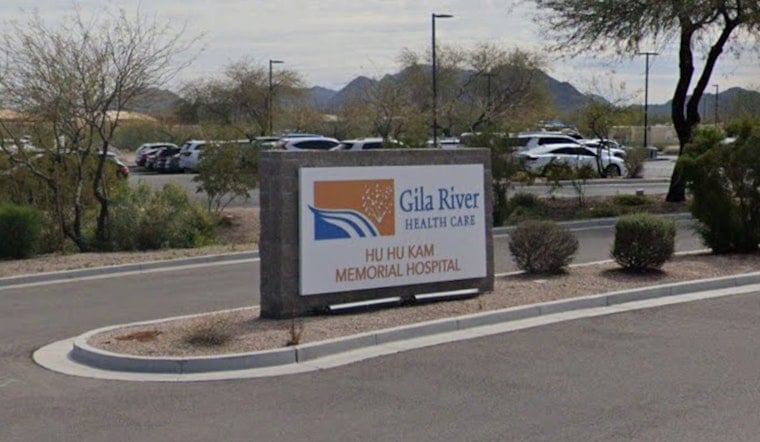
Ten medical students a year will soon train inside a tribal health system 40 miles southeast of Phoenix Sky Harbor International Airport, as the University of Arizona College of Medicine – Phoenix prepares to open what its dean calls the nation's first MD-granting medical school branch on tribal land. The new branch will sit on Gila River Health Care's campus in Sacaton, Arizona, with its first cohort arriving in 2027.
The partnership brings together the University of Arizona, the Gila River Indian Community and Gila River Health Care, according to a report from the Phoenix Business Journal. Dr. Fredric Wondisford, dean of the University of Arizona College of Medicine – Phoenix, said the university has a long history working with Gila River Health Care, and described the Sacaton campus as the nation's first campus on tribal land of an allopathic, or MD, medical school. Gila River Health Care operates as a subsidiary of the Gila River Indian Community.
Leaders from the university, the tribal community and the health system unveiled the project formally on August 18 during a launch event at Gila River Resorts & Casinos – Wild Horse Pass in Chandler, according to University of Arizona News. Gila River Indian Community Governor Stephen Roe Lewis and University of Arizona President Suresh Garimella both took part, the university said.
How the Three-Year Program Will Work
Starting in July 2027, the Sacaton branch will admit 10 students annually into a three-year accelerated MD program, per the same university account. Students will spend their first 18 months taking foundational coursework in Phoenix before relocating to Sacaton for another 18 months of clinical education at Gila River Health Care facilities.
The accelerated structure mirrors the college's existing three-year Primary Care Accelerated Program, which the University of Arizona College of Medicine built to fast-track training in family medicine, general pediatrics and general internal medicine while feeding graduates directly into Arizona primary care residencies. That existing pipeline gives the Sacaton branch a template for keeping doctors working in the state after they finish training.
Clinical training will happen at Hu Hu Kam Memorial Hospital, a Joint Commission-accredited tribal hospital operated by the Gila River Indian Community that serves an estimated patient population of 29,000 across tribal lands, according to the Arizona Center for Rural Health. Gila River Health Care runs as a “Tribal 638” health enterprise under the Indian Self-Determination and Education Assistance Act, a legal structure that lets the sovereign nation administer its own health services rather than relying on federal Indian Health Service management, the center notes.
A $25 Million Tribal Investment
Gila River Health Care is committing more than $25 million through 2034 to establish the branch, covering full-tuition scholarships, faculty positions and educational infrastructure on tribal land, according to Healthcare Innovation. The scale of that commitment underscores how directly the tribal health system is shaping, and funding, the branch it will host.
Filling a National Doctor Gap
The need behind the new campus is stark. The Indian Health Service experienced a 38% physician vacancy rate in fiscal 2024, compared with a 30% vacancy rate across all health care providers in the agency, according to Government Accountability Office data cited by Healthcare Innovation. Arizona itself ranked 42nd in the nation for primary care access in 2026, with rapid population growth straining the state's existing physician workforce, the outlet reported.
The underrepresentation of Native physicians nationally is just as pronounced. American Indian and Alaska Native physicians made up just 0.3% of active U.S. physicians in 2024, despite American Indian and Alaska Native people representing nearly 3% of the total U.S. population, according to Association of American Medical Colleges data reported by KFF.
Not the First Tribal Medical School, But a First of Its Kind
The University of Arizona branch will be the nation's first MD-granting, or allopathic, medical school on tribal land, but it is not the first tribally affiliated medical school of any kind. The Oklahoma State University College of Osteopathic Medicine at Cherokee Nation in Tahlequah, Oklahoma, opened in 2020 as the nation's first tribally affiliated DO, or osteopathic, medical school, and it graduated its inaugural class in May 2024, according to BestColleges. The distinction between the two degree tracks marks the Sacaton campus as a genuinely new milestone rather than a repeat of the Oklahoma model.
Several details about how the Sacaton program will actually operate remain unclear. It is not yet known what selection criteria will govern the 10 annual student slots, whether enrolled members of federally recognized tribes will receive any admissions preference, or how many graduates will ultimately choose to stay in Sacaton or elsewhere in rural Arizona once they finish their accelerated degrees and subsequent residency training.





