

























































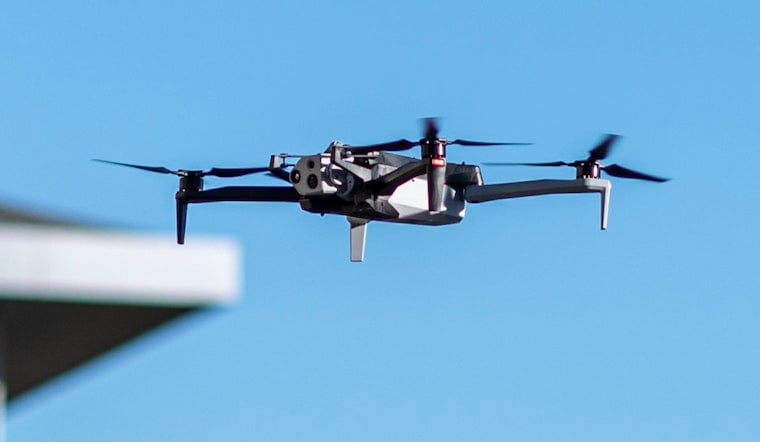
Sacramento police want to put more high-tech eyes in the sky, including thermal-imaging drones capable of reading license plates from hundreds of feet away. The proposed expansion would also push the department’s Drone First Responder program deeper into the city’s 911 response system, giving residents plenty to debate before the next fleet takes flight.
The Sacramento Police Department is asking for public feedback on its draft military equipment plan, which includes new and replacement uncrewed aerial systems and eight Skydio X10 drones for emergency response. The department held a community forum Thursday at the Oak Park Community Center, and its survey is scheduled to remain open through next Friday, according to The Sacramento Bee.
The draft report lists dozens of proposed aircraft across several models, including DJI, iFlight and Skydio drones. The eight Skydio X10s would be used for the Drone First Responder program and are included in a pending Axon contract at no additional cost, while other proposed drones are described as replacements for aircraft being retired or nearing the end of their three- to five-year service lives.
The X10 Brings Thermal Imaging And Long-Range Tracking
Skydio markets the X10 as a public-safety drone with thermal imaging, high-resolution cameras and autonomous night-flight capabilities. The company says the aircraft can detect a person on a roof in complete darkness, read a license plate from about 800 feet and track people or vehicles after they move out of view, according to the company’s product specifications.
Those capabilities are exactly why the proposal is drawing attention. A drone that can arrive before officers, search rooftops at night and keep a vehicle in frame may help with emergencies and dangerous searches, but it also raises predictable questions about who is being watched, how long footage is kept and what happens to the data afterward.
Sacramento Already Tested Drones As First Responders
Sacramento launched a Drone First Responder trial in November 2024 with the Sacramento Fire Department. The pilot operated from Del Paso Heights, covered a two-mile response radius and was designed to provide overwatch, verify information and assist with searches before first responders arrived, according to a Sacramento police news release.
The department’s current draft report says its unmanned aerial systems were used 501 times during the reporting period ending April 30, compared with 557 uses in the previous period. The report also projects roughly $39,000 in annual personnel and training costs and about $7,700 in maintenance costs for the UAS category.
California Law Requires Public Review Before Approval
Under Assembly Bill 481, California law enforcement agencies must receive approval from their governing bodies before funding, acquiring or using covered military equipment, and they must publish annual reports describing equipment use, costs, complaints and planned purchases. The law also requires a public engagement meeting, while a Sacramento city audit found that SPD had made substantial progress in expanding its reporting and outreach.
That audit also documented lingering scrutiny from City Council members and community stakeholders, who had pressed the department for more specific explanations of why it needed certain equipment and how the gear would protect the public while safeguarding civil rights. The draft plan’s public-comment period is therefore more than a procedural box to check; it is part of the argument over what kind of police technology Sacramento wants to normalize.
The Bee reported that community members raised concerns at the Oak Park meeting about military equipment and surveillance technology. Department officials said SPD controls its own data-sharing decisions, follows Sacramento’s sanctuary-city policies and does not share information for civil immigration enforcement.
A Recent San Francisco Leak Adds To The Unease
The technology’s growing use elsewhere has also supplied a fresh cautionary tale. In July, WIRED reported that live video from five San Francisco police Skydio drones, including color and thermal feeds, was exposed online for months through an improperly secured link.
That incident did not involve Sacramento, and it does not establish that SPD’s system is insecure. It does show why safeguards, access controls and clear rules for sharing police drone footage matter just as much as the aircraft’s cameras and flight time.
The draft plan now moves through Sacramento’s public-review process before the City Council decides whether to approve the policy and proposed acquisitions. For residents, the central question is not simply whether drones can get to a 911 call faster; it is whether the city can keep the technology’s reach from outrunning its rules.




