

























































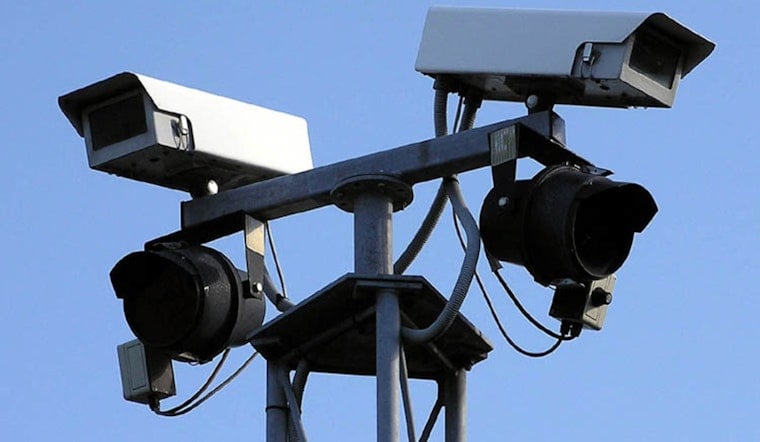
Bay Area drivers could soon face tighter rules on the invisible trail their cars leave behind, as California lawmakers weigh new limits on automated license plate readers. The proposal would restrict how police agencies store, search and share plate data while preserving access for active investigations and missing-person searches.
The debate is unfolding as ALPR systems spread across California. A report by Times of San Diego says at least 230 police and sheriffs’ departments use the technology statewide, while Berkeley operates a 52-camera network. The systems read plates and compare them with law-enforcement databases for vehicles of interest, turning ordinary commutes into searchable records.
What SB 1013 Would Change
Senate Bill 1013, authored by Sen. Sabrina Cervantes, would require new or amended ALPR vendor contracts beginning January 1, 2027, to block default access to national databases and prevent automatic access by other agencies. The measure would also require public privacy policies, employee training, logged searches tied to case file numbers and a 30-day limit on routine data retention, with exceptions for active investigations, criminal proceedings and authorized hot lists, according to California Legislative Information.
As of Monday, the proposal remains alive in Sacramento. Times of San Diego reports that SB 1013 is pending in the Assembly Appropriations Committee, with a hearing scheduled for Wednesday. That hearing will be the bill’s next formal test.
Berkeley Police Point To Stolen-Car Recoveries
Berkeley police are making the public-safety case with their own numbers. In a proposed city budget document, the department says its 2025 ALPR network generated 621 stolen-vehicle alerts and 78 felony-vehicle alerts, contributed to at least 37 stolen-vehicle recoveries, played a role in 58 arrests and supported 121 cases, according to the City of Berkeley.
Police agencies and officers’ unions argue that tighter retention and sharing rules could slow investigations, particularly when a suspect vehicle crosses city or county lines. A Senate Transportation Committee analysis lists the California Police Chiefs Association as opposed unless amended, alongside numerous police officers’ associations.
Privacy Advocates Cite Data-Sharing Failures
Privacy advocates point to recent evidence that California’s existing guardrails have not always held. CalMatters reported that Southern California agencies shared ALPR data with federal immigration authorities, while the California Attorney General’s Office later sued El Cajon over alleged unlawful sharing with federal and out-of-state agencies. Those episodes are part of the backdrop for a bill focused not only on deletion deadlines, but also on default access, audit trails and who can search a network.
Bay Area Cities Are Already Testing The Limits
The issue has already landed close to home. Mountain View Flock Scare coverage found that federal agencies accessed the city’s camera network without local police approval, prompting officials to disable statewide and national lookup settings while they reviewed the system.
Bill Would Add Civil Liability For Data Misuse
SB 1013 would also allow people harmed by unauthorized access or use of ALPR information to bring a civil lawsuit. The measure sets actual damages at no less than $2,500 and allows for possible punitive damages and attorney fees, although the proposal remains subject to the legislative process, the bill text says.




