

























































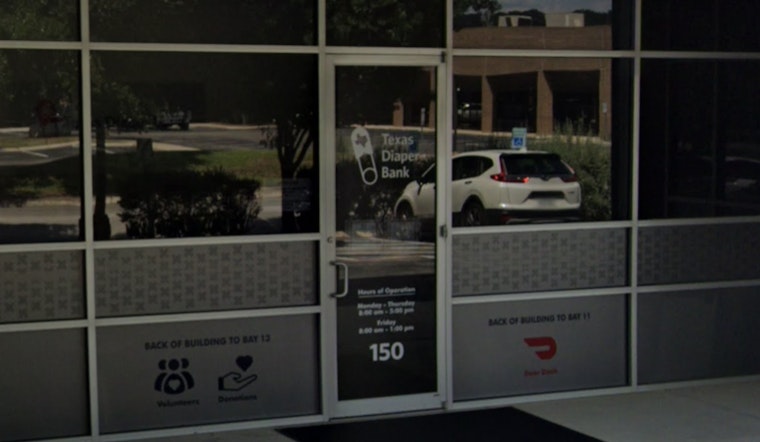
Karen Pittsley is 77 years old and lives in San Antonio, and she says a nonprofit diaper bank has been a godsend to her. Bob Imler, 79, spent two years rehabilitating after fracturing both his hip and upper femur, and he too found relief through the same organization's deliveries of incontinence supplies to his front door. Both are clients of the Texas Diaper Bank, whose Senior Care Essentials program has quietly become the fastest-growing part of an organization most people still associate with baby diapers.
The San Antonio nonprofit, founded in 1997 by ten local United Methodist churches, is now the only organization distributing adult incontinence products anywhere in Texas, and one of just 36 nationwide, according to reporting by the San Antonio Express-News. That national scarcity tracks with figures from the National Diaper Bank Network, which counts an estimated 25 million American adults living with temporary or chronic urinary incontinence, a population the network says makes adult absorbent products the fastest-growing segment of the hygienic diaper market. Of its member banks nationwide, the network says only 36 run dedicated adult incontinence distribution programs at all.
The Texas Diaper Bank has now started handing out adult diapers at all 12 of San Antonio's comprehensive senior centers, funded in part by nearly $64,000 from the city, the Express-News reports. That city funding runs through September 30, 2027, with an option to renew for another year. Part-time senior centers and senior nutrition program centers are not included in the arrangement, per the paper's reporting.
A Program That Outgrew Its Budget
Senior Care Essentials is the diaper bank's most expensive program to run, and, according to the organization, it remains its most underfunded despite being its fastest-growing. The program has distributed more than 700,000 adult diapers and 375,000 adult wipes to older adults across 13 South Central Texas counties since it launched, according to the Texas Diaper Bank, and it has helped more than 40,000 seniors in total, per the Express-News. Eligible clients must be 60 or older and live in Bexar, Atascosa, Bandera, Comal, Frio, Gillespie, Guadalupe, Karnes, Kendall, Kerr, McMullen, Medina or Wilson counties, and services are provided free regardless of income.
Even with that reach, the paper reports 224 older adults are currently waiting for services, a number diaper bank chief of advancement and programs Lexi Bachran confirmed. Unmanaged incontinence can cost seniors on fixed incomes between $120 and $150 a month out-of-pocket when insurance doesn't cover it, according to a GuideStar organizational profile of the nonprofit, while the Express-News reports adult diapers and incontinence products can run more than $200 a month. That gap exists largely because Medicare does not cover incontinence supplies or adult diapers, a structural exclusion that guidance from Aeroflow Urology confirms, though Texas Medicaid does cover adult briefs, pull-ups and underpads for low-income beneficiaries who can document medical necessity with a doctor's prescription.
Growing Need in a Rapidly Aging County
The poverty rate among older adults in San Antonio climbed from 13.3% to nearly 15% between 2015 and 2024, according to the city's Department of Human Services, as cited by the Express-News. Roughly 14% of Bexar County's population is 65 or older, per the U.S. Census Bureau, which translates to more than 300,000 residents based on 2025 population estimates. Texas's 2023 elimination of the 6.25% sales tax on adult and child diapers under Senate Bill 379 offered some relief, as Avalara reported at the time, but that tax break does little to offset the ongoing monthly cost burden seniors describe.
Pittsley said the diaper bank helped restore her dignity. Imler, who learned about the program through a rehabilitation program and has received its services for about a year and a half, said incontinence can be a traumatic and humiliating experience, and he credits the nonprofit with helping him regain what he called a modicum of dignity. Bachran said the diaper bank's work helps seniors attend activities without fear and anxiety, addressing a dynamic the organization says keeps some older adults isolated out of embarrassment about incontinence.
Volunteers and City Infrastructure Behind the Push
The diaper bank operates out of a 30,000-square-foot warehouse on San Antonio's northwest side with a staff of just 15. Volunteers from Zachry Corp. recently repackaged 48,500 diapers and 1,720 adult pull-ups for distribution, according to the Express-News. Travis Mross, president of Zachry Construction, serves as the diaper bank's board president; program manager of direct services Erika Aranguiz and board member Tom Grothues were also named in the paper's coverage.
The expansion into senior centers builds on the city's broader push to modernize its senior services network, which grew to 12 comprehensive centers in November 2024 with the opening of the $14.2 million Barbara Robinette Community & Senior Center, as Community Impact reported. Those centers operate 12 hours a day, Monday through Thursday, offering meals, arts and crafts, exercise classes, field trips and technology classes, and their Healthy Eating Aging Living nutrition programs provide one daily meal meeting nutrition requirements. Transportation is available for individuals living within a 5-mile radius of a center. San Antonio has continued investing in that infrastructure, most recently with the Inner City TIRZ board's approval of up to $46 million in debt financing for a new Eastside senior center that will replace a smaller, leased facility on WW White Road.
Advocates Call for a Shift in Priorities
Jason Aleman, senior vice president of community impact at United Way San Antonio and Bexar County, and Adriana Rocha Garcia, a former San Antonio city council member who now leads the Center for Health Empowerment in South Texas, both spoke to the program's significance in the Express-News report. Rocha Garcia said society should stop acting as if seniors do not matter.
The diaper bank also receives state funding for childcare products for children between zero and 36 months, reflecting what the organization describes as a broader Texas emphasis on supporting the beginning of life over its end. That imbalance is echoed nationally: the National Diaper Bank Network found 21% of Texas infants and toddlers live below the federal poverty line, with monthly baby diaper costs consuming 26% of the average $312 monthly TANF benefit for a family of three, even though 89% of diaper bank recipient families are working households. The Texas Diaper Bank allows clients to receive children's diapers, menstrual products or adult incontinence products on a quarterly basis, serving individuals and families across San Antonio and nearby counties free of charge regardless of income.





