

























































Thirteen-year-old Savanna Martinez has seizures every day, including sudden drop seizures that can knock her to the ground without warning. On Sunday, a San Antonio poetry collective and a local music venue turned their weekly open mic into a fundraiser to help her family afford a specialized service dog that could cost as much as $40,000.
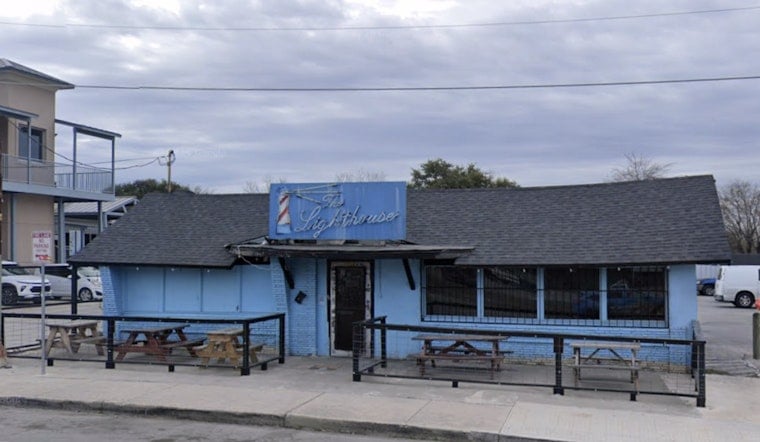
The event was hosted by the Zona San Anto Poetry Collective and The Lighthouse Lounge at 1016 Cincinnati Ave, which gave up its regular Lakeside Poetry open mic session for the cause, according to Street Talk Magazine. Organizers offered food and raffles alongside performances, with proceeds going toward the family's fundraising campaign. As reported by WOAI, the family held the fundraiser on Sunday specifically to raise money for the service dog.
Savanna has been unable to attend traditional school for three years because of her condition and is homeschooled instead, per Street Talk Magazine's reporting. Her seizures are severe enough that her medical team is also managing her medications while preparing her for a pending surgical procedure to receive a medical implant, according to a Facebook post from the family shared through a video appeal for support.
A Financial Catch-22 for a Working Mother
Savanna's mother, Lorie Revilla-Ramirez, is a single working mother who maintains health insurance and works to provide for her family. But she earns too much to qualify for assistance programs, even though the $40,000 cost of a specialized service dog remains out of reach, the same Facebook post explains. It is a systemic gap that often forces middle-income working families toward public fundraising, since assistance program grants frequently set strict income caps that exclude households even when specialized medical equipment or service animals are financially unreachable.
The price tag the family is chasing sits squarely within industry norms. Professionally trained seizure service dogs generally cost between $15,000 and $40,000, and can run as high as $50,000 depending on the breed and the extent of specialized task training required, according to Medical News Today. Those costs stem from two to three years of expert breeding, intensive task training, and individualized handler integration before a dog is ever paired with its handler.
What a Seizure Service Dog Actually Does
Seizure response dogs are not simply companions. They are trained to perform specific physical tasks during and after a seizure, such as positioning their bodies to cushion a falling handler, lying next to the person during a seizure to prevent injury, barking to summon caregivers, or activating emergency medical alert devices, according to the Epilepsy Foundation.
That distinction matters legally. Under Titles II and III of the Americans with Disabilities Act, service animals are strictly defined as dogs individually trained to do work or perform tasks for a person with a disability, explicitly including alerting and protecting someone during a seizure, while emotional support animals do not qualify for the same protections, per the U.S. Department of Justice. That federal designation is what allows a properly trained service dog to legally accompany a handler like Savanna into schools, businesses, and public transit.
Epilepsy's Reach Beyond One Family
Savanna's case reflects a broader national pattern. Roughly 3 million adults and nearly 470,000 children in the United States live with active epilepsy, representing about 1.2% of the population, according to the CDC. A 2025 geospatial study analyzing 4.8 million Medicare beneficiaries also identified elevated regional clusters of epilepsy across parts of the American South, including East Texas, an area researchers designated part of an “epilepsy belt,” as reported by Newsweek.
Federal health survey data shows that people living with epilepsy report significantly lower health-related quality of life and higher rates of disability than the general population, often facing social isolation and disruption to daily routines tied to driving restrictions, medication side effects, injury risks, and educational setbacks, the CDC has found. For Savanna, that disruption has already meant three years without a traditional classroom.
Similar grassroots efforts have surfaced elsewhere as families confront the gap between medical need and what insurance or assistance programs will cover. Hoodline has reported on Atlanta's 740-runner epilepsy fundraiser, while Houston-area charities have delivered wheelchair vans to families of children with severe neurological conditions. In San Antonio, Sunday's open mic was one more attempt by a local arts community to close that gap for one family, one raffle ticket at a time.





