

























































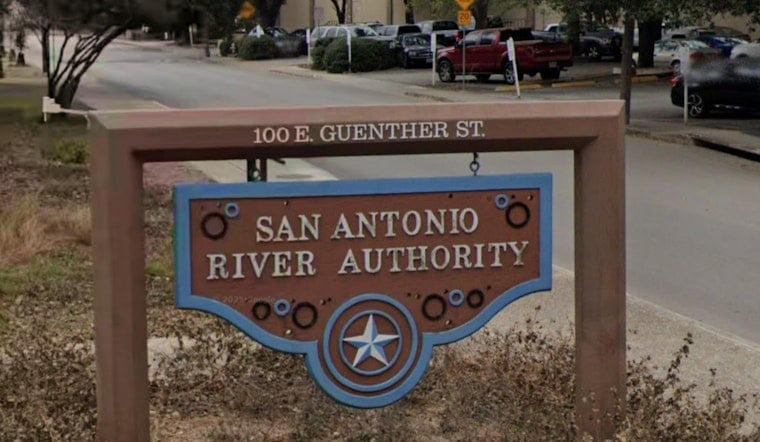
The San Antonio River Authority's board of directors has voted unanimously to move forward with a proposed tax rate of $0.01930 per $100 of property valuation for fiscal year 2027, a 5.46% increase that would push the agency to within striking distance of its statutory ceiling. The vote sets up a public hearing and final adoption next month, as the four-county agency leans on higher tax collections to fund an expanded flood warning network built in the aftermath of a deadly 2025 flash flood.
Under Chapter 8513 of the Texas Special District Local Laws Code, SARA's tax rate cannot legally exceed 2 cents per $100 of valuation, according to the San Antonio River Authority. The board's recommended rate, put forward by Rick Trefzer, would land at 96.5% of that cap, according to the San Antonio Report, which first reported on the board's action. It marks the second consecutive year the agency has raised rates, after increasing them from $0.01787 to $0.01830 in 2025, per the same outlet.
Flood Deaths Drove a $21 Million Mandate
The push for more revenue traces directly back to a flash flood at Beitel Creek near Loop 410 in June 2025 that killed 13 people and swept away 15 vehicles, according to the San Antonio Report's earlier reporting. In response, SARA entered into an interlocal agreement with Bexar County that year to build the NextGen Flood Warning System, a roughly $20 million initiative in Bexar County alone that made the river authority responsible for overseeing all flood gauges for both the county and the city of San Antonio, per the same outlet.
The system is designed to help first responders detect rising water and warn drivers before roads become impassable, targeting motorists who drive into flooded low-water crossings, the San Antonio Report reports. As part of that rollout, SARA expanded its SARiverFlood.org monitoring network across all four member counties and integrated real-time low-water crossing sensors directly into navigation apps like Waze and Google Maps, according to KSAT. The station's report notes the network now includes more than 200 low-water crossing monitors in Bexar County alone. The proposed new tax rate would generate $1.8 million more in annual revenue than the previous year, with the NextGen program set to receive the majority of proceeds from both the 2025 and proposed 2026 rate increases, per the San Antonio Report.
Falling Property Values Squeeze the Budget
SARA's push toward its rate cap comes as the tax base underneath it is shrinking rather than growing. The Bexar Central Appraisal District reported in April that existing residential property values dropped by 0.11% on average, contributing to a 1.3% decline in overall county property tax revenues — Bexar County's first property valuation drop in recent memory, according to the San Antonio Report. Board treasurer Trefzer said the river authority would lose almost $900,000 in revenue if it kept its current rate unchanged, per the seed reporting.
The pressure extends beyond SARA. Bexar County itself faced a $3.2 billion reduction in taxable property values and a projected multi-year deficit for fiscal year 2026-27 as revenues flatten and federal ARPA funds expire, according to KENS 5. The county avoided its own tax rate hike this cycle by freezing department hiring, the station reported. Compounding the squeeze, Texas Proposition 13, passed in late 2025, raised homestead exemptions to $140,000 and added more than $9 billion in state property tax exemptions in Bexar County alone, according to PropertyTaxes.Law.
Board Members Split Over the Increase
Not every board member is on board with the direction, even though the vote was unanimous. Derek Gaudlitz, who represents Wilson County on the river authority board, said he is not a fan of raising taxes and is very concerned about the increase, according to the San Antonio Report. Board members overall said the increase was necessary to avoid significant service cuts or cuts to future growth plans, the outlet reported.
Patrice Melancon said the proposed rate is the highest the river authority has ever had, while also saying the agency is doing more and providing more value than ever before, per the same report. Trefzer said the potential tax-revenue shortfall is not expected to hit in 2027 but could arise in 2030 and beyond, and he separately warned that tax revenue may eventually be insufficient to support current service levels. Under state law, special taxing units like river authorities can grow property tax collections up to 8% annually before triggering a voter-approval election, compared to a 3.5% cap for general cities and counties, according to the Texas Comptroller.
A Four-County Balancing Act
SARA's jurisdiction, created by the Texas Legislature in 1937, spans 3,658 square miles across Bexar, Wilson, Karnes, and Goliad counties and includes 39 flood-control dams, per the river authority. Its 12-member elected board includes six representatives from Bexar County and two each from Wilson, Karnes, and Goliad counties. That structure means rural directors like Gaudlitz share governance and tax exposure even though Bexar County drives most of the flood-technology spending.
The proposed $411.2 million budget also includes $154.8 million for major capital projects spanning flood control, conservation, creeks and trails maintenance, parks, and infrastructure and utility improvements, according to the San Antonio Report. Among those projects is SARA's new two-story, 57,000-square-foot headquarters under construction at 201 W. Sheridan St., expected to be complete in 2027. The agency acquired the Southtown property from the Alamo Colleges District in December 2019 for $4.15 million in cash plus a land exchange, with state filings estimating total construction costs at $35.5 million, according to the San Antonio Report.
The proposed rate would produce $52.5 million in total revenue for the agency, whose funding also comes from water rights, leases, and administrative and operating fees in addition to tax dollars, per the seed reporting. SARA's board will hold its first public hearing on the proposed tax rate and vote to adopt the rate and 2027 budget on September 16.





