

























































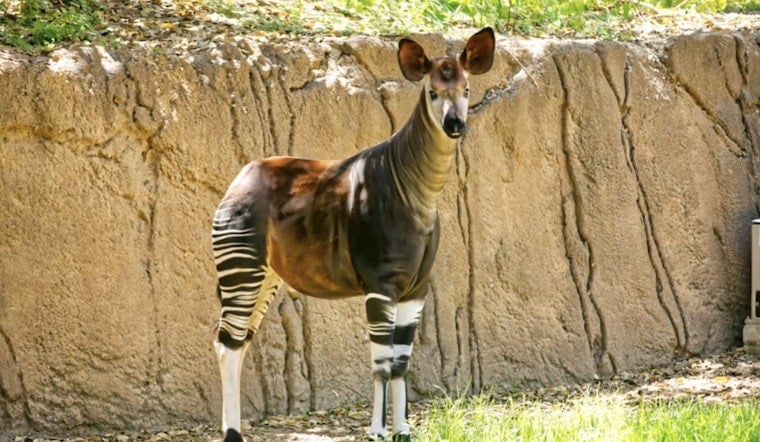
The San Antonio Zoo is mourning the death of Epulu, a male okapi who experienced colic symptoms after spending more than a decade as a fixture of the park's African wildlife programs. Zoo officials announced his death this week, describing him as an animal who played an important role in conservation efforts for his endangered species.
Epulu arrived at the San Antonio Zoo in December 2014 as a 2-year-old, transferred from the Sedgwick County Zoo in Kansas alongside a female okapi named Ludimi from the San Diego Zoo, according to the San Antonio Express-News. The pair was brought together to form a new breeding match in support of species preservation efforts for the rare, reclusive animal. His death, first reported by WOAI, comes after colic symptoms that the zoo said it is still processing as a community.
That breeding effort paid off in September 2023, when Epulu and Ludimi successfully sired an okapi calf named Gates, a milestone the Express-News covered at the time as a significant captive breeding success. Okapis have a 14- to 15-month gestation period, making births in managed care relatively rare, and Gates' arrival was treated as a genuine win for the species' future in North America.
A Surprise Twist In Gates' Story
Gates' early life came with its own twist. In March 2025, San Antonio Zoo veterinary staff revealed that the calf, initially thought to be male at birth, was actually female after a follow-up medical exam at nearly 1.5 years old, according to KENS 5. Zoo staff noted that an energetic initial newborn exam had made early sex determination difficult. Then in October 2025, the zoo announced that Gates would be relocated to another AZA-accredited institution as part of the Okapi Species Survival Plan, a move meant to foster genetic diversity across the managed population, per a San Antonio Zoo announcement.
That transfer means Epulu's genetic line continues to shape breeding decisions even after his death. Species survival plans routinely move animals between accredited zoos to optimize breeding matches, and Gates' relocation was already underway before news of her father's death broke.
Why Every Okapi Counts
The scale of the loss becomes clearer when set against the numbers. As of March 2025, the managed North American okapi population under the AZA Species Survival Plan totaled just 88 animals spread across 27 accredited facilities, the same KENS 5 report noted. With numbers that small, every mature breeding male carries outsized conservation value, which is part of why Epulu's death registers beyond San Antonio.
Colic and gastrointestinal complications are known to present serious veterinary management challenges in giraffids and other large ruminants, largely because of their complex, multi-chambered digestive systems, according to research published on PMC. Digestive tract disorders in captive ruminants can escalate quickly, and prompt medical intervention is often critical once symptoms appear.
An Endangered Species Far From Home
The okapi is officially classified as Endangered on the IUCN Red List, with wild populations in the Democratic Republic of the Congo primarily threatened by illegal mining, logging, deforestation, and bushmeat poaching, according to KSAT. UNESCO estimates put the wild population as low as 10,000 to 30,000 individuals, following an estimated drop of more than 40 percent between 1995 and 2007, the Express-News has reported.
Okapis were unknown to Western scientists until 1901 and remain the only living relative of the giraffe, earning them the nickname the African Unicorn, per KSAT. Epulu lived in the zoo's Africa Live! exhibit, a habitat area showcasing African rainforest and savanna wildlife where generations of San Antonio visitors came to learn about okapi conservation.
The zoo has not yet released the exact findings from Epulu's forthcoming necropsy report, and it remains unclear whether San Antonio will receive another male okapi through the Species Survival Plan to continue breeding with Ludimi. For now, the zoo says it is simply mourning the loss of an animal whose decade-plus in San Antonio helped sustain one of conservation's smallest and most closely managed populations.





