

























































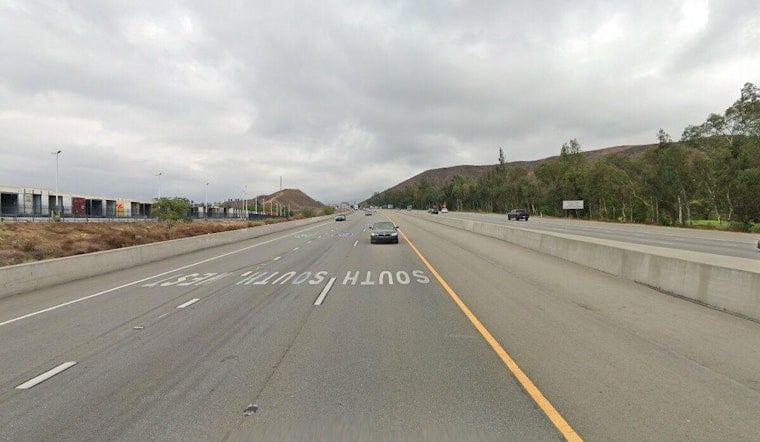
San Bernardino no longer has to wait on the state to clear homeless encampments off its freeways. Under a new agreement with Caltrans, city crews can now step directly onto state-owned right-of-way along the 10, 215 and 210 freeways, plus Highway 18, Route 66 and part of Highway 330, and the city stands to be reimbursed up to $400,000 for the work.
The deal, known as an Encampment Delegated Maintenance Agreement, was approved by the San Bernardino City Council and signed by Caltrans, according to the Daily Bulletin. City Council approval came June 3 and Caltrans signed off on July 17, according to IE Business Daily, which detailed the exact funding cap and the specific freeway corridors now covered by the agreement. Ontario struck a parallel deal covering Caltrans property along the 10, 15 and 60 freeways, according to the Daily Bulletin's reporting.
Governor Gavin Newsom announced the additions of Ontario and San Bernardino, along with San Diego, to the state's roster of partner cities. That expansion pushed the Encampment Delegated Maintenance Agreement program to 13 participating cities statewide, according to the Santa Monica Daily Press. Caltrans has now signed similar agreements with San Diego, the city and county of San Francisco, Claremont, Commerce, Fresno, Paramount, Riverside, Santa Ana, Santa Fe Springs, San Jose and Santa Monica, per the Daily Bulletin.
Why Cities Needed the State's Sign-Off in the First Place
Before agreements like this existed, local public works crews faced barriers to addressing encampments on Caltrans-owned freeway right-of-way, which could slow down cleanups. San Bernardino City Manager Dan Bell said the new arrangement removes that bottleneck entirely. Local officials can now enter Caltrans property faster without calling for permission, Bell said, according to the Daily Bulletin. He added in an interview that the partnership will help make cleanups happen sooner by eliminating access issues.
The agreements also help offset the cost of the work itself. Encampment Delegated Maintenance Agreements mitigate city cleanup costs by reimbursing cities and opening up previously unavailable Caltrans property, per the Daily Bulletin's reporting. Under San Bernardino's contract, covered work includes encampment removal, litter and debris collection, vegetation management and graffiti abatement.
A Statewide Push Years in the Making
San Bernardino's arrangement fits into a much larger cleanup campaign. Caltrans maintenance crews have removed nearly 26,500 encampments statewide and hauled away approximately 457,000 cubic yards of litter and debris from state rights-of-way since July 2021, according to the Daily Bulletin. In San Francisco, Caltrans crews removed 81 encampments and collected more than 1,150 cubic yards of waste and debris from state rights-of-way since July 1, 2024, according to Cal OES.
Newsom framed the new partnerships as proof that state and local coordination can produce results. State investments paired with local coordination are helping communities create safer, healthier places, Newsom said, per the Daily Bulletin, while urging local governments to remove encampments, increase housing construction and promote mental health service reform. He also said the partnerships must continue delivering results by keeping roadways clean and addressing homelessness. Caltrans has prioritized encampments that threaten public health and safety in its cleanup operations, according to Newsom's July news release cited by the Daily Bulletin.
San Bernardino Mayor Stresses Services, Not Just Sweeps
San Bernardino Mayor Helen Tran cast the agreement as more than a cleanup contract. Residents deserve clean, safe freeway corridors, and people experiencing homelessness deserve connections to services supporting stable housing, Tran said, according to the Daily Bulletin. She added that the partnership combines compassionate outreach with timely action to restore public spaces. The city says it will prioritize providing resources to people living in encampments as they're cleared, and San Bernardino will partner with the Center for Employment Opportunity to offer workforce assistance to people reentering the job market, per the Daily Bulletin.
That emphasis on services comes amid homelessness concerns in the region. The City of San Bernardino's 2025 count recorded 1,535 unhoused residents, according to San Bernardino County figures reported by Hoodline.
The Daily Bulletin also cited HUD data on federal homelessness reductions. California reduced unsheltered homelessness by 6.8%, or 8,391 people, in 2025 compared with 2024, according to that HUD data.
Safety Concerns and the Money Behind Outreach
The push for faster freeway cleanups follows a violent incident that put a spotlight on conditions at local encampments. A fatal shooting on August 16 at a homeless encampment near State Route 210 and Del Rosa Avenue in San Bernardino left one person dead and led to two arrests, Hoodline previously reported. The case underscored the kind of public safety risk that officials cite when prioritizing rapid clearings of freeway-adjacent camps.
Funding for the outreach side of the equation is also flowing separately from the cleanup contracts. San Bernardino County and its regional Continuum of Care were awarded $10 million in California Homeless Housing, Assistance and Prevention Round 6 grant funds in March to support permanent housing conversion, street outreach and case management, according to Community Forward Redlands. That money is meant to give outreach workers something to offer displaced residents before crews move in to clear a site — though how effectively those dollars translate into stable housing for people cleared from freeway corridors remains an open question for local officials to track.
A 2024 U.S. Supreme Court ruling is part of the legal backdrop for encampment work. Newsom's 2024 executive order is also discussed in guidance about encampment work, according to Homebase.





