

























































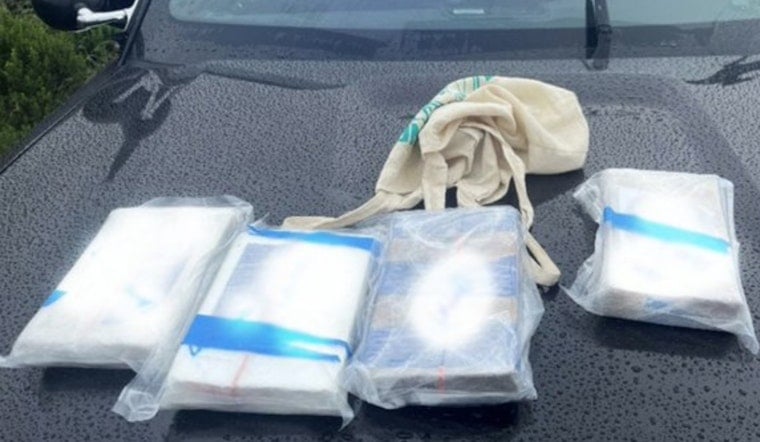
A routine traffic stop in San Diego County turned into a major narcotics bust after Sheriff's detectives seized 3 kilograms of fentanyl, 1 kilogram of cocaine, and a stack of cash, according to the San Diego Sheriff's Office. A K9 alert and follow-up detective work uncovered the stash, leading to the driver's arrest on charges of narcotics transportation and sales.
The bust was announced in a post from the San Diego Sheriff, run out of the Sheriff's headquarters at 9621 Ridgehaven Court in San Diego. The department's post included an image of U.S. currency banknotes — including visible $1, $20, and $100 bills — sitting beside a computer keyboard, though the total cash amount was not specified. The Sheriff's Office said the seizure prevented overdoses and saved lives across San Diego County, though it did not detail the specific location of the stop, the driver's identity, or bail status.
Recently, Sheriff's Detectives seized 3 kilos of fentanyl, 1 kilo of cocaine, and cash during what began as a routine traffic stop.
— San Diego Sheriff (@SDSheriff) August 29, 2026
A K9 alert and sharp detective work uncovered the deadly stash, leading to the driver’s arrest for narcotics transportation and sales.
This… pic.twitter.com/6AXAfrxCmN
Enough Fentanyl for 1.5 Million Potentially Lethal Doses
The scale of the seizure is staggering when measured against how little fentanyl it takes to kill. Two milligrams of fentanyl is considered a potentially lethal dose, depending on a person's body size and tolerance, according to the Drug Enforcement Administration, meaning the 3 kilograms recovered in this stop represent roughly 1.5 million potentially fatal doses.
That volume lands amid an ongoing local overdose crisis. San Diego County recorded 394 fentanyl overdose deaths in 2025, following a 2024 report that logged 945 total drug overdose deaths countywide — a 21 percent decrease from 1,203 fatalities in 2023, per the County of San Diego. The county has responded on the public health side too, expanding its Overdose Surveillance and Response program last August to distribute free naloxone kits and fentanyl test strips at locations countywide, according to the County News Center.
Felony Charges Carry Mandatory Prison Time
The driver arrested in the stop faces a felony under California Health and Safety Code § 11352, which covers transporting or possessing controlled substances like fentanyl or cocaine for sale and carries a baseline sentence of three, four, or five years in state prison, according to the Shouse Law Group. But the combined 4-kilogram haul — 3 kilograms of fentanyl and 1 kilogram of cocaine — pushes potential punishment well beyond that baseline.
Under Health and Safety Code § 11370.4(a), drug commerce convictions involving more than 1 kilogram of illicit substances trigger an additional three-year prison enhancement, while quantities exceeding 4 kilograms add five consecutive years, per Eisner Gorin LLP. Compounding that exposure, California reforms enacted following Proposition 36 in 2025 now require mandatory state prison sentences — rather than county jail diversion — for those convicted of selling or transporting heavy controlled substances such as fentanyl or cocaine, according to the Law Offices of David Chesley.
Part of a Larger Interdiction Pattern
San Diego County's position along major transit corridors has made vehicle stops a frontline tool against trafficking. Data from the American Immigration Council analyzing federal records through 2024 found that more than 81 percent of individuals caught smuggling fentanyl at southwest border ports of entry were U.S. citizens, with highway traffic stops serving as a primary method of domestic interdiction. Separately, U.S. Customs and Border Protection reported that ports of entry in the San Diego region seized nearly 33,000 pounds of illegal narcotics valued at $111 million during a single fiscal quarter in late 2025, according to the Department of Homeland Security.
San Diego County Sheriff Kelly A. Martinez has said the department's strategy against fentanyl pairs aggressive traffic and interdiction enforcement against traffickers with public education and harm reduction, per remarks shared by the Drug Enforcement Administration. That approach echoes state-level trends: Governor Gavin Newsom reported in March that law enforcement traffic stops and interdiction operations across California seized more than 25 million deadly doses of fentanyl over a two-year period, according to the Office of Governor Gavin Newsom.
This stop follows a string of similar busts across the region in recent months. In August, San Ysidro officers found fentanyl hidden in a moped worth an estimated $238,000, while similar traffic-stop busts have unfolded elsewhere in California, including in Oakland and San Bruno. Key details in this latest case remain unresolved, including the exact location of the stop, the driver's identity and bail status, whether state or federal prosecutors will handle the case, and whether the driver was tied to a larger trafficking operation.





