

























































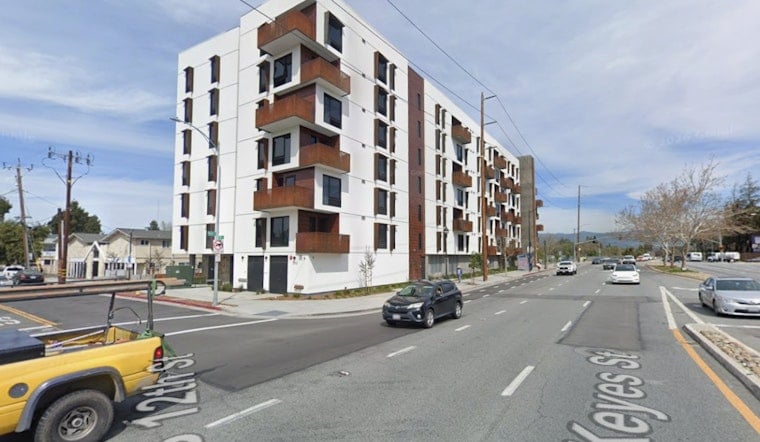
San Jose's Housing Department oversees roughly 25,000 affordable apartments across 220 properties and manages a $745 million loan portfolio, but for a stretch during a recent audit period, the city had just one inspector responsible for checking on all of it. That detail, along with findings that some tenants exceeded income limits while some property owners fell far behind on loan payments, is at the center of a new city audit that landed before the San Jose City Council this month.
The audit, titled "Affordable Multifamily Housing Loan Portfolio: Clearer Goals and Stronger Oversight Would Improve Monitoring", was formally issued by the City of San Jose on June 5. City Auditor Joseph Rios presented the findings to the council on August 18, telling members his office examined San Jose's affordable housing developments after residents identified housing affordability as a key concern, according to San José Spotlight. The council voted that same day to accept the auditor's report and its recommendations.
Rios said resource constraints and the absence of standard processes were the primary reasons behind incomplete reviews, and he identified strategic planning and risk-rating as top priorities for the department going forward. The Housing Department completed only two-thirds of its annual compliance reviews in 2024 and 2025, per the outlet's reporting, and had built up a three-month backlog of property inspections.
One Inspector, Tens of Thousands of Homes
The staffing numbers behind those gaps are stark. During the audit period, the department had just one inspector covering tens of thousands of homes, even though the agency overall runs on an annual budget of about $119 million and 112 full-time employees administering federal, state, and local housing funds, according to a description of the department's capacity published by BeBee. The audit also flagged vacancies and high employee turnover as ongoing problems within the department.
Those staffing shortfalls translated into repeated compliance failures at the property level. The audit found that a quarter of properties inspected in 2024 and 2025 required reinspection three or more times, and one property was reexamined eight times before it finally received a violation notice. Auditors also found that some affordable housing buildings had repeated code violations that went unresolved for extended periods.
Income Limits and an Unpaid $7.6 Million Loan
Beyond the inspection backlog, auditors sampled nearly 880 apartments across 10 properties and found 110 sampled households exceeded their apartment's income limits. Overall, 13% of households in the sample slightly exceeded local income restrictions and 5% surpassed federal income thresholds, figures Rios presented to the council. Rios also noted that federal and state governments may have overlapping oversight responsibilities depending on how a given property was financed.
The financial stakes extend beyond compliance paperwork. One property owner owed San Jose $7.6 million in 2025, while another paid the city only about $1,700 that same year, illustrating a wide gap in how developers have kept up with repaying their affordable housing loans. Some developers have not repaid their loans at all, the audit found, and reduced income at struggling properties has further diminished their ability to pay the city back. Separately, one affordable housing property could have collected $114,000 more per year, and other properties lost potential rental income because tenants were charged below the amounts allowed under their agreements.
City Says Fixes Are Already Underway
Housing Director Erik Soliván accepted the auditor's findings at the meeting last Tuesday and told the council his department is developing an automated rent-roll portal, which would show where affordable or subsidized housing is available in San Jose, along with a risk-rating model to help staff prioritize which properties need review first. Soliván said property managers, not the city, are ultimately responsible for acting when a household's income rises above or falls below program limits — the Housing Department itself has no ability to take action on those households directly, nor can it issue fines or citations. The department also lacks a clear process for escalating problems to the city's code enforcement team, according to the audit.
Councilmember Pamela Campos asked housing staff to return to the council once they have developed a formal policy for handling tenants who fall above or below income limits. Sarah Fields, a department representative, said the Housing Department is already implementing the audit's recommendations, which also include updating the department's outdated software — auditors said the current systems hinder loan and property tracking — and developing a strategic affordable housing oversight plan that defines staff roles and goals.
A Problem San Jose Has Flagged Before
This is not the first time San Jose's own watchdogs have raised these concerns. The city last formally audited its affordable housing portfolio in 2014, and that audit turned up similar findings to this year's report. A separate 2017 city audit found that enforcement of San Jose's Apartment Rent Ordinance was severely hindered by insufficient staffing and complex rules such as rent banking, according to San Jose Inside. More recently, an April 2024 report from the California State Auditor found that San Jose failed to consistently establish performance measures or track revenues and expenditures for its housing and homelessness programs.
Not everyone views the audit's headline concerns the same way. Sandy Perry said building-code oversight problems are more impactful for apartment residents than households exceeding income limits, a distinction that speaks to what tenant advocates see as the more urgent priority: livable conditions over technical income compliance.
Growth Mandates Add Pressure
The oversight gaps come as San Jose faces state-mandated growth requirements that will keep expanding its housing stock — and its administrative workload — for years to come. The city's 2023–2031 Regional Housing Needs Allocation, certified by state housing officials in January 2024, requires San Jose to plan for 62,200 new residential units across various income tiers over eight years. Meanwhile, the city's approach to funding affordable housing has shifted: in June 2025 the council adopted a $5.5 billion operating budget that reallocated Measure E real estate transfer tax revenue away from long-term affordable housing construction toward short-term homeless shelter operations, according to reporting cited by San José Spotlight. In February, the city separately allocated up to $11.2 million to master-lease 197 vacant apartments in a struggling downtown luxury tower under a new voucher program aimed at middle-income workers and municipal employees.
As San Jose adds units through both large developments and smaller infill projects — the city permitted 2,922 accessory dwelling units between 2017 and 2024, with annual permits climbing from 92 to 558 over that span, according to SV@Home — the audit's authors made clear that the department's capacity to track what it already owns and manages has not kept pace. Whether the promised rent-roll portal and risk-rating model close that gap will likely be the subject of the follow-up the council has already requested.



