

























































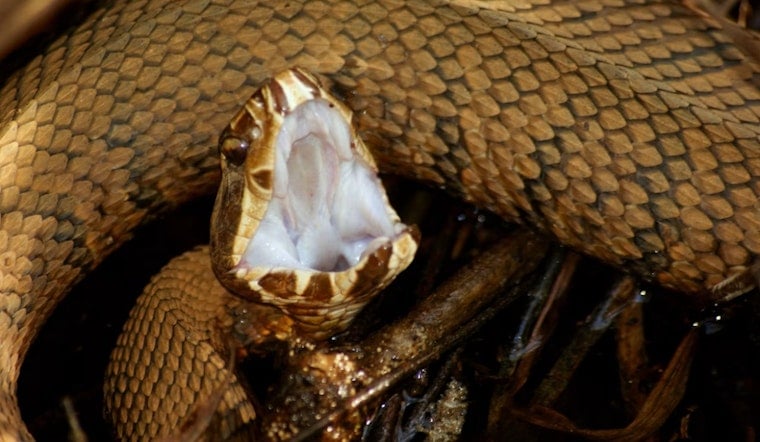
Jeremy Sons, the 46-year-old North Texan known to thousands as the Denton Spider-Man, is recovering in a Fort Worth intensive care unit after a venomous cottonmouth snake bit him twice while he searched for animals on his rural property. His right arm swelled so severely that doctors gave him 30 vials of antivenom and performed emergency surgery in the middle of the night, with another operation still to come once the swelling subsides.
Sons was reaching under a log on his land when the snake struck, according to FOX 4 News, which reported he pulled the snake off himself after being bitten twice. He underwent emergency surgery at around two or three in the morning, and the station reported his doctor considered his physical reaction one of the worst they had seen from a snake bite. Sons is now recovering at a Fort Worth ICU, where his arm must be kept elevated, per the same report.
Despite the ordeal, Sons insisted the snake wasn't to blame, telling the station the animal was not at fault for biting him. That instinct toward compassion for animals, even the one that nearly took his arm, tracks with the life Sons has built since he first put on a Spider-Man costume in 2020.
From Pandemic Morale-Booster to Sanctuary Founder
Sons began dressing as Spider-Man that year to lift spirits during the COVID-19 lockdowns, originally donning the suit for a trip to a Denton Sam's Club after his local fitness coaching gym was shuttered by statewide pandemic restrictions, according to the Dallas Observer. The persona grew into something bigger: Sons has since performed at more than 2,000 free events and visited children in hospitals across North Texas in costume, per the outlet's earlier reporting. He also organized a toy drive for children in Uvalde following the 2022 school shooting there.
That same generosity carried into the sanctuary he and his wife now run. Sons operates Clear Creek Adventure Ranch Rescue & Education, an accredited 501(c)(3) nonprofit at 899 John George Lane in Sanger that shelters more than 70 rescued and special-needs animals, including kangaroos, coatimundis, emus and handicapped livestock, according to the organization's own account of its mission. The ranch also offers private educational tours where visitors can bottle-feed baby kangaroos and meet the rescued animals.
A Second Health Crisis in Four Months
The snakebite is not Sons' first brush with a medical emergency this year. Four months earlier, in April, he underwent emergency surgery and was hospitalized for severe sepsis caused by a kidney stone infection, according to the Uvalde Leader-News, which had covered his earlier visit to the city. That earlier crisis means Sons and his family are now confronting a second life-threatening health emergency within the same year, compounding the strain on both his household and the sanctuary that depends on him.
Why the Bite Was So Severe
Texas is home to 15 venomous snake species and subspecies, including the Western cottonmouth, but the state averages only one to two fatal snakebites per year out of roughly 7,000 venomous bites recorded annually nationwide, according to the Texas Parks & Wildlife Department. Cottonmouths typically average around 3.5 feet in length and are found mostly in sluggish waterways and wooded bottomlands across eastern and central Texas, the department notes.
What makes cottonmouth bites so dangerous isn't a neurological attack but a chemical one. The venom is heavily cytotoxic, containing enzymes such as phospholipase A2 and metalloproteinases that break down cellular membranes and disrupt tissue structures, triggering the kind of localized necrosis and severe edema that Sons experienced, according to research published by the National Center for Biotechnology Information's StatPearls resource. Antivenom halts the venom's progression through the body but does not reverse tissue damage that has already occurred, per guidance from the University of Utah Health Poison Control Center.
The scale of Sons' treatment underscores just how serious his case was. Clinical protocols for North American pit viper envenomations typically call for an initial loading dose of just 4 to 6 vials of antivenom such as CroFab or Anavip, making the 30 vials Sons received an unusually large dose reserved for the most critical envenomations, according to the University of Utah Health Poison Control Center's guidance.
The Steep Cost of Surviving a Snakebite
Beyond the physical toll, severe snakebites carry a brutal financial toll. A 2025 cost analysis using North American Snakebite Registry data found that acute pit viper envenomation treatment averages $31,343 per patient, with antivenom accounting for roughly 72% of total hospital charges, according to research published on PubMed. Given that antivenom can cost several thousand dollars per vial, a treatment course involving 30 vials can push hospital billing toward six figures.
Doctors also face a delicate balancing act when deciding whether to operate. Medical toxicology research cautions that surgical interventions like fasciotomies should be used carefully in snakebite cases, since unnecessary surgery carries complication rates as high as 31% and can worsen long-term disfigurement compared with aggressive antivenom therapy, according to research from SERB Pharmaceuticals. True compartment syndrome after a pit viper bite is considered rare, and toxicologists generally recommend confirming elevated pressure in the affected limb before operating, the research notes. Sons is expected to undergo another round of surgery once the swelling in his arm goes down.
Staying Alert on the Property
State wildlife officials warn that incidents like the one that injured Sons are exactly why caution matters around brush piles and fallen wood. The Texas Parks & Wildlife Department advises residents never to step over or reach under logs, rocks or brush piles without first inspecting the area or using a long tool, since venomous snakes frequently use such spots for shelter, thermoregulation and ambush hunting. A similar caution played out in April, when a snake bit a fourth-grader during a school field trip in nearby Tarrant County, an incident Hoodline previously covered that renewed regional conversation about snake safety.
For now, Sons remains in the Fort Worth ICU with his arm elevated as he awaits the next stage of his recovery. The man North Texas has come to know as a costumed source of comfort for sick children and grieving communities alike is, for the moment, the one in need of support.





