

























































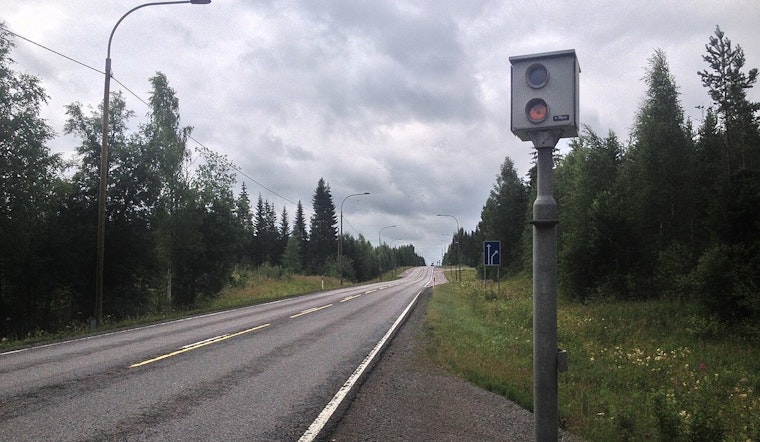
The Santa Ana City Council has voted 4-2 to formally ask California lawmakers to add the city to the state's speed camera pilot program, a push aimed at reining in speeding after one of the deadliest years on record for local streets. Santa Ana logged 3,487 collisions in 2025, including 1,943 injuries and 26 deaths, with unsafe speed cited as the main factor in many of those crashes. Council member Phil Bacerra, who introduced the proposal in April, has singled out Segerstrom Avenue as one of the city's most dangerous racing hotspots, arguing that police officers can't be deployed to every racing hotspot every night.
According to LAist, the vote fell along a familiar fault line, with council members Johnathan Ryan Hernandez and Benjamin Vazquez dissenting and council member Jessie Lopez absent from the meeting. If California ultimately approves Santa Ana's inclusion, the city's Public Works Department, rather than the police department, would oversee the camera data, and drivers caught speeding would only face citations after a 60-day warning period during which they'd receive warnings instead.
A Divided Council Weighs Surveillance Against Safety
Hernandez told LAist he worries Santa Ana could become a guinea pig in the pilot program, and said the effort's guardrails still need to be identified before he could get behind it. He said he wants more data before reconsidering the proposal.
Vazquez raised a different objection, telling LAist that camera use has tracked people down in California and across the country, a concern he tied to expanding surveillance in the city. Amezcua pushed back, saying the program would not be permanent if it failed, and noting that requesting funds from state and congressional representatives remains an option.
Phan, meanwhile, said in comments to LAist that the city must balance the pilot program's cost against what its budget can bear, calling the program incredibly expensive even before accounting for the fine reductions built into the state's guardrails.
Why Santa Ana Can't Just Install Cameras on Its Own
The hurdle facing Santa Ana is bureaucratic as much as financial. California's speed camera pilot was created under Assembly Bill 645, enacted in 2023, which originally limited the five-year program to six designated jurisdictions, according to CalMatters. Adding a new city requires separate legislation passed by the state Legislature and signed by the governor, the same process lawmakers used to add Malibu to the pilot in September 2024 following fatal crashes on Pacific Coast Highway.
Under AB 645, camera violations are civil penalties rather than criminal offenses and add no points to a driver's DMV record, per LADOT. Fines are tiered, running from $50 for driving 11 to 15 mph over the limit up to $500 for speeds of 100 mph or more, and the cameras capture only rear license plates. The pilot's guidelines also require cities to cut civil penalties by 50% for lower-income drivers earning up to 250% of the federal poverty line, and by 80% or offer community service for indigent drivers, according to Bike East Bay, which notes that any net revenue left over after covering program costs must go toward local traffic-calming infrastructure rather than a city's general fund.
An Old Wound Still Fresh in Santa Ana
Santa Ana isn't new to automated traffic enforcement, and its last attempt didn't end well. The city once ran red-light cameras at 15 intersections before the City Council voted unanimously in March 2014 to terminate its contract with vendor Redflex Traffic Systems, citing $500 fines that burdened residents and returned little to city coffers, as reported by Voice of OC. That program generated just $58,316 in net revenue over six years even as residents paid millions in fines, the outlet's report shows.
State legislators appear to have built in lessons from that history. Under Vehicle Code Section 22425, participating cities must remove a speed camera if it fails to produce a measurable reduction in excessive speeding or violations within 18 months of installation, according to LegiScan.
The Price of Getting In
Cost looms large in the council's calculus. Santa Ana estimates a 12-camera program would require roughly $2 million to launch, with annual operating costs running between $1.5 million and $2 million, per figures reported by LAist.
Those figures would land atop a municipal budget that already funds street safety work: the City Council adopted a $778.37 million budget for the 2025-2026 fiscal year in June 2025, setting aside $44.9 million for capital street repairs and $6.9 million specifically for traffic safety and engineering projects, according to the City of Santa Ana.
Looking to Other Cities' Numbers
Backers of the plan point to results elsewhere. San Francisco and Oakland have already set up speed cameras that reduced speeding at camera locations by more than 70%, per LAist's reporting. San Francisco's own rollout, which Hoodline covered as it unfolded, saw a 72% speeding drop at camera sites during its first six months, with the city issuing more than 260,000 warnings and citations and collecting $1.2 million in civil fines during its first month of active ticketing in August 2025.
National research backs the broader push, too. Federal Highway Administration data show automated speed cameras can cut overall traffic collisions on urban streets by up to 54%, while New York City saw a 73% drop in excessive speeding in camera zones, according to the City of San Jose. Statewide, California Highway Patrol data show more than 24,000 speed-related collisions in 2025, resulting in nearly 10,000 injuries, as reported by the Los Angeles Times.
What Happens if Sacramento Says Yes
If state lawmakers agree to add Santa Ana to the pilot, the city says it would launch a public information campaign before any cameras begin catching speeders. The proposal comes more than a year after Hoodline reported on a fatal high-speed South Main crash, one of the single-vehicle wrecks that have made speeding a persistent safety concern on Santa Ana's streets.





.jpg)