

























































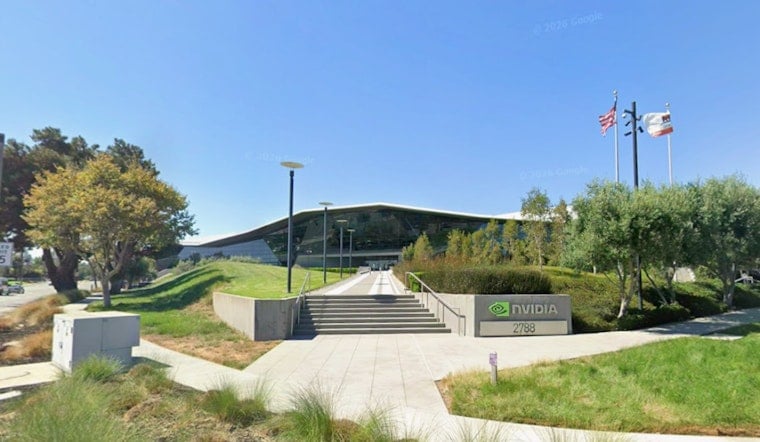
Nvidia posted revenue of $96.22 billion for the May-July quarter, blowing past Wall Street's expectations and cementing the Santa Clara chipmaker's position at the center of the AI infrastructure boom. Net income hit $59.69 billion for the period, up sharply from $26.42 billion a year earlier, while earnings came in at $2.46 per share compared with the $2.09 per share that analysts polled by FactSet had forecast.
The results, released yesterday, showed a company still accelerating rather than cooling off, according to The Boston Globe. Nvidia's data center segment, which includes the AI data centers and factories that power much of the current computing buildout, reported revenue of $89 billion, more than double what it generated a year earlier. CFO Colette Kress said the record figure was primarily driven by the shipment ramp of the company's Blackwell Ultra infrastructure, with hyperscale customer sales doubling year-over-year to $48.71 billion, according to Kiplinger.
Within that same division, revenue from AI clouds, industrial customers, and enterprise deployments — a category Nvidia calls ACIE — surged 138% year-over-year to $40.31 billion, the outlet reported, reflecting demand from AI startups, sovereign entities, and enterprise buyers rather than just the largest cloud giants. Hyperscalers such as Amazon, Meta and Google remain central to that business, but the diversification suggests Nvidia's customer base is broadening well beyond a handful of tech giants.
Huang Points to Compute as the New Revenue Engine
Nvidia CEO Jensen Huang said AI has reached its inflection point and that compute is revenue, a framing meant to underscore how directly chip shipments are now translating into company earnings. Huang also announced that Nvidia's next-generation Vera Rubin AI architecture has entered full production, following the Blackwell hardware line, according to Constellation Research. The transition marks the next phase of a product cadence that has kept customers upgrading their data centers on a near-annual basis.
Nvidia's edge computing segment, which covers chips that bring AI-powered features to computers, game consoles and robotics, reported revenue of $7.2 billion, up 27% from the same period last year. Operating expenses rose 55% to $8.41 billion as the company continues to scale its engineering and infrastructure operations to match demand.
Cash Flow Fuels Buybacks, Debt and Bay Area Expansion
The scale of Nvidia's profitability showed up clearly in its cash flow and capital return figures. The company returned approximately $26.0 billion to shareholders through stock repurchases and cash dividends during the quarter, leaving $99.0 billion remaining under its authorized buyback program, according to Stock Titan. Nvidia also generated $21.34 billion in free cash flow for the quarter while maintaining a 75.0% gross margin, per Seeking Alpha.
That cash generation hasn't stopped Nvidia from also taking on debt. During the first half of fiscal 2027, the company issued $25.0 billion in new senior notes, raising its total debt to $33.4 billion while ending the quarter with $56.6 billion in cash, cash equivalents and marketable debt securities, the outlet's report noted. Nvidia has also expanded its AI supply chain and capacity commitments to $279 billion, with total future commitments across manufacturing, cloud, data centers, equity investments and capital expenditures reaching $366 billion as of July 26.
Some of that capital has flowed directly into the Bay Area. Nvidia invested $2.0 billion in cloud infrastructure provider CoreWeave in January, a deal Hoodline reported established a joint buildout target of more than 5 gigawatts of AI computing capacity by 2030. In March, the company also expanded its own headquarters, acquiring four office buildings and an adjacent parking garage along San Tomas Expressway in Santa Clara — adding roughly 500,000 square feet to its home campus, as Hoodline detailed in its coverage of the real estate deal.
China Remains a Wildcard for Nvidia's Guidance
Nvidia's forecast for the current quarter calls for revenue of about $108 billion, above the $104.86 billion Wall Street analysts had projected and representing a potential 89% increase from the same period last year. Notably, the company said its outlook assumes no data center compute revenue from China at all, a reflection of the regulatory uncertainty still surrounding chip exports.
In January, the U.S. Department of Commerce revised its export regulations to allow case-by-case reviews of Nvidia H200 AI chip sales to approved Chinese buyers under a 25% surcharge, while maintaining a strict ban on cutting-edge Blackwell GPUs, according to the Bureau of Industry and Security. That policy split leaves Nvidia able to sell older-generation chips into China under scrutiny while its newest architecture stays off-limits, a constraint the company has chosen to model as zero revenue rather than assume any resolution.
Investors Weigh Blowout Numbers Against Boom Fatigue
Despite the headline numbers clearing expectations, Nvidia shares ended the regular trading session 1.6% lower and slipped another 0.3% in after-hours trading. The stock is still up 12.4% so far this year, and the company's market value has climbed from $400 billion at the end of 2022 to roughly $5.2 trillion, reflecting how central Nvidia's high-end chips have become as AI's preferred building blocks, per the Globe's reporting.
The muted stock reaction points to a broader unease among investors, who worry about a jarring comedown after a three-year boom even as Nvidia has regularly cleared analysts' expectations during that stretch. AI infrastructure spending remains strong, but AI development still faces skepticism about whether it will justify trillions of dollars in spending, and the wider industry continues to face pushback over data center expansion and potential widespread job losses.
Nvidia's own expansion plans in Silicon Valley have continued regardless of that skepticism. The company has recently explored a possible Santa Clara deal after CEO Jensen Huang met with Korean chip rival Rebellions, according to Hoodline's earlier report, part of a pattern of partnerships and infrastructure bets that have accompanied the chipmaker's rapid financial growth this year.





