

























































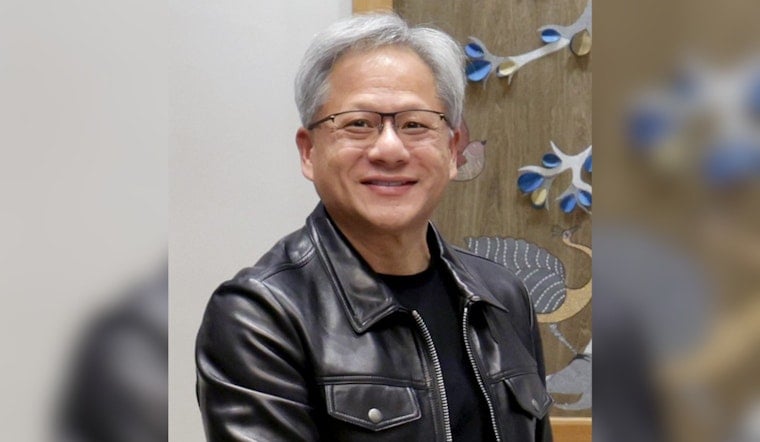
Nvidia CEO Jensen Huang sat down this week with Sunghyun Park, co-founder and chief executive of South Korean AI chip designer Rebellions, at Nvidia's headquarters in Santa Clara to discuss a potential collaboration between the two companies. The meeting, described by people familiar with the matter, covered a range of possible arrangements — from a technical partnership to a minority investment to an outright acquisition of Rebellions by Nvidia. The people said the details are not yet public.
The talks were first reported by Bloomberg, which noted Nvidia is working to maintain its central role in the artificial intelligence era even as it courts smaller, specialized rivals. Huang has led a far-reaching investment spree in recent years, using equity stakes and financing deals to lock down partners across the AI supply chain. Rebellions, for its part, has spent the last two years building itself into South Korea's answer to Nvidia's dominance in AI hardware.
A Santa Clara Meeting With High Stakes
Park holds a Ph.D. from MIT's Computer Science and Artificial Intelligence Laboratory and previously designed chips and quantitative trading systems at Intel Labs, SpaceX and Morgan Stanley, according to background reported by Chosunbiz. He returned to South Korea in late 2020 to found Rebellions with the explicit goal of building an alternative to Nvidia's GPU dominance, the outlet's reporting notes. That backstory gives the Santa Clara sit-down an unusual charge: the meeting brought Huang face to face with an engineer who spent years inside Silicon Valley's biggest names before setting out to challenge Nvidia's own turf.
Rebellions builds neural processing units — chips called ATOM and REBEL — that are tuned specifically for AI inference, the work of running trained models rather than building them. Those chips claim a two-to-three-times power efficiency advantage over traditional GPUs when running large language models in data centers, per research cited by Jon Peddie Research. Inference has overtaken model training as the primary driver of data center power consumption and operating expense, which is why Rebellions' energy-efficient approach has drawn interest even from a company as dominant in AI training as Nvidia.
Rebellions' Rapid Rise Backed by Seoul
Rebellions' momentum has been building for months. In March, the company closed a pre-IPO funding round that grew to 640 billion won — about $400 million — lifting its valuation to as much as 3.4 trillion won, or roughly $2.6 billion, as reported by MK News. The round was backed by South Korea's National Growth Fund as part of the country's national push, sometimes called the “K-Nvidia” initiative, to build domestic semiconductor independence.
That same month, South Korea's Financial Services Commission named Rebellions the first direct equity investment target of its 15 trillion won Advanced Strategic Industries Fund, part of a state program aiming to make the country a top-three global AI power, MK News reported. The company had already become South Korea's first AI chip unicorn in December 2024, when it merged with SK Telecom's semiconductor subsidiary SAPEON Korea in a deal valuing the combined firm at roughly 1.3 trillion won, or $929 million, according to the Korea Herald. That merger paired Rebellions' ATOM chip architecture with SAPEON's existing data center relationships across SK Group affiliates.
Ecosystem Ties Already Run Deep
Rebellions isn't a stranger to major chip industry names. In October 2024, the company partnered with Arm, Samsung Foundry and ADTechnology to build a next-generation AI CPU chiplet platform combining Rebellions' REBEL accelerator with Arm compute on Samsung's 2-nanometer manufacturing process, per Business Wire. Arm later joined Samsung as a strategic investor in Rebellions' $250 million Series C round in September 2025. In June, Rebellions acquired South Korean AI inference optimization startup SqueezeBits to fold model compression software into a fuller data center offering — a move that expanded the company's ambitions from chip design into full-stack AI infrastructure just two months before the Nvidia talks became known.
The company has also been pushing directly into the U.S. market. As part of its 2026 global expansion, Rebellions launched its RebelRack and RebelPOD data center platforms while targeting major American hyperscale customers, including Meta Platforms and xAI, for AI inference deployments, according to MK News. That expansion is part of why Rebellions' CEO was already spending time in the South Bay well before this week's meeting at Nvidia's headquarters.
Why a Full Buyout Faces Long Odds
Any outright Nvidia acquisition of Rebellions would run into serious headwinds on both sides of the Pacific. The U.S. Department of Justice and Federal Trade Commission opened antitrust investigations into Nvidia in mid-2024 over allegations of market dominance in AI hardware and software, following the FTC's 2021 legal challenge that blocked Nvidia's $40 billion attempted takeover of Arm, according to AP News. Regulatory scrutiny of that kind makes a full purchase of an emerging AI chip rival considerably harder to pull off than a technical partnership or a minority stake.
South Korean authorities present their own complication. Rebellions is deeply woven into the country's sovereign AI strategy, backed by state funds and industrial partners including Samsung, SK Telecom and SK Hynix — meaning any acquisition or foreign investment could draw scrutiny from South Korean trade officials protective of the nation's silicon independence.
The Rebellions talks land amid a broader pattern of Nvidia using its balance sheet to secure ground across the AI supply chain. In August, Nvidia announced a $500 billion AI infrastructure financing consortium alongside Wall Street private equity firms, including Blackstone, BlackRock, and Apollo Global Management, to help fund customer purchases of its hardware, per Seeking Alpha. Hoodline has tracked Nvidia's financing spree throughout the year, including its multibillion-dollar equity stakes in semiconductor and cloud partners aimed at cementing its position at the center of the AI buildout.
For now, the outcome of the Santa Clara meeting remains unresolved. People familiar with the matter told Bloomberg that Nvidia is weighing a technical partnership, an investment or a full acquisition of Rebellions, but no decision has been made public, and it is not yet known which path Huang and Park will ultimately pursue.





.jpg)