

























































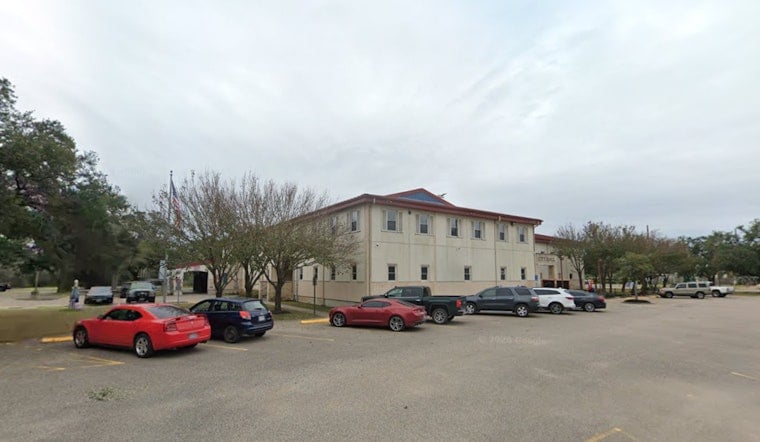
Seabrook City Council voted 6-1 to approve a preliminary planned unit development for a 670,000-square-foot distribution center featuring two warehouses north of Red Bluff Road, clearing the way for a project that has divided residents over fears the city's north side is turning into an industrial corridor. Council member Angela Cervantes cast the lone dissenting vote.
The project, proposed by Houston-based developer Constellation Realty Partners, would rise on the 59-acre site widely known as the Lazzari Tract, located north of Red Bluff Road and a proposed Port Houston roadway, according to Community Impact. The tract itself spans 59.43 acres and combines Reserves A and B of the Bayview Commercial Subdivision with three additional parcels acquired by Douglas Development Partners, according to the City of Seabrook. Because the site spans multiple zoning classifications, the developer needed a planned unit development to move forward at all.
A Second Vote After a Failed July Motion
The approval follows a stumble the previous month, when the same proposal failed to advance at a July council meeting because the motion to approve it did not receive a second, per the same account from the developer's public filings referenced by Community Impact. Residents spoke in opposition at that earlier meeting, and the fight carried over into the vote that ultimately succeeded.
Two buildings make up the project: Building A at approximately 464,400 square feet and Building B at roughly 205,200 square feet, both capped at a maximum height of 50 feet. City documents indicate construction is anticipated to take two and a half years, though groundbreaking cannot begin until the intersection of Highway 146 and Red Bluff Road is completed. The Seabrook Planning and Zoning Commission had already recommended approval of the preliminary plan on June 18.
Financial Case Versus Community Pushback
Supporters framed the vote as a pragmatic financial decision. Ed Klein, who serves on Seabrook's Planning and Zoning Commission, said allowing the development to proceed was financially smart for the city, and warned that if Seabrook did not approve the project, the Port of Houston could simply buy the land outright, removing it from city zoning control entirely. City officials project the distribution center will generate $4 million in tax revenue for Seabrook over the next 10 years.
Cervantes and residents who opposed the plan argued that projected revenue does not justify what they see as the potential transformation of North Seabrook into an industrial zone. Resident Celeste Rudd said the developer's pursuit of a planned unit development amounted to a way to work around the city's existing zoning rules. Melanie Bentley went further, calling the developer predatory and warning that approval could turn Seabrook into what she described as a dumping ground for industrial development.
Environmental Conditions Attached to Approval
Council did not approve the project without strings attached. Members required the developer to plant mature trees rather than saplings, install wing walls for sound mitigation, and increase buffers along Red Bluff Road to preserve natural scenery. The storage of hazardous materials and the stacking of shipping containers were both explicitly prohibited under the terms of approval.
Council also requested an evaluation of rooftop green space for migratory birds, a condition tied to the site's location directly north of Friendship Park and adjacent to the Seabrook Wildlife Refuge and Park along the coastal prairie. That proximity has driven local concern over artificial lighting, noise, and storm runoff spilling into sensitive habitat, per background from an environmental assessment filed with the Export-Import Bank of the United States. With preliminary approval secured, Constellation Realty Partners can now proceed with the first phases of the project.
Why Port-Adjacent Land Is in Such High Demand
The pressure to develop sites like the Lazzari Tract traces back to Seabrook's position next to one of the country's busiest maritime gateways. Port Houston had climbed to become the fifth-largest container port in the nation as of 2023, handling roughly 7 percent of all national container tonnage, according to the Houston Chronicle. Nearby Bayport Container Terminal completed a $91.6 million Wharf 6 expansion in August 2023 specifically to accommodate larger neo-Panamax vessels and keep pace with double-digit annual cargo growth.
Industrial construction has followed that growth along Seabrook's major corridors, including the 454,600-square-foot Bayport 146 Distribution Center completed in 2023 and a 134,632-square-foot freezer warehouse Camfield Partners has planned for Old Highway 146, according to the Bay Area Houston Economic Partnership. State highway upgrades have reinforced the trend: the Texas Department of Transportation completed a $217 million expansion of State Highway 146 through Seabrook and Kemah in 2024, building a 2.1-mile express bridge meant to divert heavy freight traffic away from local streets. A state corridor study had projected daily traffic on that highway would climb from 46,200 vehicles in 2018 to nearly 70,000 by 2038, with heavy truck traffic growing 5 percent, according to Construction Equipment Guide.
Land like the Lazzari Tract is increasingly scarce. Environmental assessment filings show Seabrook covers roughly 21.5 square miles but has only about 1,082 developable acres left, making contiguous 59-acre parcels rare finds for developers chasing port-adjacent real estate. That scarcity helps explain why the fight over this single tract has become such a flashpoint for a city trying to balance its industrial tax base against the small-town character it invested in when it committed $600,000 in federal funds to park upgrades in 2024.




