

























































Seattle's Office of Housing has completed another environmental review of its long-planned Fort Lawton housing redevelopment, this time studying a backup option that would move the project's roughly 500 homes off the Magnolia site entirely and onto a city-owned parcel along Aurora Avenue. The former Army base bordering Discovery Park has been eyed as a housing site since at least 2005, and city officials say the Fort Lawton plan itself has not been abandoned even as this fresh 391-page document works through an alternative scenario.
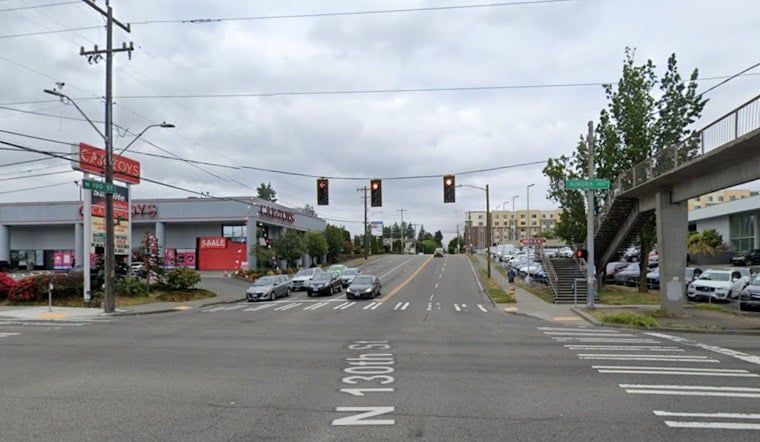
According to The Urbanist, the second draft supplemental environmental impact statement examines what it would look like to build the same roughly 500 units on a 4.1-acre city-owned parcel near Aurora Avenue and 130th Street instead of the 34-acre Fort Lawton site. That parcel currently holds a tiny house village, a former auto dealer, and four vacant buildings, the outlet reports. The Aurora Avenue alternative is described as a compact urban development on a fully developed site, including nearly one acre of outdoor amenity space, compared with the Fort Lawton plan's sprawling campus model.
The Aurora option emerged directly from feedback gathered during the first round of public comment, according to Nona Raybern as cited by the same outlet. Fort Lawton housing critics had requested that the city study an alternative that would convert the full 34 acres to park space and build housing somewhere else, and the new document appears to respond to that request by giving planners a comparison point rather than a competing proposal the city intends to pursue.
Why the Site-Specific Fight Isn't Over
The renewed environmental study comes even after the Seattle City Council passed Council Bill 121215 in a 5-4 vote in July, eliminating Hearing Examiner appeals for broad legislative zoning and Comprehensive Plan changes. That SEPA reform bill, advanced by Councilmember Eddie Lin and signed into law by Mayor Katie Wilson this month, is meant to reduce delays affecting larger zoning changes. But it does not touch project-level reviews like Fort Lawton's — individual projects will remain subject to administrative appeal, per the same reporting from The Urbanist.
That distinction matters because Fort Lawton's environmental process has already been through one costly legal fight. The city prevailed in a 2018 appeal of its Fort Lawton environmental review after Elizabeth Campbell and the Discovery Park Community Alliance challenged the project, a dispute that caused months of delays and legal costs. Friends of Discovery Park also filed a lawsuit against an earlier redevelopment plan in 2021, alleging the project would affect the area's heron nesting population — a concern tied to the site's proximity to Kiwanis Ravine, home to Seattle's largest active Great Blue Heron colony, according to the City of Seattle Office of Housing. Environmental documents note construction timing limits between February and July around the ravine to protect the birds.
The first draft supplemental environmental impact statement, completed in 2025 and running 251 pages, drew public testimony at a hearing held that April at Daybreak Star Cultural Center. Housing supporters outnumbered opponents testifying in person at that hearing, per The Urbanist's reporting, though Pete Hanning argued the animals and living creatures were not given a voice at the hearing.
What's Still Planned for the Site
Despite the study of alternatives, the underlying Fort Lawton plan remains centered on Magnolia. The project includes nearly 500 homes, split among 200 units of affordable rental housing, 200 homes for ownership, and 100 units of permanent supportive housing. The City of Seattle selected the Chief Seattle Club in April 2025 to develop and operate 85 to 100 units of that permanent supportive housing for formerly homeless seniors and veterans, featuring ground-floor case management and wraparound services, according to a City of Seattle announcement. Catholic Housing Services of Western Washington has partnered with the United Indians of All Tribes Foundation on the rental component, targeted to households earning up to 60 percent of Area Median Income.
The homeownership piece is expected to be sizable in its own right. U.S. Representative Pramila Jayapal secured $3.15 million in federal Fiscal Year 2026 Community Project Funding for infrastructure design and permitting at the site this past April, noting the planned 200 homeownership units will mark the largest Habitat for Humanity development in the nation, according to her office. That funding follows an earlier federal spending bill that included $3.1 million for Fort Lawton project design and infrastructure planning this past February.
Traffic, Schools, and Park Space in the Balance
City projections tied to the full build-out estimate the development would house approximately 1,600 permanent residents, generate 2,266 daily vehicle trips, and bring roughly 316 new students to local schools, according to King 5 News. Those figures have fueled much of the neighborhood debate in Magnolia over congestion and school capacity.
The revised plan sets aside nearly 22 acres — almost 65 percent of the 34-acre parcel — as public parkland and open space, one of the largest additions to Seattle's park system in decades, according to Seattle Parks and Recreation. The site sits directly next to Discovery Park's 534 acres, itself created in 1973 when Mayor Wes Uhlman accepted the deed for the first 391 acres of surplus Fort Lawton land, per the Seattle Municipal Archives. Fort Lawton was originally established in 1898 as a U.S. Army post on land historically inhabited by Coast Salish peoples and served as a major Pacific port of embarkation during World War II before its recommended closure under the 2005 Base Realignment and Closure process.
Public comment on the latest draft supplemental environmental impact statement closes on September 8, and the Office of Housing will hold both an in-person session at Seattle Municipal Tower and a virtual session on August 27, The Urbanist reports. Environmental consultants are expected to produce a final environmental impact statement afterward, though its publication date remains undetermined, and any appeal period will only open once that final analysis is complete.
The timing lands amid a rough stretch for the city's infrastructure legal track record more broadly — the Seattle Department of Transportation suffered another loss at the Washington Court of Appeals this past July, and separately, a planned Burke-Gilman Trail project will likely require its own environmental impact statement, according to The Urbanist. For now, though, city officials maintain that Fort Lawton's Magnolia site remains the plan, with the Aurora Avenue study serving as a study in contrast rather than a replacement.
Hoodline previously reported on the city's 500-home Fort Lawton vision when it was highlighted in Mayor Bruce Harrell's State of the City address.





