

























































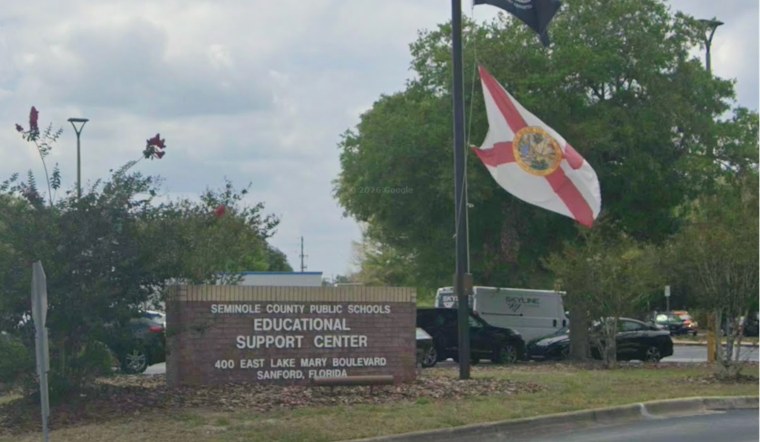
Seminole County Public Schools has turned up the thermostat in its buildings, betting that warmer classrooms will help close a budget gap that has already cost the district more than 300 jobs. The district raised occupied building temperatures from 71 to 74 degrees during the school week and pushed unoccupied temperatures from 74 to 78 degrees, a move officials say will save roughly $1.5 million a year. But the rollout has not been entirely smooth — mechanical problems in several facilities have left some classrooms warmer than intended, right as Central Florida bakes under brutal August heat.
A district spokesperson confirmed the AC adjustment is expected to save about $1.5 million annually, according to Orlando Weekly. Seminole County Public Schools is reportedly facing a $30 million budget shortfall, and the district spends between $17 million and $19 million annually on electricity, according to Assistant Superintendent Mark Mullins. Oviedo Community News reports the district actually eliminated 315 total positions — including 190 teaching and instructional jobs — to address the 2026-27 shortfall, a deeper cut than earlier estimates suggested.
The financial squeeze isn't new, and it isn't going away. The same outlet reports SCPS managed to shrink its immediate 2026-27 deficit from nearly $30 million down to $600,000 using a one-time state appropriation, but district officials still project an ongoing $3 million annual deficit going forward. State law has compounded the pressure: local school boards' property tax rates are capped through the state-mandated Required Local Effort, which lawmakers have cut by 45% — from 5.474 to 2.975 mills — across 14 consecutive annual decreases in Seminole County between 2012 and 2026, per the same outlet's reporting.
Why Utilities Became the Target
With so little room to raise revenue locally, district leaders have had few places left to cut. District financial data from May 2026 showed that 82.8% of Seminole County Public Schools' general operating fund goes directly to employee compensation and benefits for instructional staff and school administration, the outlet's reporting notes. That leaves utilities as one of the only large, non-personnel expenses left to squeeze, and Florida Power & Light has reported that raising a thermostat just one degree can save five percent on monthly cooling costs, according to Orlando Weekly.
Mullins reassured the public that the district continues to prioritize students through the AC change, according to FOX 35 Orlando. A district statement said HVAC systems are working extremely hard because of extremely hot temperatures and high humidity, per WESH 2. SCPS says it prioritizes students, staff and families as it manages the tradeoffs.
Those reassurances came as Central Florida endured a brutal stretch of heat. National Weather Service heat advisories in mid-August recorded ambient temperatures of 98°F and heat index values reaching between 108°F and 112°F across east-central Florida, as Hoodline previously reported. Following the August thermostat adjustments, SCPS officials acknowledged encountering mechanical problems in several facilities that left certain classrooms warmer than intended, prompting concerns from parents and students, according to FOX 35 Orlando.
How the Numbers Compare to Engineering Standards
The American Society of Heating, Refrigerating and Air-Conditioning Engineers, or ASHRAE, recommends keeping occupied indoor building temperatures between 68°F and 79°F and relative humidity below 65% to prevent mold growth and maintain thermal comfort. SCPS's new occupied target of 74°F falls within that range on paper, but the reported mechanical glitches suggest actual classroom conditions haven't always matched the settings on the thermostat.
Seminole County isn't alone in navigating these tradeoffs. Orange County Public Schools, which serves more than three times as many students as Seminole County, maintains classroom temperatures within a target range of 74 to 77 degrees, Orlando Weekly reports. The Orange County Classroom Teachers Association, which represents more than 13,000 Orange County public school educators, advocated for stronger heat protections in classrooms in 2025. The stakes were made plain in Ocoee, where malfunctioning AC sent several students to the hospital at a middle school, according to the same reporting.
Enrollment Declines Are Squeezing the Budget Too
Underlying the fiscal strain is a steady loss of students. Seminole County Public Schools has a projected enrollment of 58,200 students, down nearly 10,000 since 2022, according to Orlando Weekly. Orange County Public Schools experienced a decline of nearly 8,000 students during the 2026-27 school year, per the Orlando Sentinel. Declining student enrollment has been attributed to a mix of factors, including declining birth rates, federal immigration enforcement under the Trump administration, and the expansion of a state voucher program.
Florida's state voucher program allows parents to use taxpayer dollars for private schooling or homeschooling — and, as Orlando Weekly notes, also for expenses like Disney trips, televisions and paddleboards. That universal expansion, enacted under House Bill 1 in 2023, made all K-12 students eligible for state-funded Education Savings Accounts and drew more than 221,000 participating students statewide during the 2024-2025 school year, according to Fusion Academy. Fewer students in traditional public schools means less state funding tied to enrollment, adding another layer of pressure on district budgets already squeezed by capped property tax rates and rising payroll costs.
Seminole County Public Schools remains the 12th largest school district in Florida, serving tens of thousands of students and holding an “A” academic rating from the Florida Department of Education, according to The Org. That track record is part of what makes the current financial bind notable — even a high-performing district with a long list of accolades is now adjusting thermostats and cutting hundreds of jobs to stay solvent. For now, families and staff are left navigating the discomfort of a still-imperfect rollout while the district works out the mechanical kinks in its cost-saving plan.





