

























































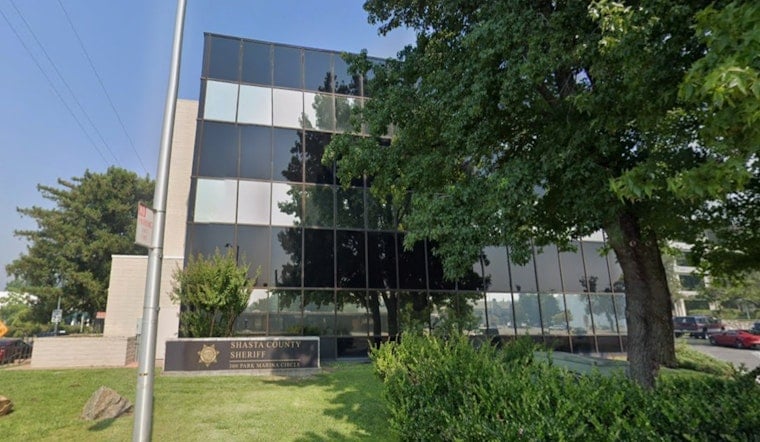
Shasta County officials on Thursday released the remains of James Homer Wright Jr. to his family for burial, closing a missing persons case that had haunted Redding for nearly 38 years. Wright, known to loved ones as “Little Man,” was 19 when he vanished in August 1988 after riding his bicycle away from a relative's house on the west side of town. It took a private DNA lab, two law enforcement agencies, and a mother who recognized her son's sneakers in old evidence photos to finally bring him home.
According to the Shasta County Sheriff's Office, the case was solved through DNA testing combined with the identification made when Wright's mother recognized a pair of Nike high-top shoes tied to remains recovered years earlier. Wright was last seen leaving a relative's residence and heading toward a nearby gas station on August 23, 1988, according to the National Missing and Unidentified Persons System. He never returned, and for decades his disappearance sat unresolved even though remains matching his description had already been found.
Remains Recovered Years Before Anyone Knew Whose They Were
Human remains were first discovered on a small island in the Sacramento River south of Bonnyview in 1990, with a second search of the same island turning up additional remains in 1991, per the Sheriff's Office. The case was logged under Coroner's Case SCSO90-23791. But identifying those remains proved impossible with the technology available at the time.
Missing-persons DNA testing did not become available through the California Department of Justice, then the sole agency capable of running such tests, until around 2004. Wright's remains were submitted for testing in 2006, but by 2007 the lab could only confirm the skeleton belonged to a male, according to the Sheriff's Office. The case stalled there for another 18 years, the remains identified only by gender, not by name.
A Mother Recognizes Her Son's Shoes
The break came in September 2025, when the Shasta County Sheriff's Office Major Crimes Unit formally reopened Wright's disappearance after his mother recognized the Nike high-tops in evidence photos connected to the 1990 discovery, the Sheriff's Office reported. The Redding Police Department then coordinated new DNA testing through the California Department of Justice and private forensic laboratory Othram, as reported by Action News Now.
Othram used whole-genome sequencing and genetic genealogy to build a comprehensive DNA profile, which matched Wright's familial DNA in March 2026, according to ISHI News. Investigators from both agencies then reviewed additional evidence to corroborate the DNA identification before notifying Wright's family on July 15, 2026, per Action News Now. Wright, an enrolled member of the Astariwi Band of the Pit River Tribe, was finally given a name again nearly four decades after he disappeared, the Record Searchlight reported.
Part of a Growing Local Pattern
Wright's case is the latest in a string of Shasta County cold cases cracked with help from Othram's lab. The same technology was used to identify 2013 Jane Doe Velma Lee in October 2025 and helped secure a guilty plea in December 2025 from Roger Neil Schmidt Sr. for a 1984 Burney murder. Just months earlier, Hoodline reported on how consumer DNA tests identified a Napa woman who had gone unidentified in Redding for 12 years.
Wright's identification also lands amid a broader reckoning over Missing and Murdered Indigenous Persons cases in California, which ranks fifth in the nation for such cases, prompting state lawmakers to launch the Feather Alert notification system for missing Native Americans in 2023, according to N&R Spotlight. Data compiled by the Sovereign Bodies Institute, cited by the Sacramento Native American Health Center, shows only 9% of homicides involving Indigenous people in California are solved, compared to a 60% clearance rate for the state's non-Native population. Wright's case, while a missing person rather than confirmed homicide investigation, closes with the kind of resolution that remains rare for Native families across the state.





