

























































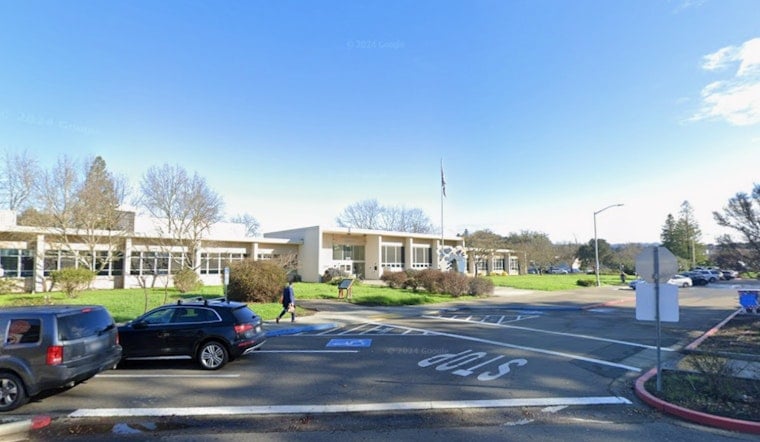
Sonoma County's Community Advisory Council wanted to bring together four candidates running for two open Board of Supervisors seats to talk about civilian oversight of the Sheriff's Office. County lawyers said no. Now the council is holding the forum anyway — just without any county resources behind it — and the standoff has exposed a raw nerve in Sonoma County's long-running fight over who gets to watch the watchmen.
The Sonoma County Counsel's Office sent letters to the council on July 27 and August 6, raising concerns that even hosting the event could create the appearance of taking sides, according to The Press Democrat. Deputy County Counsel Kara Abelson wrote that even the perception of impartiality could place the council and the county at risk of a violation. The council, an 11-member volunteer panel appointed by county supervisors and the director of the Independent Office of Law Enforcement Review and Outreach, had planned to question candidates in the District 2 and District 4 races about their views on Measure P and IOLERO's authority.
Despite the warning, the council voted unanimously to move forward, deciding to continue planning a forum without using county resources, with members organizing the event in their personal capacities on their own time. Lorena Barrera, according to the same report, said the forum was intended to let candidates answer questions rather than to endorse anyone. The council is now reaching out to the four candidates directly and is working with the group Community Law Enforcement Accountability Now on the event.
Two Open Board Seats, One Contested Measure
The dispute lands squarely in the middle of two competitive open-seat races. District 2's four-term Supervisor David Rabbitt announced in March that he would not seek re-election, a decision Hoodline covered in the race for his seat wide open, and Joanna Paun and Sylvia Lemus advanced from the June primary to face off in November. District 4's three-term Supervisor James Gore likewise chose not to run again, and Tom Schwedhelm and Melanie Bagby moved on to that runoff. Together, the two contests mean voters will pick half of the five-member Board of Supervisors this November — and, oversight advocates argue, will effectively decide the political fate of Measure P.
Sonoma County voters approved Measure P in a landslide in November 2020, expanding IOLERO's budget and independent investigative authority, a mandate that tied the agency's funding to 1% of the Sheriff's Office budget, according to Ballotpedia. IOLERO itself traces back further, to September 2015, when the Board of Supervisors created the office following recommendations from a community task force formed after the 2013 fatal deputy shooting of 13-year-old Andy Lopez in Santa Rosa, per the ACLU Sonoma County. That history is why candidates' positions on IOLERO's authority and Measure P's implementation carry outsized weight for local voters, and why the council's canceled forum struck a nerve.
A Legal Fight IOLERO Just Won
The timing of the county's intervention is notable. Just weeks earlier, on July 8, the California Supreme Court declined to review a legal battle between the Sheriff's Office and IOLERO, letting stand an appellate ruling that confirmed IOLERO's statutory subpoena authority to compel department personnel records in whistleblower investigations, according to the County of Los Angeles. Hoodline reported on the underlying appellate decision in March, when an appeals court ordered secret files handed over. The Sheriff's Office and deputies' union had fought IOLERO's subpoena power in court for years following a 2024 whistleblower probe, adding fresh stakes to any public discussion of the agency's future.
County Counsel's stance rests on Government Code Section 54964 and the 1976 California Supreme Court precedent Stanson v. Mott, which bars public entities from spending government funds or using official administrative resources to advocate for or against candidates or ballot measures, per guidance from the Fair Political Practices Commission. But the same commission's guidelines say government entities may broadcast or host candidate forums as long as all qualified candidates get equal participation and public resources aren't used to promote any one of them. Notably, the U.S. Office of Special Counsel's Hatch Act unit indicated the proposed forum likely did not violate federal law, and that analysis did not address state restrictions, leaving the state-law question as the county's sole basis for halting the event.
Advocates See a Pattern of Suppression
Sonoma County Supervisor Lynda Hopkins told the paper she supports IOLERO, Measure P, and candidate debates generally, but opposes the county itself hosting political debates — a distinction that separates her from advocates pushing for the council's forum to proceed under county auspices. Barbara Grasseschi countered that the Board of Supervisors has an integral role in supporting Measure P's implementation. Michael Miller said the county's action appeared to suppress candidate forums or public discussion about Measure P altogether, and Casey Jones called the county's legal analysis beyond conservative.
Joshua Myers offered a narrower legal read, saying a community board could potentially host a candidate forum without violating California statutes if it were structured carefully. Jennifer Solito took a different view, saying outside groups already provide other ways for the public to obtain candidate information, suggesting the council's forum isn't essential. The council has hosted candidate forums twice before in past election cycles — a 2018 sheriff candidate forum at the Santa Rosa Veterans Building and a virtual 2022 sheriff candidate forum held during a council monthly meeting — without triggering this kind of legal intervention.
A County-Wide Policy in the Works
The county is now drafting a broader policy that would prevent board-appointed bodies from holding elections-related events altogether. Under the forthcoming rule, formal candidate forums would be prohibited for any of the county's more than 75 appointed bodies, with the policy stating plainly that candidate forums are inappropriate activities for any board-appointed body. That would end the kind of forums the advisory council has held in 2018 and 2022 for good, regardless of subject matter or how carefully they're structured.
The broader debate over IOLERO's power isn't unique to Sonoma County. When Measure P passed in 2020, voters in San Francisco, Oakland, Berkeley, and San Jose simultaneously approved their own ballot measures expanding civilian oversight of law enforcement, according to KQED, part of a wave that followed the 2020 national racial justice protests. Closer to home, a November 2025 report from the Sonoma County Commission on Human Rights found that patrol stops and detention facility incidents accounted for 30% of all human rights violation complaints recorded countywide between 2019 and 2025 — a statistic advocates point to as reason candidates should face direct public questioning on oversight policy before voters head to the polls in November.
Former IOLERO Director John Alden, who stepped down in May, had already been publicly critical of friction between the watchdog agency, the Sheriff's Office, and the Board of Supervisors, citing a lack of board intervention during IOLERO's legal disputes with the sheriff. With the council pressing ahead independently and candidates for both open supervisorial seats holding differing views on IOLERO's authority and Measure P's implementation, the question of whether voters get a direct, public airing of those differences now rests on a volunteer panel working without the county's blessing — or its resources.





