

























































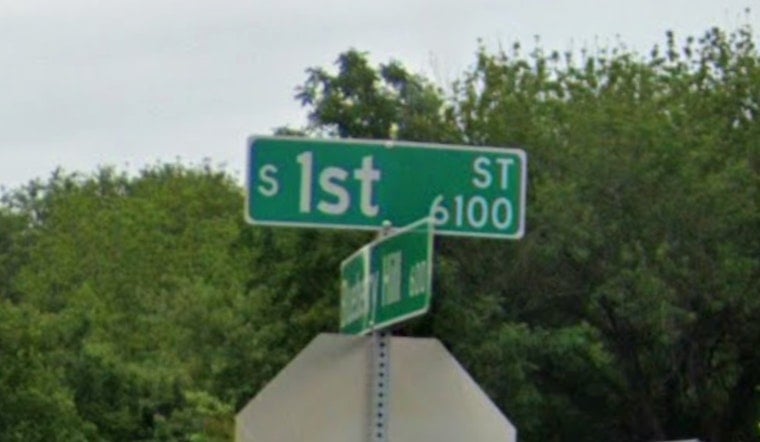
A South Austin man is helping organize nighttime volunteer patrols after a stretch of thefts and break-ins near his home off South 1st Street left neighbors feeling like they couldn't count on a quick police response. Rick Hoff says thieves got into his motorcycle and stole a neighbor's electric lawnmower, part of a string of six other thefts or car break-ins within a 1,500-foot radius of his house over roughly two and a half weeks in July.
Hoff told KXAN Austin that most of his neighbors have lived there for decades and many are senior citizens, which is part of why he and a neighbor decided to act rather than wait. The two went door-to-door warning others about the crime spree and reported the thefts in person at an Austin Police Department substation, where Hoff says he was impressed by the two officers who assisted them. According to the station's report, one woman who called in the thefts was told an officer could take weeks to address the reported crime spree, and she was bounced between 911 and 311 before eventually being instructed to file an online report.
Austin Police Department confirmed it received a report about the stolen electric lawnmower, but the lawnmower case has since been suspended due to a lack of leads, suspects, evidence, surveillance footage or a serial number, per the same account. APD recommended that Hoff and his neighbor form a neighborhood watch, and the pair now plan to organize volunteers for nighttime drives around the neighborhood.
Why Police Response Has Lagged
The frustration in Hoff's neighborhood tracks with a broader staffing crunch inside Austin's police department. APD is around 300 officers short in 2026, and as recently as early 2025 the department had only 469 officers assigned to regular patrol shifts out of an authorized patrol strength of 769, according to KVUE. Overall sworn vacancies stood at 316 out of 1,816 authorized roles during that same period.
Those gaps have shown up in response times. APD's average response time for high-priority emergency calls climbed to 12 minutes and 46 seconds in 2024, up from 11 minutes and 24 seconds the year before, missing the department's own goal of 10 minutes and 44 seconds, KVUE reported. APD has attributed the rising response times to patrol officer shortages and citywide traffic congestion. An operational evaluation by Matrix Consulting Group, cited by the American-Statesman, found APD patrol officers had only 22% of their shift time available for proactive community engagement work, well below the industry benchmark of 35% to 50%.
What APD Says It's Changing
Austin Police Department Chief Lisa Davis, who was sworn in to the role in 2024, said the department had begun sending officers to formerly lower-priority calls again starting in 2025. In April 2026, Davis said staffing struggles meant responding to lower-priority calls was not always possible. APD is now revising its response to residential burglaries that occurred within the previous 24 hours and says it will respond to 911 calls meeting that criteria, with the revision expected to be completed within the next few weeks.
The department has also implemented strategies to increase recruiting and retention, and reports significant improvement in retention over the past two years. Austin City Council approved a five-year, $218 million collective bargaining agreement with the Austin Police Association in October 2024, delivering an 8% base wage increase in FY2024-2025 along with recruitment bonuses, according to The Daily Texan. That contract followed more than a year of stalled negotiations. Separately, APD launched a pilot program in April 2026 deploying non-sworn Community Service Officers, who wear distinct uniforms and carry body cameras but lack sworn law enforcement powers, to handle lower-priority calls such as delayed burglary or theft reports where no suspect or physical evidence is present.
Reporting Options and What Residents Can Do
APD requires emergencies or in-progress incidents to be reported by calling 911, but accepts non-emergencies or past incidents through 311 or iReportAustin.com, part of an online reporting system the department revamped in 2021 when it began asking the public to submit nonviolent, not-in-progress crimes that way instead of tying up 911. The department uses a four-tier priority system for crime responses and has said call wait times will vary based on circumstances and officer availability.
For residents worried about being targeted, APD has advised keeping property locked in a secure area, installing motion-sensor or permanent lighting around home exteriors and outbuildings, installing cameras inside and outside homes, garages and vehicles, and maintaining an inventory of belongings with serial numbers and pictures. The department also assigns dedicated District Representatives in each police sector to help residents formally establish Neighborhood Watch groups, a program AustinTexas.gov describes as connecting police commands directly with neighborhood associations. APD expanded outreach around that effort in April 2025, encouraging representatives to meet directly with resident groups and property managers, according to the Downtown Austin Alliance.
Even as Austin residents grapple with a run of local break-ins, state figures show property crime trending downward overall. Texas Department of Public Safety data shows statewide burglary offenses dropped 12.19%, from 89,445 incidents in 2024 to 78,539 in 2025. For now, though, Hoff and his neighbors aren't waiting on statewide trends to feel safer on their own block.





