

























































A pair of South Bay high schoolers has turned personal experience with dirty air into a campaign that just notched a countywide policy win. Kelly Liu, a student at Valley Christian High School, and Aahaan Jain, a student at Lynbrook High School, co-founded Conserve, a youth-led nonprofit focused on air pollution, climate education and public policy advocacy, and their work helped push the Santa Clara County Board of Education to formally recognize air pollution as a public threat to students and school employees across the county.
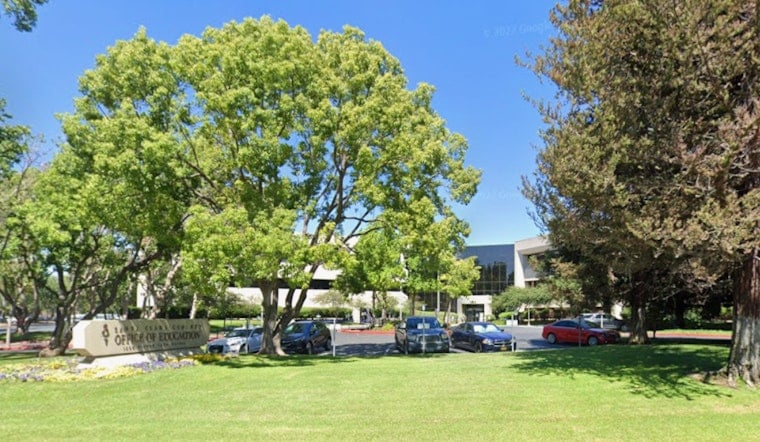
The resolution passed unanimously in July, according to The Mercury News. The county board's own account of the vote, taken July 15, gives it the formal title Threat of Air Pollution, following public testimony and policy requests submitted by Conserve's student leaders, according to the Santa Clara County Office of Education. The measure addressed clean energy, school electrification, climate education and student health, per the Mercury News report.
Liu and Jain say the fight is personal. Liu experienced hazy orange skies and difficulty breathing during the 2020 wildfires in East San Jose, while Jain grew up in India, where he sometimes experienced smog so thick it was hard to see; his family later moved to California in part because of his serious sensitivity to pollution, the newspaper's reporting notes.
A Nonprofit That Outgrew Its Founders' Backyard
What began as a local effort has since grown to 13 chapters, including ones in Arizona, Connecticut and Pakistan, the Mercury News reports. Conserve has raised $4,000 and engaged more than 1,800 community members, while its members have introduced climate-action policy resolutions in more than 20 school districts. The group has formed partnerships with 50 schools to install low-cost sensors measuring PM2.5, the tiny particles found in vehicle exhaust and wildfire smoke.
The organization has also held workshops to help students understand the air they breathe and is developing real-time pollution-risk maps and Corsi-Rosenthal boxes, do-it-yourself devices meant to clean classroom air, according to the same account. On the research side, Conserve is working with Stanford University's Burney Lab, Acterra and Breathe Mongolia to expand air-quality monitoring in East San Jose and other communities. Jennifer Burney, a Stanford professor who teaches global environmental policy and earth system science, leads a research team developing low-cost air-pollution sensors alongside Conserve; she told the Mercury News that Conserve uses publicly available data to illustrate air-quality challenges facing communities everywhere.
The Stakes for Students and Teachers
The urgency behind the campaign is backed by data cited in the Mercury News piece: higher particulate-matter levels have been connected to a 5.7% increase in student absences, a 13.1% increase in teacher absences, and a 28% increase in serious student discipline referrals. Jain co-leads Silicon Valley Youth Climate Action's state advocacy team, while Liu co-leads the organization's San Jose team — an organization founded in 2019 that has helped pass more than 120 local, regional, and state climate policies with the help of thousands of Bay Area students, according to Silicon Valley Youth Climate Action.
That group's co-founder, Tara Sreekrishnan, also sits on the Santa Clara County Board of Education after her September 2021 appointment, according to the Santa Clara County Office of Education — a link that ties the student organizers directly to the board that just adopted their resolution. Liu and Jain now plan to bring similar resolutions to every county office of education in California, and they are already working with students and education leaders in San Mateo, Monterey and Santa Cruz counties, hoping to improve air quality and protect the health of students and educators across California and beyond, per the Mercury News.
State Rules Exist, but Money Is Tight
California already has some guardrails in place. Under Assembly Bill 2232, enacted in September 2022, K-12 public school facilities must inspect HVAC systems every five years, meet minimum ventilation rates, and install air filtration rated MERV 13 or higher whenever feasible, according to Liebert Cassidy Whitmore. Separately, joint guidance from the California Department of Education and California Air Resources Board recommends that schools modify, relocate or move outdoor activities like recess and physical education indoors, or cancel them, whenever the Air Quality Index exceeds 100 for sensitive groups.
Paying for the infrastructure those rules require is another matter. The state's CalSHAPE program awarded $421 million to more than 3,800 public schools between 2021 and 2023 to assess HVAC systems, helping public schools maintain and upgrade heating, ventilation and air-conditioning systems, but budget constraints led the Energy Commission to close it to new grant applications in July 2024, according to CalMatters. That funding gap lands on top of a national problem: a U.S. Government Accountability Office study found roughly 54% of public school districts nationwide need to repair or replace their HVAC systems, per Cal SMACNA.
Why Santa Clara County in Particular
The county's air quality has long drawn poor marks. The American Lung Association's 2023 State of the Air report gave Santa Clara County an F grade for high ozone days and fine particle pollution, according to San José Spotlight. State health data separately shows about 14.5% of children ages 5 to 17 in the county have been diagnosed with lifetime asthma, per the California Department of Public Health.
Regional agencies have been chipping away at related sources of pollution. The Bay Area Air Quality Management District awarded $4.8 million to SAFETRANS Transportation Inc. last October to acquire 14 zero-emission electric school buses and 11 charging stations for special education students in the county, as Hoodline previously reported. Liu and Jain are now pushing for more investment specifically in school ventilation and filtration, arguing that classroom air deserves the same attention as what is happening on the roads outside.





