

























































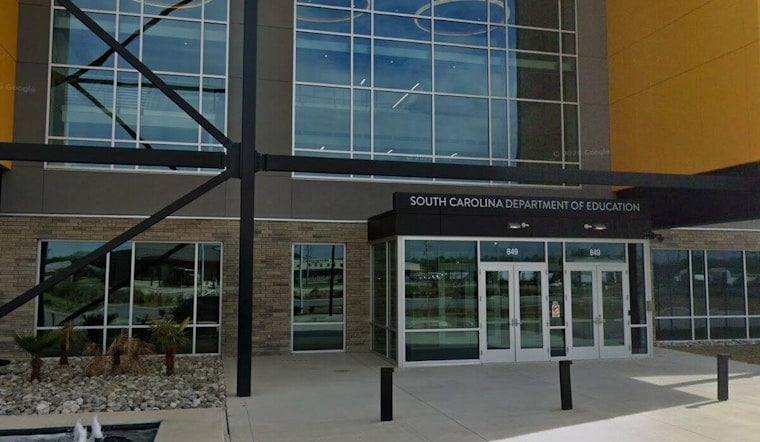
South Carolina's publicly funded school voucher program has officially reached its cap of 15,000 students for the 2026-2027 school year, with each recipient set to receive $7,634 in state funds — up from $7,500 per student the year before. The rapid enrollment comes even as lawmakers continue to spar over how the money is spent and after state investigators charged a Calhoun County woman with fraud tied to voucher funds earlier this year.
The Education Scholarship Trust Fund, or ESTF, was signed into law in 2023 and lets families use public money for nontraditional forms of education, including private school tuition, tutoring, educational therapies, and out-of-district attendance fees, according to WYFF. According to the South Carolina Education Oversight Committee's 2026 Annual Report, ESTF scholarships are available to students from Kindergarten through 12th grade. Applications for the 2026-2027 school year officially closed in early August after the program hit its statutory limit, according to the South Carolina Department of Education. State law had capped enrollment at 10,000 students for 2025-2026 before expanding it to 15,000 for the current school year.
A Family's Case for the Program
Becca Williams, who lives in the Upstate and uses ESTF funds to educate her children according to their needs, told WYFF that five thousand new students had already been approved for the program by the time reporting occurred. Williams said the funding has helped her children in ways that go beyond academics — she said the program helped her children self-regulate more than anything else. Many families like hers were preapproved through the ESTF program, per the station's report, easing some of the uncertainty that had left parents waiting to learn whether they would receive promised funds.
Fraud Case Raises Oversight Questions
Not every story around the program has been about smooth expansion. The South Carolina Law Enforcement Division charged a 33-year-old Calhoun County woman, Courtney Alissa Gibson, with two counts of breach of trust with fraudulent intent in February, according to the South Carolina Law Enforcement Division. Investigators found she allegedly used $6,547.46 in ESTF property for personal gain, spending voucher funds on Apple electronics and calculators that she then resold for profit. SLED launched the investigation at the request of the state Department of Education.
Lawmakers Clash Over Who Should Qualify
The fraud case has sharpened a broader fight at the State House over who should be allowed to draw ESTF money in the first place. State Rep. Neal Collins and other lawmakers debated a budget proviso this year that would have barred certain families from accessing the fund, but the effort failed when legislators passed the budget. Collins has said alternative education funding should include accountability measures and ensure the funds actually educate children.
According to South Carolina Public Radio, Collins called the program's rollout a fiasco during March budget debate, arguing lawmakers never intended for full-time homeschoolers to draw thousands of dollars in state stipends under what the Department of Education calls its funding model — unbundling. State Department of Education data released in March showed that of the 10,000 voucher slots awarded for 2025-2026, 5,641 recipients, or 56%, were already attending private schools or being homeschooled before receiving state funds, according to The Post and Courier. Collins requested that data specifically to argue the program largely subsidizes existing private education rather than expanding choice for students leaving public schools.
Eligibility Widens, Costs Draw Scrutiny
The program's reach is also growing on the income side. Under Senate Bill 62, enacted in 2025, income eligibility expands from 300% of the federal poverty level in 2025-2026 to 500% — $165,000 for a family of four — for the current school year, making an estimated 85% of South Carolina students eligible, according to ExcelinEd in Action. The law phased in income requirements over its first three years before opening eligibility to higher-earning households.
The $7,634 per-student ESTF award for 2026-2027 has drawn scrutiny over program costs. School choice advocates argue that vouchers cost the state less than traditional public schooling, even as critics like Collins question how faithfully the money tracks to actual education. A Brookings review says the last decade of research on traditional voucher programs strongly suggests they lower academic achievement, placing South Carolina's expansion within a broader national debate over outcomes.
Legal Foundation and Program Rules
The program's current structure exists because of a legal fight. The South Carolina Supreme Court struck down part of the 2023 voucher program in 2024, according to the Institute for Justice. The program's legal foundation has been shaped by court rulings. That ruling forced the General Assembly to pass Senate Bill 62 in May 2025, placing oversight with an independent trustee and raising income limits.
Under current program rules, families can use funds for what the program calls unbundled educational therapies, while full-time standard homeschooling remains ineligible for the award. ClassWallet manages the distribution of scholarship funds for 2026-2027, and the program lists approved education service providers.
Parents Report High Satisfaction
Despite the funding disputes, some parents have reported positive experiences with the program. The Department of Education has said the legislation gives ESTF families greater clarity on eligible expenses, adding that every South Carolina student deserves access to the educational option that best meets their needs.
For families like Williams's, that satisfaction is personal. But with a fraud prosecution now working through the courts and lawmakers still pushing for tighter oversight on who qualifies, the debate over how the state polices its rapidly growing voucher program is far from settled heading into the new school year.





