

























































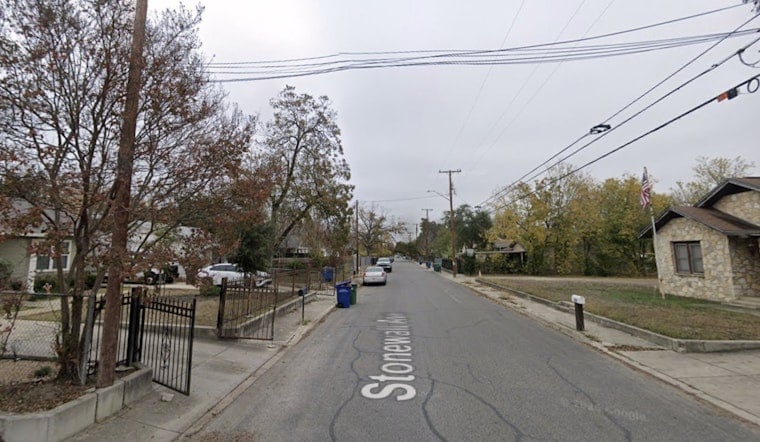
Six residents escaped a South Side San Antonio house fire on Sunday that tore through their home and caused an estimated $200,000 in damage, according to fire officials. Firefighters battling the blaze also had to contend with water supply issues stemming from a faulty fire hydrant near the scene, complicating their efforts to knock down the flames.
The fire broke out Sunday on the South Side, and all six people inside managed to get out safely before crews arrived, as reported by WOAI. Damage from the fire was estimated at $200,000, a figure that lines up with national trends: the National Fire Protection Association has found that single-family homes account for 68% of all reported home structure fires and 79% of the direct property damage tallied nationwide between 2019 and 2023.
Faulty hydrants are not a new headache for San Antonio firefighters. A January 2024 house fire on Toledo Street left crews dealing with low water pressure from surrounding hydrants, forcing them to lean on onboard engine tanks and an aerial ladder truck to put out the flames, according to KSAT. A similar scenario played out in June 2023, when a South Side structure fire displaced residents from four apartment units after firefighters ran into initial hydrant problems, though the station reported that crews still contained that blaze without any injuries.
How San Antonio Firefighters Work Around Hydrant Failures
San Antonio Fire Department engines are built to handle exactly this kind of setback. SAFD officials have said that fire engines routinely carry onboard water tanks so crews can start an immediate attack on a fire while secondary hose connections to municipal hydrants are set up, per the same KSAT reporting cited above. That tactic gives firefighters a head start even when a hydrant on scene isn't delivering full pressure.
Responsibility for the city's hydrant network is split between two agencies. SAFD firefighters inspect all of the city's roughly 30,000 public fire hydrants annually during routine station checks, while the San Antonio Water System holds repair authority over the mechanical upkeep of those hydrants, a division of labor first detailed in a 2019 KENS 5 investigation. Industry-wide, hydrants are also flow-tested and color-coded under National Fire Protection Association standard NFPA 291, a classification system designed to tell fire crews the expected water volume before they even hook up a hose, according to Kord Fire Protection.
SAWS also enforces rules meant to protect that pressure system from outside interference. The utility requires contractors and other external water users to obtain specialized, calibrated fire hydrant meters equipped with backflow prevention, a policy intended to stop unauthorized withdrawals that could compromise pressure across the system, according to San Antonio Water System regulations.
Recovery Resources for Displaced Families
For the six residents now displaced from their home, local disaster relief organizations typically step in quickly. The American Red Cross Greater San Antonio Chapter usually deploys within an hour of major residential displacement calls to arrange emergency lodging and financial assistance, a pattern documented in KENS 5's coverage of a March 2026 apartment fire that displaced 35 residents elsewhere in the city. The Red Cross also provides financial aid for immediate basic needs such as food, clothing, and household furnishings for residents left without a home after a fire, according to emergency services documentation published by the organization's Greater San Antonio Area chapter.
It remains unclear whether SAWS had previous maintenance records on file for the specific hydrant involved in Sunday's fire, and investigators have not yet determined what caused the blaze. For now, officials have confirmed only that all six residents made it out safely and that damage to the home is estimated at $200,000.





