

























































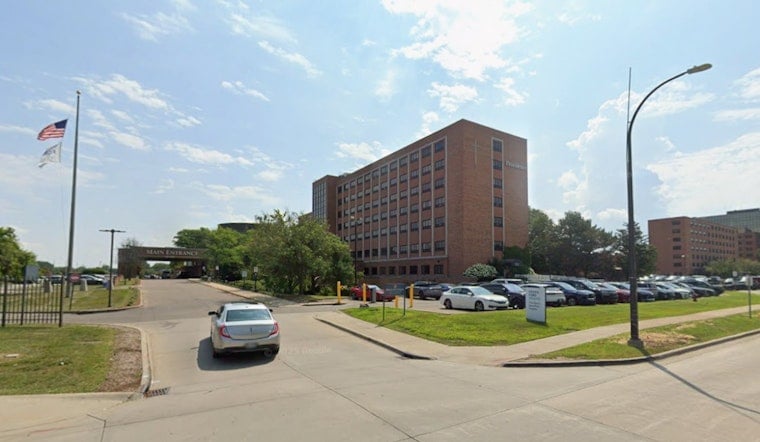
Henry Ford Providence Southfield Hospital has lost its Level II trauma center designation, and ambulances carrying seriously injured patients are now being routed to other hospitals instead of the Southfield campus. The hospital can still treat trauma patients who arrive by private vehicle, and its emergency department continues accepting ambulance patients suffering heart attacks and strokes, but ambulances must now take serious trauma cases to other Level I or Level II trauma hospitals.
The change was first reported by the Detroit Free Press, whose reporting shows the hospital was excluded from the most recent Michigan trauma-designation list. That list is issued by the Michigan Department of Health and Human Services, which designates trauma-care levels for hospitals statewide and released its latest update on July 7. The state agency did not respond to multiple comment requests from the Free Press, according to the newspaper's reporting.
What Hospital Leaders Are Saying
Dr. Adnan Munkarah, president of clinical enterprise and chief physician executive for Henry Ford Health, said the change is temporary and unrelated to quality-of-care standards. Per Munkarah, the hospital stopped accepting trauma patients by ambulance on July 1, and an American College of Surgeons administrative process led to the restriction. He said the process involves documenting education and process improvements, and that the matter will be resolved shortly. Henry Ford Health is pursuing an appeal of the trauma-status change, the outlet's report notes, and the hospital's trauma team remains able to treat Level II trauma patients despite the ambulance restriction.
The American College of Surgeons said it does not comment on the ongoing verification status of any hospital system, per the same account. Under Michigan Administrative Code Rule 325.130, healthcare facilities in the state are legally prohibited from self-designating as trauma centers or advertising with the word trauma without maintaining an official state designation, according to the Michigan Department of Health and Human Services. Designation for Level I and Level II facilities relies on a three-year verification cycle conducted by the American College of Surgeons Committee on Trauma, per the state health department.
What the National Standards Require
The American College of Surgeons updated its national trauma standards in July 2025, specifying that Level I and Level II trauma centers must maintain clinical coverage continuously available to respond at the bedside within 15 minutes of request. Trauma-care designations in Michigan range from Level I to Level IV, with Level III and Level IV centers required to provide prompt patient assessment and stabilization and to arrange transfer of seriously injured patients to higher-level trauma centers.
Providence Southfield's emergency department treated more than 64,000 cases last year, underscoring the volume of patients the hospital handles even as ambulance trauma traffic is now diverted elsewhere. The nearest alternatives for that diverted traffic are close by: Corewell Health William Beaumont University Hospital in Royal Oak, roughly 15 to 20 minutes away, and Corewell Health Farmington Hills Hospital, also roughly 15 to 20 minutes away. Royal Oak holds Oakland County's only adult Level I trauma status alongside a Level II pediatric trauma center, according to Wikipedia, while Farmington Hills operates 330 beds with an active Level II adult trauma center designation.
A Hospital Still Adjusting to a Major Merger
Henry Ford Providence Southfield Hospital became part of Henry Ford Health through a 2024 merger with Ascension Michigan, one that expanded Henry Ford from five to 13 acute care hospitals statewide when the joint venture was finalized on October 1 of that year, according to Bridge Michigan. The Southfield campus itself dates back further: originally established in Detroit, the hospital relocated to its current 9 Mile Road site in Southfield in 1965 as Providence Hospital, operating for decades under Catholic health systems before the 2024 transition to Henry Ford Health.
Following the joint venture's launch, Henry Ford Health has been working toward $250 million in operational synergies while integrating five separate electronic medical record platforms across its expanded 50,000-employee health system, according to Becker's Hospital Review. That system-wide integration work forms the backdrop against which the trauma-status lapse is playing out, even as Henry Ford leadership insists the ambulance restriction is administrative rather than a reflection of clinical quality at the Southfield campus.





