

























































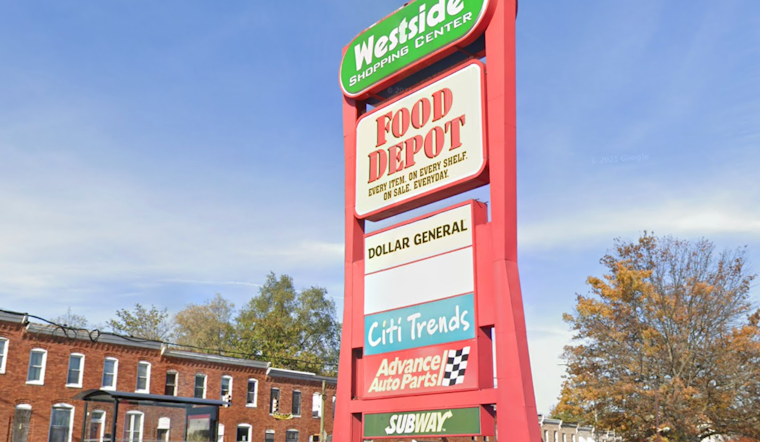
Drivers pulled into the Westside Shopping Center in Southwest Baltimore on Saturday and left without their guns but with cash in hand, part of an event that collected 431 firearms in a single day. The haul included 108 revolvers, 124 semi- and fully-automatic weapons, and 199 rifles and shotguns, some of which had been reported stolen.
The event marked the fourth annual gun buyback and peace-building fair organized by the Archdiocese of Baltimore in partnership with city police, according to CBS News. Drive-up participants received payouts ranging from $100 to $300 per weapon, no questions asked, as police worked the lot to log and remove the firearms from circulation.
Saturday's total builds on a program that has grown steadily since it launched in 2023. Per WCBM News-Talk Radio, previous annual totals included 362 firearms in 2023, nearly 300 in 2024, and 410 in 2025 — bringing the four-year cumulative count to 1,487 firearms collected across the city.
A Coalition Built Around Southwest Baltimore
The buyback fair was organized in collaboration with the Health by Southwest coalition, a network that includes Ascension Saint Agnes Hospital, Catholic Charities, Our Lady of Victory Parish, St. Joseph's Monastery, My Brother's Keeper, and Mount Saint Joseph High School, the station's report notes. Father Michael Murphy, pastor of Our Lady of Victory and St. Joseph's Monastery, serves as a founding member of the coalition.
More than $220,000 has been raised from Catholic parishes and individual donors to fund the buybacks, according to Baltimore Fishbowl. Any funds left over after paying for surrendered weapons are directed to the Archdiocese's Grief Ministry, which was created in 2021 to help city residents who lost loved ones to violence cover burial costs and groceries.
A Backdrop of Historic Crime Declines
The buyback lands at a moment when Baltimore's violence numbers look markedly different than they did a few years ago. The city recorded 50 homicides through the first six months of 2026, a 23 percent drop from mid-2025 and the lowest first-half homicide count for the city since at least the 1960s, according to The Trace. That marks a sharp turn from 2015 through 2021, when the city logged seven consecutive years with more than 300 homicides annually.
State health data shows the shift extends beyond city limits. Total annual firearm deaths in Maryland dropped 31 percent, from 878 in 2021 to 606 in 2025, according to the Maryland Department of Health. State officials attribute most of that decline to a 51 percent drop in firearm homicides over the same period.
Suicide Prevention Emerges as a Driving Concern
Even as homicides fall, a different trend has organizers worried. Preliminary state data indicates that firearm suicides, at 322 deaths, surpassed firearm homicides, at 276 deaths, in Maryland during 2025, per MarylandReporter.com. While homicides have steadily declined statewide since 2021, firearm suicides resumed climbing in 2024 and 2025.
That shift has reshaped how organizers talk about buybacks. A 2026 study published in JAMA Health Forum found that restricting access to firearms and keeping guns away from distressed individuals significantly reduces suicide rates, Baltimore Fishbowl reports. Public health experts cited in that coverage note that firearms are lethal in roughly 90 percent of suicide attempts, making the removal of guns from homes a meaningful intervention.
Where the Guns Come From, and Why Voluntary Surrender Matters Now
Tracing the origin of Baltimore's illegal guns remains a persistent challenge for local authorities. Maryland Lt. Governor Aruna Miller said during a prior Archdiocese buyback that approximately two-thirds of firearms recovered in Baltimore originate from out-of-state gun traffickers, according to the Catholic Review.
Legal changes have also raised the stakes for programs like this one. In a June 2026 ruling in Hicks v. State, the Appellate Court of Maryland held that police officers cannot stop or frisk individuals solely because a handgun is visible, applying the U.S. Supreme Court's Bruen framework, according to Justia Law. The decision overturned decades of Maryland precedent that had treated visible gun possession as inherent reasonable suspicion for an investigatory stop, leaving voluntary programs like Saturday's buyback as one of the more direct routes for getting unaccounted firearms out of private hands.





