

























































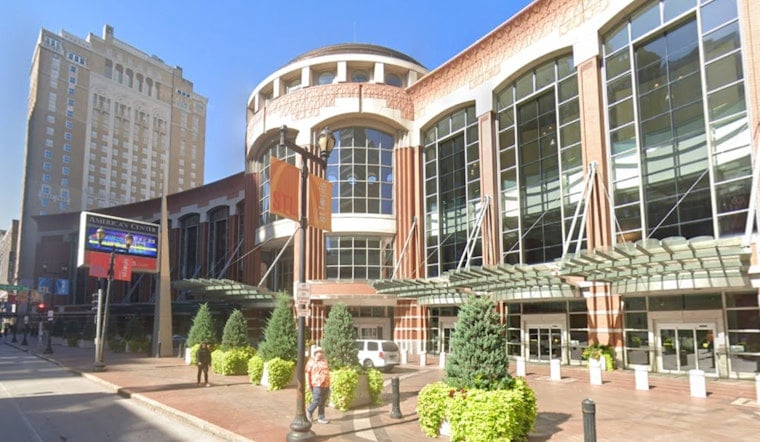
Nearly 1,300 forensic scientists, crime scene technicians, and detectives descended on downtown St. Louis this week for the International Association for Identification's 110th annual conference, where new fingerprint-scanning technology and a genetic genealogy team's push to identify a man from a 2021 cold case took center stage. The gathering runs from Sunday through Saturday at the America's Center Convention Complex, drawing representation from 29 different countries.
One attendee, Bill Peiler, described the event in blunt terms while speaking with First Alert 4: the IAI is “the Super Bowl for people involved in forensics.” Peiler also said the conference promotes forensic science and community support. The IAI itself is no upstart operation — founded in October 1915 by Oakland Police Inspector Harry H. Caldwell as the International Association for Criminal Identification, it is recognized as the world's oldest and largest forensic science professional organization, according to the International Association for Identification. The group now counts more than 6,000 members across 77 countries, organized into 44 regional divisions covering 48 U.S. states, per records held by West Virginia University Libraries, the official repository for the association's historic archives.
Fingerprints Scanned in Fractions of a Second
At the conference floor, Forensic Photonics, LLC displayed everyday objects — a lightbulb, a can of Mountain Dew, and a 9mm gun magazine — to demonstrate how fingerprints can be lifted from vastly different surfaces. The company's LIFT system, short for Latent Imaging Fluorescence Technology, scanned a 9mm magazine for prints during the St. Louis demonstration, per the seed report from First Alert 4. Forensic Photonics, founded in 2018, built the LIFT system to capture non-destructive 1,000 PPI fingerprint images in fractions of a second using molecular spectroscopy, according to Forensic Photonics, eliminating what has traditionally been hours of manual darkroom chemical processing.
Peiler said the LIFT system frees up law enforcement time to examine more evidence and collect more fingerprints, and he added that the technology may help cut down crime in communities. The stakes for getting that evidence right in court have also risen: Forensic Photonics integrated C2PA digital provenance signing directly into its LIFT devices this year, letting legal teams and juries cryptographically verify that latent print photos have not been tampered with, according to the Content Authenticity Initiative. The open-source cryptographic data is embedded directly into the image files, addressing the kind of chain-of-custody challenges that can derail evidence in the courtroom.
Training Without a Crime Scene
Elsewhere on the floor, an assessment tool called the RSA forensics test offered a way to train and grade crime scene investigators without needing an actual crime scene. The test grades trainees on tasks including putting on gloves, camera settings, photo angles, charting notes, and the detailed steps taken at a real crime scene, all measured against real-world standards. Mathew Marvin, laboratory director at Front Center, said crime scene investigators should be tested before being placed in situations that require real performance under pressure.
A related demonstration came from Marvin and Bill Mooney, who showcased a video-game-based way to train and test CSI personnel. Mooney is CEO and co-founder of MysteryWorks. Separately, RSA forensics is designed to help investigators maintain distance from crime scenes while still capturing the documentation needed for a case file. That same emphasis on non-invasive documentation echoed elsewhere at the conference, where vendor L-Tron Corporation demonstrated its OSCR360 spherical photography system, showing how 360-degree visual walkthroughs can document tight crime scene spaces without disturbing physical evidence, according to L-Tron Corporation.
DNA Detectives Chase a Nameless Man
Among the most consequential work on display came from New Jersey's Investigative Genetic Genealogy Center, which uses DNA testing to solve cold cases. Tracie Boyle, a case manager at the center, is hoping to raise awareness of a 2021 cold case in St. Louis involving an unidentified man. Boyle said the man is believed to be half Asian and half European, but noted that genetic data is currently lacking for Asian and European genetic pools — a gap that complicates efforts to trace his identity through DNA databases.
The center's broader track record underscores why investigators are paying attention to its work: Ramapo College's Investigative Genetic Genealogy Center solved 43 cold cases involving violent crimes and unidentified human remains in its first four years of operation through May 2026, according to NJ Spotlight News. The lab combines public genealogy databases like GEDmatch with police DNA files to crack cases that had otherwise gone cold. It also runs a 15-week online certificate program for law enforcement and genealogists while providing pro bono lab work for underfunded police departments, a service that has helped more than 200 students complete the program to date.
A Century-Old Certification System Still Growing
The conference's emphasis on credentialing traces back nearly 50 years. In 1977, the IAI created the Certified Latent Print Examiner program, establishing the forensic science community's first formal professional certification board, according to a history compiled by Onin.com. Certifications administered through the IAI now span crime scene investigation, forensic art, footwear analysis, and biometrics, giving attendees at this year's conference the chance to gain credentials across multiple crime scene processing disciplines.
St. Louis is only this year's stop on a rotating national circuit. The IAI moves its annual educational conference through major convention destinations each year, with Dallas set to host in 2027, Orlando in 2028, and Providence in 2029, according to the association's own conference planning materials. For now, though, the spotlight remains on downtown St. Louis, where nearly 1,300 attendees are spending the week comparing notes on everything from fingerprint physics to the unresolved identity of a man whose 2021 case still awaits an answer.




