

























































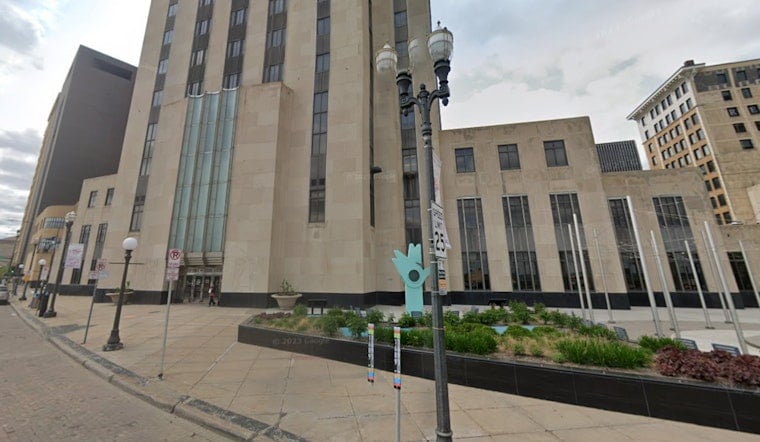
The Saint Paul & Minnesota Foundation has dedicated $15 million toward improving downtown St. Paul, a commitment its leaders say is structured as an investment rather than a charitable gift. The money will flow into buildings, businesses, nonprofits and community investment portfolios across the downtown core, positioning Minnesota's largest community foundation as a direct financial player in the neighborhood where it recently relocated its own headquarters.
According to the Pioneer Press, the foundation's president and chief executive officer, Chanda Smith Baker, said the $15 million investment is not a grant. Instead, the funding combines foundation capital with public, private and philanthropic partners to unlock new possibilities for downtown, she said. Some of the money will land in the foundation's Future Ready and Momentum Minnesota portfolios, according to the outlet's report, while other dollars will flow into the Saint Paul Downtown Investment Fund, which is maintained by the Saint Paul Downtown Development Corporation.
A Foundation That Moved Downtown Itself
The timing carries some symbolism. The foundation relocated from the U.S. Bank Center to Osborn 370 at 370 Wabasha St. in January 2025, per the same account, and Osborn 370 reportedly has a higher occupancy rate and better maintenance than the U.S. Bank Center it left behind. Smith Baker said the foundation is investing in downtown St. Paul because it believes in downtown's future and the role of a strong capital city in Minnesota's economic vitality, the report noted.
As part of the arrangement, the foundation will gain additional seats on the boards of the Downtown Alliance and the Downtown Development Corporation, plus a seat on the committee directing the corporation's investment decisions. Smith Baker already holds a seat on the Downtown Alliance board, which functions as a partnership between city hall and major downtown employers. The Saint Paul Downtown Alliance also maintains the Grow Downtown program, which helps negotiate low rents for entrepreneurs during their first six months and connects budding entrepreneurs with property managers — a program the outlet's report credits with helping open some of 21 new downtown businesses over the past year.
Where the Money Points
The Downtown Investment Fund is geared toward building acquisitions, and the Downtown Development Corporation has already acquired title to or distressed mortgages on five downtown properties, including the Alliance Bank Center and the U.S. Bank Center. Dave Higgins, president of the Downtown Development Corporation and managing director of the fund, said the corporation is focused on continuing work on properties it already has rather than acquiring additional buildings for now, according to the article. He said the new money will help steer or redevelop existing properties instead.
That U.S. Bank Center acquisition has already drawn scrutiny in Hoodline's earlier coverage, which detailed the corporation's purchase of the building's distressed mortgage debt and a Gensler architectural study identifying the tower as one of ten prime candidates for residential conversion. That study projected nearly 4,000 potential new housing units across downtown office buildings if enough of those conversions move forward, though turning high-rise towers into livable apartments still requires complex financing and lengthy construction before any of that housing — or the foot traffic it might bring — actually materializes.
Two Portfolios, Two Different Goals
The $15 million commitment splits across investment vehicles with distinct aims. The foundation's Future Ready portfolio supports community impact and capital preservation projects while seeking financial returns of about 1%, while the Momentum Minnesota portfolio focuses on values-aligned investments and seeks long-term financial returns of around 8% to 12%. That structure lets the foundation describe the commitment as patient capital rather than pure philanthropy, distinguishing it from the $30 million that Securian Financial and the Bush Foundation put into the same Downtown Investment Fund in November 2025.
Joe Spencer, president of the Downtown Alliance, said the foundation's financial commitment and partnership could increase other investors' confidence in downtown's transformation. The framing echoes what Securian itself signaled in June, when the insurer unveiled a $50 million modernization of its downtown headquarters, a project Hoodline covered in reporting on the company's HQ investment tied to its role as a founding backer of the same fund.
A Foundation Built From Two Legacies
The Saint Paul & Minnesota Foundation traces its roots to two separate organizations: the St. Paul Foundation, founded in 1940, and the Minnesota Foundation, established in 1949 after growing out of the St. Paul Foundation. The two eventually merged into the single statewide organization managing philanthropic assets across Minnesota today. That merger history underpins what the foundation calls a place-based investing strategy, one it has also applied outside downtown St. Paul — the outlet's report notes the foundation's involvement in Green Acres Oat Mill, which is building a regenerative oat supply chain and expects to create rural jobs in Albert Lea while supporting southern Minnesota farmers, and in Claros Technologies, a Minneapolis company using a UV-based process to destroy PFAS at the source, a venture Hoodline previously covered in a report on the PFAS startup's funding round.
The downtown commitment lands amid a broader wave of public and philanthropic spending aimed at stabilizing St. Paul's office-heavy core, from the city's own $5 million Downtown Vitality Fund to Ramsey County's proposed $320 million Building Stronger Together initiative. Whether $15 million in patient capital meaningfully speeds up conversions like the one planned for the U.S. Bank Center remains to be seen, but for now the foundation is betting its own headquarters move downtown was the right call — and putting real money behind that bet.



