

























































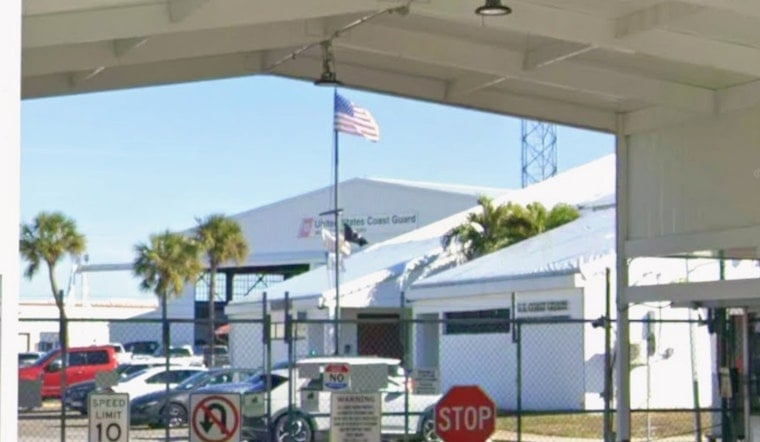
The U.S. Coast Guard has awarded a $60 million contract to rebuild and modernize Sector St. Petersburg's waterfront, replacing facilities battered by Hurricane Helene with infrastructure built to house the service's newest patrol ships. The accelerated design-build contract went to Tutor Perini Corporation on August 13, with a target completion date of summer 2028.
According to St Pete Catalyst, the contract covers both the removal and rebuilding of facilities damaged by Hurricane Helene and the construction of new infrastructure at the sector, which oversees 400 nautical miles of Florida's west coast. The deal was issued under solicitation number 70Z04726RPCNI0012, and the Coast Guard says the contractor was chosen for offering the highest technically rated proposal at a fair and reasonable price, per Investing.com.
What's Being Built at the Waterfront
Beyond replacing what Hurricane Helene destroyed in September 2024, the project scope includes a new Maintenance and Weapons Detachment facility, a multipurpose training building, new cutter berthing, a boat ramp, a fuel station, upgraded stormwater management, and a strengthened waterfront bulkhead engineered for heavy crane operations, the Coast Guard announced. The new shore utility connections and berthing are designed specifically to homeport and maintain 154-foot Sentinel-class Fast Response Cutters and other cutter classes that conduct multi-mission patrols lasting up to five days across 2,500 nautical miles.
Sector St. Petersburg began receiving the modern 154-foot cutters in May 2022 with the arrival of USCGC Pablo Valent, with additional deliveries continuing as recently as October 2025 with USCGC Olivia Hooker, according to Professional Mariner. Those Fast Response Cutters are replacing the sector's older island-class patrol boats, a multi-year fleet transition that has driven the need for stronger berths and updated shore utilities in the first place.
A Command With Outsized Reach
Sector St. Petersburg is one of the Coast Guard's largest regional commands, overseeing maritime safety and security across its stretch of coastline while protecting Port Tampa Bay, the third-largest U.S. port for domestic trade, the outlet reports. The sector carries out five primary missions, including search and rescue, law enforcement, and environmental protection. Capt. Courtney A. Sergent took command of the sector in June 2025, succeeding Capt. Michael P. Kahle as Sector Commander and Captain of the Port.
The rebuild follows a stretch in which the sector's cutters and crews kept working even as their own shore facilities took damage. During and immediately after Hurricanes Helene and Milton in autumn 2024, Coast Guard cutters and personnel assigned to the sector continued search-and-rescue sorties along Florida's west coast, with vessels like USCGC Resolute deployed offshore for emergency response throughout the storm sequence, according to Seapower Magazine.
National Funding, Familiar Contractor
The $60 million award is drawn from a historic $25 billion federal Coast Guard procurement and shore infrastructure recapitalization initiative aimed at addressing shore facility deficits nationwide. Tutor Perini has handled Coast Guard maritime construction before, including a $29 million design-build aviation hangar at Air Station Cape Cod in 2013 and a $132.6 million Coast Guard hurricane rebuild project awarded in 2022.
The St. Petersburg contract lands alongside other federal maritime investments in the Tampa Bay area. Earlier this month, a $1 million Maritime Administration grant went to Gulf Marine Repair in Tampa for shipyard utility upgrades supporting Coast Guard cutter overhauls, as Hoodline previously reported. Gulf Marine Repair regularly performs drydocking work for Coast Guard cutters operating in the region, tying the base's waterfront rebuild to broader commercial shipyard capacity that keeps the sector's fleet running.
With demolition, bulkhead reinforcement, and heavy construction set to unfold on the waterfront through 2028, the sector's leadership will need to keep cutters berthed, crews trained, and search-and-rescue operations running while the project takes shape around them.





