

























































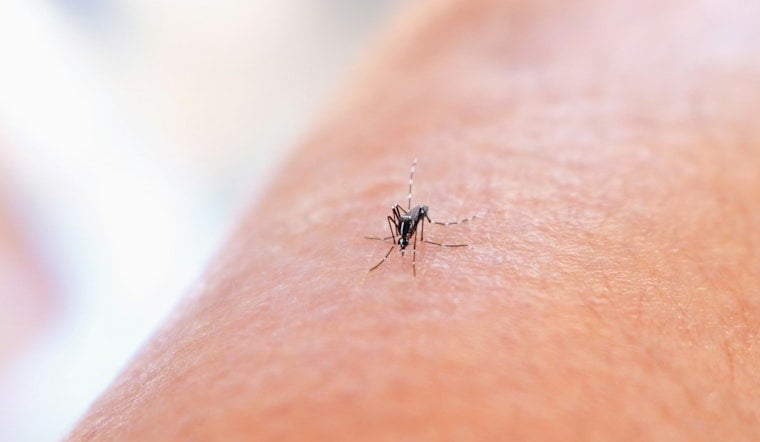
Stanislaus County has confirmed its first human case of West Nile virus for 2026, health officials announced, as state surveillance data shows mosquito-borne virus activity running at a five-year high across California. The news comes just days after crews sprayed pesticide over Empire and rural west Modesto to knock down adult mosquito populations before the disease could spread further.
A Season Already Flagged As Severe
The Stanislaus County Health Services Agency did not specify where in the county the infected resident was exposed, according to a press release cited by CBS Sacramento. The agency noted that the last significant increase in human West Nile cases in the county occurred in 2023. Dr. Thea Papasozomenos urged residents to protect themselves and their families from mosquito bites, saying current surveillance indicators point to a severe West Nile season in 2026 with concern for a higher number of human cases, per the same report.
The timing lines up with aggressive vector control action on the ground. The East Side Mosquito Abatement District conducted low-volume aerial spraying of Dibrom over Empire and rural west Modesto this past Thursday to suppress adult mosquitoes carrying the virus, according to a community notice posted on Facebook. The district's spraying authority operates under the California Health and Safety Code across a roughly 540-square-mile area north of the Tuolumne River.
Mosquito Pools Climbing Week Over Week
Environmental surveillance backs up the concern. The California Department of Public Health logged 28 newly positive mosquito pools in Stanislaus County for the week ending August 21, up from 25 positive pools the week before, according to state data. Those numbers reflect viral amplification already underway in local mosquito populations before this human case was confirmed.
Statewide, the picture looks similarly alarming. Twenty-four percent of tested dead birds in California have come back positive for West Nile virus through mid-August, compared with a five-year average of 13%, while mosquito positivity has reached 8 per 1,000 tested versus a five-year average of 5 per 1,000, as reported by Hey SoCal. Dead birds are considered a warning sign of West Nile activity in an area, and Californians can report them to the state's dead bird hotline at westnile.ca.gov or by calling 877-968-2473.
Statewide Case Count Nearly Triples Last Year's Pace
California has recorded 46 human West Nile virus cases in 2026 as of August 21, compared with just 14 cases at the same point in 2025, per state figures cited by CBS Sacramento. Of those 46 cases, 87% — 40 patients — involved severe neuroinvasive disease, with a median patient age of 63 and 54% identified as male, according to the California Department of Public Health. The state has also recorded four West Nile fatalities in 2026, occurring in Butte, Fresno, Glenn, and Kings counties.
Those numbers likely understate the true scope of infection. Most people who catch West Nile virus never show obvious symptoms — only about one in five infected people develop symptoms at all, and severe neurological illness strikes fewer than 1% of cases. When illness does occur, it typically brings fever, headache, body aches, joint pain, vomiting, and rash; in rare cases the virus can cause serious illness affecting the brain and spinal cord, including encephalitis and meningitis, which can lead to long-term problems or death. Older adults and people with weakened immune systems face particularly high risk of serious illness. There is no vaccine or specific treatment for West Nile virus. Nationally, the CDC attributes roughly 2,000 diagnosed cases and about 130 deaths to the virus each year.
National Surge Mirrors California's Numbers
California's spike is part of a broader national trend. The CDC has logged 222 human West Nile cases and at least eight fatalities across 32 states as of mid-August, with 70% categorized as neuroinvasive, according to data reported by Yahoo News. Human cases typically peak between August and September, meaning the season's most dangerous stretch may still be ahead. Stanislaus County's case follows a similar pattern from last year, when the county confirmed its first 2025 human case on July 3 in a resident who developed neuroinvasive illness, after recording four neuroinvasive cases back in August 2023, as previously reported by Riverbank News.
Livestock Also At Risk In The Central Valley
The virus isn't only a human health concern in the region. The California Department of Food and Agriculture has confirmed six equine cases statewide in 2026, following an infection last September in a vaccinated Quarter Horse mare in Stanislaus County, according to state agriculture officials. Vector control in the county is further complicated by invasive Aedes aegypti mosquitoes, first detected in Modesto in July 2019, which bite during daytime hours and breed in small containers like bottle caps rather than the standing water favored by native Culex mosquitoes, per the East Side Mosquito Abatement District.
What Residents Can Do
Health officials are urging residents to use EPA-registered insect repellent outdoors, especially during peak mosquito hours of dawn and dusk, and to regularly dump and drain standing water around their homes, since it provides mosquito breeding sites. The guidance echoes the broader “4 Ds” framework promoted by vector control agencies statewide: DEET-based or other EPA-approved repellent, avoiding outdoor exposure at Dawn and Dusk, keeping Doors and window screens intact, and Draining standing water, according to the County of Glenn.
Stanislaus County residents who notice unusual numbers of mosquitoes, or mosquitoes biting during the day, are asked to contact the East Side Mosquito Abatement District at 209-522-4098 or the Turlock Mosquito Abatement District at 209-634-1234. California has recorded more than 8,000 human West Nile virus cases and over 400 deaths since the virus was first detected in the state in 2003, according to the California Department of Public Health, making it the state's most common vector-borne disease.





