

























































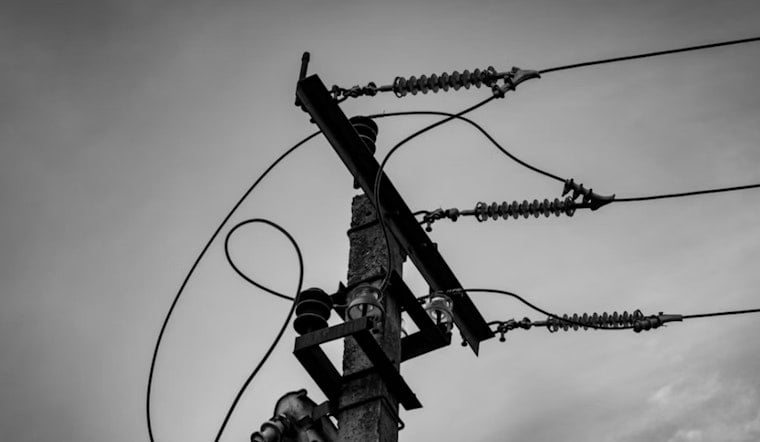
Severe storms rolling through the Charlotte region Friday knocked out power to more than 7,000 Duke Energy customers across the Carolinas, with outages concentrated in the Charlotte area and also reported in Greenville, South Carolina. The outage count was measured at 5:30 p.m. on Friday, and forecasters said more rain and storms were expected to move through the region into the evening.
According to WBTV, storms were considered particularly likely Friday afternoon and evening. Meteorologist Paul Heggen said damaging wind gusts, localized flooding, and dangerous cloud-to-ground lightning would all be possible as the system pushed through. Not every utility in the region was hit equally hard — Blue Ridge Energy reported around 34 customers experiencing outages, while Union Power Cooperative reported no outages at all, according to the cooperative's website, per the same WBTV report.
What Counts as a Severe Storm
Meteorologists don't use the word “severe” loosely. Under official criteria from the National Weather Service, a thunderstorm earns that designation when it produces wind gusts of at least 58 miles per hour or hail an inch or larger in diameter. Winds at that threshold are strong enough to snap tree limbs and pull down power lines, which is exactly the kind of damage that has repeatedly darkened Charlotte neighborhoods this summer.
Friday's outages follow a similar round of storms that knocked out power to more than 18,100 customers across the Carolinas just days earlier, according to Hoodline's prior storm coverage. The pattern fits a recurring summer weather cycle in the Carolinas, in which squall lines produce localized microbursts and lightning that routinely topple trees onto overhead lines.
Duke Energy's Grid Under Pressure — and Under Scrutiny
Duke Energy Carolinas, headquartered in Charlotte, serves roughly 3 million residential, commercial, and industrial customers across a 24,000-square-mile territory spanning North and South Carolina, according to the utility. The company has leaned heavily on automated “self-healing” grid technology that detects disruptions and reroutes power around damaged lines without waiting for a crew — a system that now covers nearly 80% of Duke Energy's North Carolina customers, up from less than half in 2022, per the Goldsboro Daily News.
The scale of that technology's impact is significant: in just the first ten months of 2025, the self-healing system prevented more than 1.1 million customer outages and saved nearly 2.6 million hours of cumulative outage time statewide, Duke Energy has reported. The utility has also added or replaced more than 116,000 distribution poles and upgraded over 13,400 wooden transmission poles to steel or concrete over the past five years, part of a broader push to harden the grid against high-wind storms like Friday's.
That infrastructure push is unfolding alongside major regulatory and corporate changes. Duke Energy Carolinas reached a settlement in July with the North Carolina Public Staff to cut its proposed multiyear rate increase by more than half while still securing funding for grid investments, and the company has also applied to merge its Carolinas and Progress operating units into a single utility by January 1, 2027. In South Carolina, Duke Energy submitted a base rate request last year covering nearly 680,000 customers in the Upstate region and the I-77 corridor south of Charlotte to help pay for similar storm-resilience work.
The Real Danger of Downed Lines
Despite the grid upgrades, storm-snapped power lines remain a serious hazard in Charlotte neighborhoods. A downed, energized line that snapped and caught fire in southeast Charlotte in July killed a 37-year-old woman near Sharon Amity Road, as Hoodline previously reported; emergency responders said they could not approach her until utility crews de-energized the line. Days later, a separate electrocution injured someone off Ballantyne Commons under similarly murky circumstances.
State and utility officials are urging the same precautions after Friday's storms. People should treat all power lines, trees, limbs, or other objects touching lines as energized and dangerous, and should stay away from any fallen or sagging line. Children and pets should be kept away entirely from areas where lines may have come down. Anyone in a car with a downed line across it should stay inside the vehicle; if forced to escape because of fire or another immediate life-threatening situation, North Carolina emergency guidance says to jump clear and land on both feet without touching the car.
North Carolina's official emergency guidelines, maintained by Ready NC, also instruct residents facing prolonged outages to shut off individual circuit breakers before flipping the main power switch, and to treat standing water and metal debris near downed wires as serious electrocution risks. Line hazards can be reported to local emergency services or directly to Duke Energy at 800-228-8485.
Outage information and contact numbers vary by provider. Duke Energy Progress customers in North Carolina can call 800-419-6356, Duke Energy customers can call 800-769-3766, Union Power customers can call 800-794-4423, and Dominion Energy customers in North Carolina can call 866-366-4357. North Carolina outage resources are also available through the state Department of Public Safety, and Duke Energy maintains real-time outage maps covering both Carolinas.





