

























































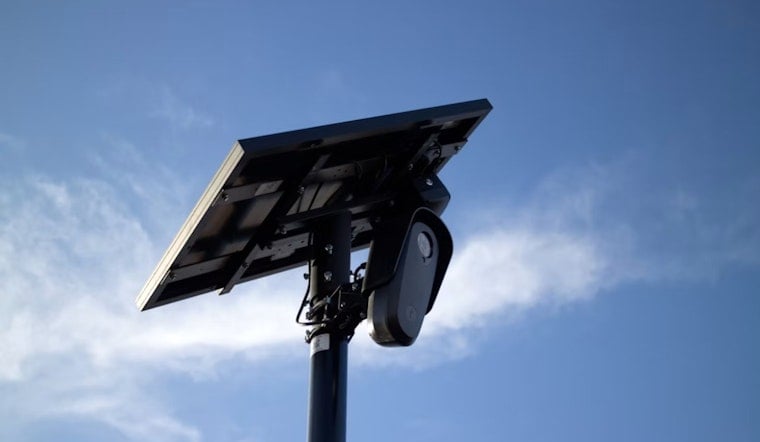
Summit County Sheriff Jaime FitzSimons has deactivated all 30 of the county's Flock Safety license plate reader cameras for at least 30 days, cutting deputies off from the surveillance system entirely while his office reviews its policies and relationship with the company. The pause comes after eight of the automatic license plate reader cameras were cut down across the county this month, and after residents and county commissioners raised concerns over privacy, data sharing and oversight.
FitzSimons announced the pause after his office met with county leaders on August 25 and heard community feedback the same day, according to The Denver Post. He said pausing the Flock technology during the review and listening to more community feedback is the right thing to do. During the pause, sheriff's office deputies and detectives will not have access to the Flock system at all, and any cameras still standing in unincorporated Summit County will be turned off. Once the pause ends, deputies will not be able to search information gathered before the shutdown began.
Cameras Cut Down Along Highway 9
The physical destruction of hardware escalated in early August, when four of the county's cameras were cut down overnight, including two along Highway 9 near Gold Hill, shortly after another camera was found turned out of position. The Summit County Sheriff's Office opened a felony vandalism investigation into the incident, noting that destroying public safety equipment carries potential criminal charges. That episode followed a broader pattern the sheriff's office had tracked, as eight of the county's 30 cameras were cut down this month altogether.
The equipment had not always been controversial locally. In November 2025, the sheriff's office cited the Flock network as a key investigative tool in identifying suspects and solving a series of construction site burglaries across the county, and FitzSimons had previously highlighted the cameras as valuable for protecting property in mountain communities, according to the sheriff's office. That track record has not stopped the recent wave of pushback, which culminated in this week's full shutdown.
A September Meeting to Decide What Comes Next
FitzSimons has scheduled a public community meeting for September 10 from 6 to 7 p.m. at the Summit County Community and Senior Center, where residents can weigh in on the department's future relationship with Flock Safety, according to the sheriff's office. The forum was announced alongside the 30-day pause as part of a stated commitment to evaluate community privacy concerns before deciding whether to resume, modify, or end the program.
Colorado's Wider Retreat From License Plate Cameras
Summit County is not alone. In Chaffee County, the Salida Police Department formally canceled its contract with Flock Safety on August 13 and discontinued its 14 cameras following public concerns over privacy, data retention, and transparency, as reported by Heart of the Rockies Radio. Salida Police Chief Russ Johnson said maintaining community trust outweighed the operational benefits of the system. Earlier this year, Denver decommissioned and removed all 110 of its city-owned Flock cameras when its contract expired, following public outrage over potential data sharing with federal immigration authorities, per The Colorado Sun. Fort Collins also terminated its Flock contract roughly a year early in June and removed its 14 cameras after months of community feedback, according to the Colorado Sun's reporting on the trend.
Colorado sheriffs and city leaders are navigating this without statewide guardrails. State lawmakers abandoned Senate Bill 26-070 in April, a bipartisan measure that would have required police to obtain a warrant to search location data older than three days and restricted out-of-state data sharing, after facing strong law enforcement opposition and a potential veto threat from the governor. That leaves data retention, audit logs, and out-of-state sharing entirely up to local jurisdictions like Summit County to decide on their own.
A National Reckoning With Mass Surveillance
Summit County's pause reflects a trend playing out nationwide. Between 50 and 100 local government jurisdictions across the United States have canceled, suspended, or rejected Flock Safety contracts during 2026, according to data tracked by the Institute for Justice and civil liberties organizations, as reported by The Guardian. An August analysis published by the American Civil Liberties Union found that fewer than 1% of all license plates scanned across Flock's national network of more than 120,000 cameras connect to any crime or vehicle theft investigation, even as the company maintains that scanning all passing traffic is necessary to cross-reference against state and national hotlists.
Flock Safety has responded to the wave of cancellations and officer misuse cases with platform-wide policy changes announced in August, mandating standardized criminal case numbers for every search, introducing automated alerts for abnormal search patterns, and lowering default data retention from 30 days down to seven. The changes followed several cases nationwide in which officers faced criminal charges for using the system to stalk private individuals, a pattern Hoodline has tracked in towns from Massachusetts to Kentucky this month. Whether those vendor-level changes are enough to satisfy Summit County residents will likely be a central question at the September 10 meeting.





