

























































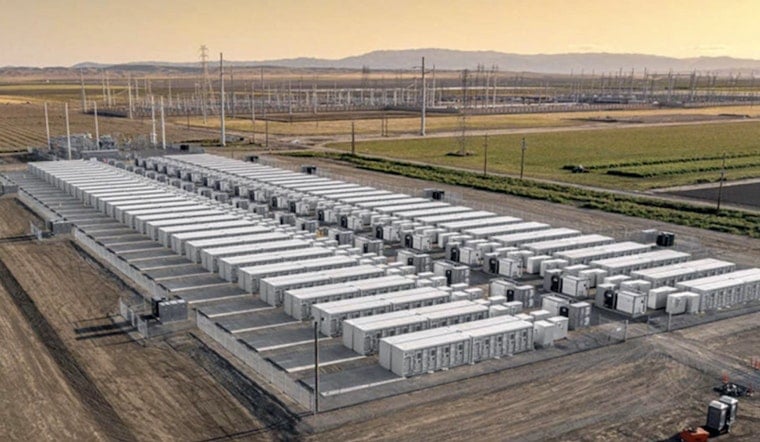
Large-scale battery energy storage facilities will be allowed to sit as close as 100 feet from homes in Surprise under a proposal the city's Planning and Zoning Commission approved, a dramatic reduction from the 1,500-foot buffer city staff had originally recommended. The vote clears the way for a potential future site near Litchfield and Cactus roads, a stretch of the city that sits across from a fire station and near residential neighborhoods.
The commission's approval, first reported by ABC15 Arizona, reduces the required separation between battery energy storage systems, known as BESS, and residential areas to a fraction of what staff had proposed. The approved amendment also includes a 150-foot setback requirement within the project site itself. The proposal now heads to the Surprise City Council, which is expected to review it in September.
This is not the first time the city has wrestled with the number. In June, the council remanded the zoning text amendment back to the Planning and Zoning Commission after the commission had initially voted in May to lower residential setbacks from 1,500 feet all the way down to 100 feet, directing further study of 100-foot, 500-foot and 1,000-foot buffers before the council's expected review, according to YourValley.net.
A 2019 Explosion Still Shapes the Debate
The caution surrounding battery storage siting in Surprise traces directly back to April 2019, when Arizona Public Service's McMicken battery energy storage facility suffered a catastrophic failure. The explosion severely injured eight firefighters. Four Peoria firefighters suffered severe injuries including skull and leg fractures, collapsed lungs and chemical burns, while four Surprise firefighters were hospitalized for evaluation before being released, per an account detailed by Precision Fire Protection.
The 2-megawatt McMicken facility's failure was traced to an internal lithium-ion cell malfunction that triggered a cascading thermal runaway, according to Precision Fire Protection's account of the incident. That runaway caused a buildup of flammable gas that ignited when emergency crews opened the facility's door. The blast pushed national safety organizations to update National Fire Protection Association Standard 855 and UL 9540A testing protocols, now requiring advanced off-gas detection, thermal isolation and automated ventilation in utility battery installations, according to research compiled by EPRI.
Susan Draper, a Surprise resident, sent an e-mail to the city about the proposal. She said she is not necessarily opposed to reducing setback requirements, but wants more information about potential risks and how nearby neighborhoods would be affected in a worst-case scenario.
Supporters Point to Grid Reliability and Industry Standards
Battery energy storage systems store large amounts of electricity, converting energy generated from solar and wind into chemical energy that can be used later when demand is higher. Industry representatives and battery storage supporters said lessons from past battery storage incidents have led to significant safety improvements. Kelsey Royer said energy storage batteries are essential for the potential future of renewable energy, and supporters more broadly argue the systems enable greater use of solar power and are essential for improving grid reliability.
Under the proposed zoning text amendment, known as Case FS23-1041, utility-scale battery storage facilities must also include a perimeter wall up to 12 feet tall located at least 150 feet from project property lines, regardless of the final residential setback distance the city council approves, YourValley.net reported. That physical barrier requirement would apply no matter which setback figure ultimately survives council review in September.
Critics, meanwhile, maintain that safety concerns must remain a top priority as the city council weighs whether to adopt the revised setback requirements. The debate has also drawn in economic development arguments: during a June council work session, advocates from the Arizona Technology Council noted that technology companies evaluate municipal energy regulations and local grid reliability before selecting expansion sites in the West Valley, the same YourValley.net report noted.
How Surprise Compares to Its Neighbors
Surprise is far from alone in wrestling with where to draw the line. Neighboring Phoenix-area municipalities have adopted widely varying BESS residential setbacks, according to a comparison from the Arizona Solar Energy Industries Association, or AriSEIA: Buckeye set a 150-foot setback, Goodyear adopted a 330-foot setback that can be reduced to 150 feet with a toxic plume study, and Mesa enforces a 1,000-foot setback from homes.
National planning standards from the American Planning Association average just 50 to 150 feet for battery storage setbacks, according to the Arizona Solar Energy Industries Association, meaning residential setback proposals exceeding 500 feet are potential outliers statewide. That framing has fueled arguments from renewable energy developers against large suburban buffer zones, even as Surprise residents point to their own city's history with the technology.
The safety concerns extend beyond Surprise's borders, too. An August 2025 report by the American Clean Power Association noted that clean energy industry data shows nearly 100 stationary battery energy storage safety incidents have been reported globally since 2012, offering a broader statistical backdrop to the local fight over setback distances.
Unresolved Questions Before the September Vote
Not every question has been settled. In July formal filings, renewable energy trade advocates urged Surprise officials to explicitly exempt customer-sited commercial backup batteries for businesses, schools and hospitals from the proposed utility-scale BESS overlay ordinance, according to AriSEIA's filings. Whether that carve-out survives council deliberation remains an open question as the city council prepares to decide the fate of the amendment in September.





