

























































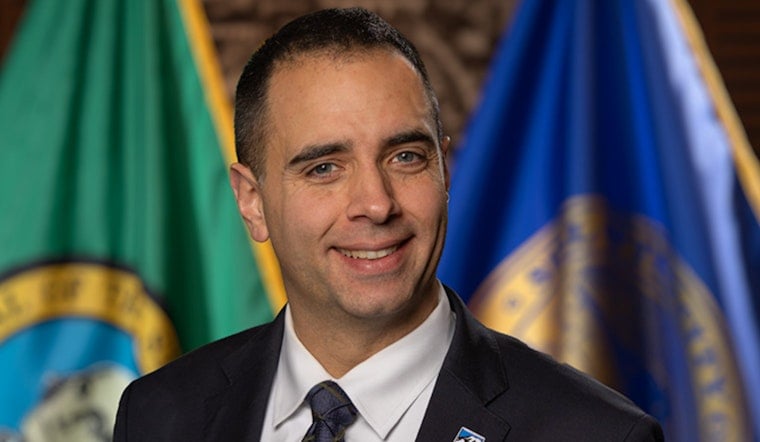
Tacoma's mayor and city council members will not see a pay raise in 2027. The city's independent Commission on Elected Salaries voted for a 0% increase at its August 3 meeting, locking in current pay levels for Mayor Anders Ibsen and the council as the city stares down a $40 million budget deficit.
Commission Chair Greg Amann formally transmitted that decision to Ibsen and the city council on August 10, confirming the freeze following the panel's review of regional pay data and Tacoma's budget outlook, according to a memorandum reported by the News Tribune. Under Tacoma Municipal Code and the City Charter, salary determinations must be filed with the City Clerk and transmitted to the council by September 1 each year, according to the City of Tacoma. Mayor Ibsen currently earns $125,224.78 annually, Deputy Mayor Joe Bushnell earns $74,925.25, and the rest of the council members earn $67,445.11 each for what is formally classified as a part-time role.
The commission's decision follows two straight years of raises — a 2.75% increase in 2025 and a 4% increase in 2024 — and comes as the city's finance director laid out a grim fiscal picture in a presentation on the state of Tacoma's finances and the upcoming biennial budget, the same report notes. Tacoma faces a projected $40 million structural deficit in its General Fund for the 2027-2028 biennium, driven by city expenditures growing at 4.8% annually against revenue growth of just 2.9%, according to the City of Tacoma. Operational costs like employee healthcare surged 41% between 2021 and 2025, exacerbating the gap.
How the Commission Operates
The Commission on Elected Salaries was created by Tacoma voters in November 2014 through a City Charter amendment that stripped elected officials of the power to set their own pay, assigning final salary authority instead to an independent citizen body. The commission has seven members: five are selected by lot by the Pierce County Auditor, one representing each of Tacoma's council districts, while the mayor appoints two additional members with legal and HR expertise, and the city council confirms those two appointees.
Don Salinas, who represents District 5 on the commission, said he could not see a wage increase until Tacoma fixes its revenue and budget shortfall, per the News Tribune's reporting. Ruben Casas, who represents District 2, offered a different view, saying not equitably compensating council members could harm Tacoma's cause and sustainability, and arguing that even a small council wage increase could help the city attract highly qualified and competitive candidates for future council races.
Austerity Beyond the Council Dais
The salary freeze lands amid a broader belt-tightening effort under City Manager Hyun Kim's Roadmap to Recovery initiative. The city has instituted a general government hiring freeze targeting $7.4 million in immediate savings and plans to merge the Public Works and Environmental Services departments effective January 1, 2027, according to the City of Tacoma. The city is also eliminating executive positions, including a Deputy City Manager role, to streamline operations.
Tacoma city leaders are developing a proposal for department budget cuts that the council is expected to approve around November, according to the News Tribune. Officials warned in July that the deficit — compounded by the expiration of federal COVID-19 relief funds and the loss of a $3 million state grant — could force significant cuts to homeless shelter funding, with formal department budget cut announcements scheduled for September, as reported by Seattle Red. Homelessness advocates have noted that Tacoma hosts 85% of Pierce County's shelter beds, a detail Hoodline previously examined in its coverage of the city's regional shelter obligations, meaning potential service reductions could reverberate across the county.
How Tacoma Stacks Up Regionally
Tacoma's pay freeze stands out against a regional backdrop of rising compensation for elected officials elsewhere in Puget Sound. Seattle Mayor Katie Wilson earns $230,000 per year and Kent Mayor Dana Ralph earns $240,000 per year as of 2026, both well above Ibsen's $125,224.78 salary, according to the Kent Reporter. In Spokane, the city's independent Salary Review Commission approved increases raising council pay to roughly $51,400 in 2025 and $53,150 in 2026, a 36.5% hike intended to align compensation with the median income for a local family of four, per the City of Everett.
State law shapes why a freeze, rather than a cut, is the tool available to Tacoma's commission right now. Under Article XI, Section 8 of the Washington State Constitution and related municipal guidance, independent salary commissions can implement pay increases at any point during an elected official's term, but salary decreases cannot take effect until after that official's current term ends, according to the Municipal Research and Services Center. That legal limit is why freezing pay at 0% has become the primary lever available to Tacoma during an active budget crisis, rather than an outright reduction.
A Wider Pattern of Local Budget Strain
Tacoma City Hall's fiscal squeeze is not happening in isolation. Tacoma Public Schools approved its 2026-2027 budget in June after closing a $10 million shortfall, following a $40 million shortfall the district resolved two years earlier, according to the Municipal Research and Services Center's compiled reporting on the district's finances. To close those gaps, the school district eliminated administrative positions and scaled back spending to avoid triggering state-binding fiscal conditions.
Whether Tacoma's council will ever move toward the full-time, better-compensated model some commission members have floated remains an open question tied directly to the city's fiscal recovery. Past commission deliberations have included arguments for eventually transforming the council into a full-time position, with proponents contending that low pay creates financial barriers that keep working-class and diverse candidates from running. For now, that debate is on hold while the city works through the budget-cut proposal expected before the council later this year.





