

























































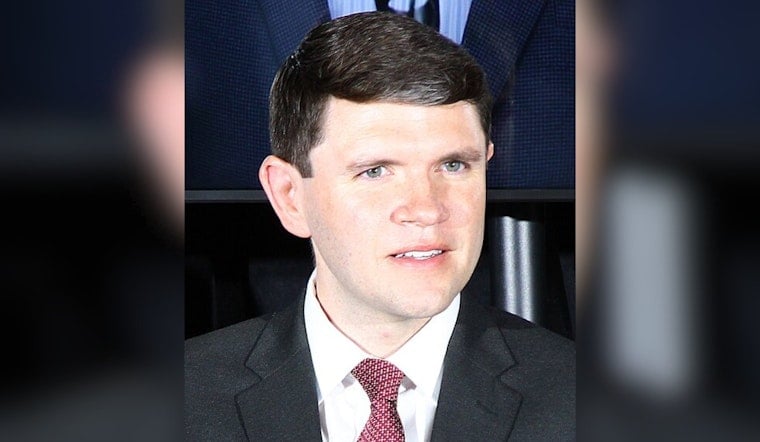
Texas Democrat James Talarico unveiled a healthcare plan today with backing from billionaire Mark Cuban, proposing to break up what he calls healthcare monopolies, cap out-of-pocket costs, and force pharmacy benefit managers to disclose pricing data they currently keep hidden. The state representative, who is running against Attorney General Ken Paxton for the U.S. Senate seat, framed the plan as a direct response to what he described as skyrocketing insurance company revenue and rising costs driven by industry consolidation.
According to CNBC, Talarico said the plan would break up healthcare monopolies, lower medical debt, reduce prescription-drug costs, and let doctors — not insurers — decide which medications patients receive. Talarico said big medicine monopolies control the healthcare system, and he pointed to hospital consolidation and the buyout of small physician-owned practices by larger hospital groups as evidence of the problem. Per reports cited in the CNBC piece, large hospital systems now control a significant share of hospital beds nationwide.
Central to the plan is a crackdown on pharmacy benefit managers, the little-known middlemen that negotiate drug prices between manufacturers, insurers, and pharmacies. Talarico's proposal would bar PBMs from hiding pricing data, and it would also create incentives to develop and approve more generic drugs while instituting caps on out-of-pocket costs. CVS Caremark, Express Scripts, and Optum Rx together process roughly 80% of prescriptions filled nationwide, the same CNBC report notes, giving those three companies outsized control over what patients ultimately pay at the counter.
Cuban's Own Fight Against Drug Middlemen
Talarico is expected to appear alongside Cuban at a live event and podcast recording in Fort Worth to discuss the plan further. Cuban founded Mark Cuban Cost Plus Drug Company in 2022, an online pharmacy built around cutting out PBMs entirely and negotiating directly with pharmaceutical manufacturers to lower consumer costs, particularly for generic drugs. The company, which operates as a public benefit corporation using a cost-plus-15-percent markup model, opened a 22,000-square-foot robotic manufacturing facility in Dallas in March 2024 to produce sterile injectables like epinephrine and address drug shortages, according to DBusiness Magazine.
Cuban called Talarico honest and said the state representative would do the right thing instead of the politically expedient thing, according to CNBC's account of Cuban's remarks. Cuban also said Talarico's plan would break up healthcare monopolies and lower medicine prices, throwing his weight behind a candidate he sees as aligned with his own anti-PBM crusade.
Federal Regulators Are Already Circling PBMs
The timing lines up with mounting federal scrutiny of the same companies Talarico is targeting. In February, the Federal Trade Commission reached a settlement with Express Scripts requiring the pharmacy benefit manager to offer transparent cost-plus pricing and eliminate spread pricing on standard plans, as detailed by Frier Levitt. Then in July, the FTC announced a proposed consent order with CVS Caremark to resolve allegations that the country's largest PBM used rebate practices that artificially inflated insulin list prices, according to the American Economic Liberties Project.
Talarico's push against PBMs isn't new. As reported by The Texas Tribune, Talarico introduced Texas House Bill 40 in 2021 to cap insulin copays after his own 2018 diagnosis with Type 1 diabetes and a first monthly insulin bill of $684. That effort helped pave the way for Texas Senate Bill 827, which capped monthly insulin copays at $25. Texas also enacted House Bill 711 in 2023, a bipartisan law barring dominant hospital systems from using anti-tiering and anti-steering contract clauses that stop health plans from directing patients toward cheaper providers, per Georgetown University's Center on Health Insurance Reforms.
A State Where Coverage Gaps Run Deep
The backdrop for this fight is stark. Census Bureau data released in September 2025 showed Texas held the nation's highest uninsured rate in 2024, with 21.6% of adults ages 19 to 64 and 13.6% of children lacking coverage — roughly double the national adult average of 11.3%, according to Texans Care for Children. Texas 2036 research published this year found that more than 60% of Texans live in hospital markets classified as highly or very highly concentrated, with single or dual health systems controlling all of the market in nine Texas metro areas.
The financial squeeze extends to people who already have insurance. An April report from the Texas Association of Health Plans found hospital consolidation drives up local healthcare prices by 15% to 30%, with Texas commercial health plans paying hospitals an average of 254% of Medicare rates for identical care — a dynamic the group says accounts for nearly 90% of employer health insurance premium increases this year. Separate survey data highlighted by Texas 2036 in March found 56% of insured Texans have skipped or delayed necessary medical care due to high out-of-pocket costs, while nearly a third of Texas adults carry unpaid medical debt.
Paxton Bets On Tax Breaks Instead
Paxton has staked out a different approach. As Hoodline reported in its coverage of Paxton's tax-break pitch, the attorney general proposed an annual $25,000 federal tax deduction for out-of-pocket medical expenses and insurance premiums, plus another $5,000 deduction for healthy lifestyle costs, rather than pursuing corporate breakups or regulatory price caps.
The contrast underscores how healthcare affordability has become a defining fault line in a race widely viewed as pivotal to national control of the Senate. The Cook Political Report rates the 2026 Texas Senate race a toss-up, and Talarico and Paxton are described as neck-and-neck in recent polling. Democrats nationally have emphasized a cost-of-living message ahead of the November election, and Talarico is trying to become the first Democrat elected statewide in Texas since 1994.
The healthcare rollout follows months of escalating clashes between the two campaigns, including Talarico's push to unseal Paxton's sealed civil depositions and earlier sparring over debate scheduling and Paxton's past. Talarico spoke at a campaign rally in Houston in March, part of a travel schedule that has taken him across the state as he builds his case that consolidated hospital systems and PBMs, not just insurers, are driving up what Texans pay for care.




