

























































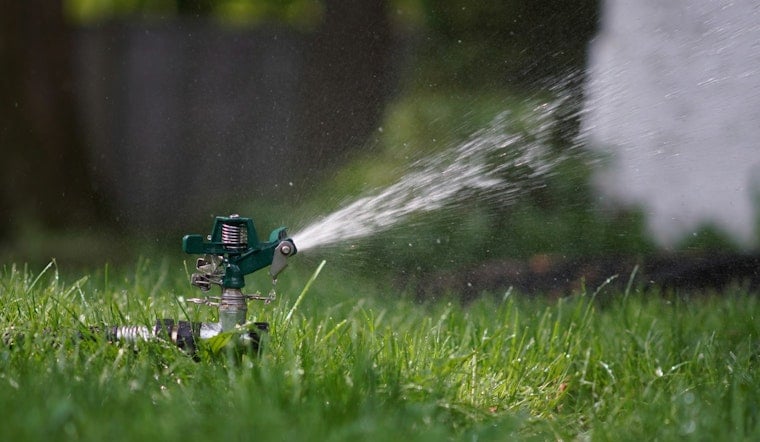
Every reclaimed water customer in Tampa woke up this week to the same unwelcome notice: the city's entire reclaimed water system is down, and nobody knows when it will come back online. The outage, which began today, means homeowners who rely on the cheaper, purple-piped irrigation supply to keep their lawns alive have lost that option indefinitely, right as the region grinds through some of its harshest drought restrictions in years.
The City of Tampa announced the shutdown in a blunt post on X, stating that “reclaimed water service is temporarily out of service for all customers” and adding, “We apologize for any inconvenience this may cause.” According to the City of Tampa, officials do not currently have an estimated time for when service will be restored, promising only to share updates as more information becomes available.
SERVICE UPDATE: Reclaimed water service is temporarily out of service for all customers. We apologize for any inconvenience this may cause. At the moment, we do not have an ETA when service will be restored - we will share updates when more information becomes available. pic.twitter.com/AfjIej4JWJ
— City of Tampa (@CityofTampa) August 24, 2026
Reclaimed water in Tampa is generated at the Howard F. Curren Advanced Wastewater Treatment Plant, which treats all wastewater collected across the city's system and carries a design capacity of 96 million gallons per day, per the City of Tampa. The plant processes that wastewater through advanced multi-stage treatment before it gets piped out for outdoor irrigation or discharged elsewhere, making it the single point of failure behind any citywide reclaimed outage.
Why This Outage Stings So Much Right Now
The timing is rough for Tampa homeowners. Reclaimed water customers normally pay just $1.20 per hundred cubic feet, or 748 gallons, and are exempt from the city's standard once-a-week potable watering restrictions, letting them irrigate any day as long as they avoid waste, according to the City of Tampa. That flexibility is now gone for an unknown stretch, and it comes only weeks after the city tried to get more residents onto the reclaimed system in the first place.
As reported by WTSP, Tampa launched an incentive program waiving reclaimed water application and meter installation fees through the end of this year, an effort meant to help residents maintain their lawns during regional drought conditions and save eligible homeowners more than $375. The push was designed to steer more households away from drinking water for irrigation — which makes a total reclaimed shutdown especially inconvenient for anyone who just signed up.
That's because the region's potable water rules leave little room to compensate. Under the Southwest Florida Water Management District's Modified Phase III Extreme Water Shortage Order, in effect since April 3, landscape watering with drinking water in Tampa is banned between 4 a.m. and 8 p.m. on designated days, and aesthetic water features are limited to four hours daily, the City of Tampa notes. Residents who lose reclaimed access can't simply switch to unrestricted hose watering to keep grass green.
Enforcement Has Already Been Ramping Up
Tampa's Water Department has been cracking down hard on violators well before this outage. Between December 1 and late May, the department issued more than 430 citations for outdoor watering violations, a jump of nearly 30% over the same period the year before, with fines starting at $100, the city said. Increased patrols have focused on high-use neighborhoods where household monthly water usage exceeded 10,000 gallons, according to the same city report.
This isn't the first time part of Tampa's reclaimed network has faltered this year. Back in March, the city experienced a localized reclaimed water outage in its eastern service area after equipment malfunctions at an east wastewater treatment facility, which required media replacement and specialized repairs, the City of Tampa said at the time. That episode was confined to one part of the city; this week's shutdown affects every reclaimed customer at once.
Drinking Water Remains Unaffected, City Stresses
Despite the disruption, city officials are emphasizing that Tampa's drinking water supply is not at risk. Reclaimed water infrastructure — including underground pipes, meter box lids, and fixtures — is color-coded purple specifically to keep it physically separate from the municipal drinking water system, which the City of Tampa says remains safe and fully operational during reclaimed outages. The separation is a legal requirement meant to prevent any cross-connection between treated effluent and potable lines.
It remains unclear what caused this week's citywide failure — whether a mechanical breakdown, a line break, or a treatment quality issue — and city officials have not said how quickly crews at the Howard F. Curren plant can restore distribution. That uncertainty is part of a broader statewide shift already underway for reclaimed water. Driven by Florida Senate Bill 64's mandate to eliminate nonbeneficial surface water discharges by 2032, Tampa has been developing its PURE project to redirect up to 50 million gallons of reclaimed water per day toward aquifer recharge or river augmentation, according to Tampa Bay Water.
Not the Only Utility Wrestling With Reclaimed Systems
Tampa isn't alone in facing reclaimed water headaches this year. Pinellas County Utilities temporarily shut down its own reclaimed system from the South Cross Bayou facility in February for a multi-day project to rehabilitate filtration systems and meet state nitrogen discharge limits. Meanwhile, Hillsborough County has been pouring money into expanding capacity elsewhere in the region, committing $1.6 billion to its One Water capital program, which includes a $1.2 billion wastewater campus in Lithia and 48-inch reclaimed water mains slated for completion by October.
For now, Tampa residents on reclaimed service are left waiting, watching their lawns, and hoping the city's next update brings a fix rather than just another apology.





