

























































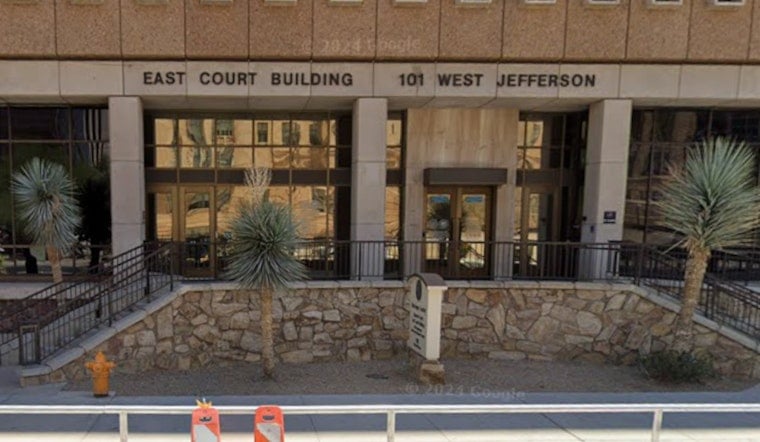
A 43-year-old man has been arrested in Tempe after a Maricopa County grand jury indicted him in connection with the 2021 death of his own child and the concealment of the body, which court records say was later found stuffed inside a backpack in bushes in Phoenix. George Alexander Braun now faces a felony charge of abandonment or concealment of a dead body, more than five years after the child died while in his care.
According to court records cited by ABC15 Arizona, Braun disposed of his child's body in a backpack that was left in bushes in Phoenix. The indictment alleges that Braun moved a dead body, or parts of a body, with the intent to abandon or conceal it on or about May 27, 2021 — the same date prosecutors say the child died while in his care. Braun was booked on the concealment charge and held on a $25,000 bond, the station reported.
The station's report also notes that Braun had three outstanding warrants at the time of his arrest, though details on what those warrants involved were not specified. Public Maricopa County booking records show a man with the same name and a matching July 17, 1983 birthdate was previously booked into county jail in May 2024 on an alleged drug offense, according to Arrests.org. It remains unclear how or when investigators connected Braun to the 2021 case, or what evidence led to the indictment now.
Why the Case Took Five Years to Reach a Courtroom
The long gap between the alleged 2021 offense and Braun's arrest last week fits a common pattern in Maricopa County felony cases. Prosecutors often present evidence to a grand jury to secure what's known as a supervening indictment, a process that establishes probable cause confidentially and lets the state issue an arrest warrant directly for a Superior Court arraignment, according to the Maricopa County Attorney's Office. That path bypasses the kind of public preliminary hearing that might otherwise draw attention to a case while it's still being built.
What remains unresolved is exactly how the child died, and why so much time passed before charges were filed. The dossier of public records reviewed for this story does not specify a cause of death, whether additional charges could still follow, or what triggered the renewed investigation. A charge of abandonment or concealment of a dead body establishes probable cause for hiding remains — it is a distinct legal question from homicide, which requires separate elements of proof under Arizona law.
What Arizona Law Says About Concealing a Body
In Arizona, knowingly moving a human body or body parts with intent to abandon or conceal them is a Class 5 felony under Arizona Revised Statutes § 13-2926, according to the Arizona State Legislature. For a first-time offender with no prior felony convictions, a non-dangerous Class 5 felony carries a presumptive sentence of 1.5 years in prison, with a range of six months to two and a half years, plus potential fines up to $150,000.
State lawmakers have signaled they think that penalty is too light in certain circumstances. During the 2026 legislative session, the Arizona House of Representatives introduced House Bill 2044, which would elevate body concealment to a Class 2 or Class 3 felony when it's committed to conceal a crime or when the offender caused the person's death. Under current law, concealment remains a Class 5 felony unless prosecutors file additional felony counts alongside it.
Maricopa County prosecutors have leaned on the concealment statute before in far more severe cases. The county attorney's office cited its use of ARS § 13-2926 in the January 2025 sentencing of a defendant convicted of first-degree murder after discarding a teenager's body in a Mesa dumpster — an approach Hoodline covered in its report on the Phoenix murder and concealment case. Prosecutors frequently tack on a concealment charge when remains are hidden in a way meant to hinder detection.
Mandatory Reporting and Legal Alternatives for Parents
Arizona law also imposes reporting duties on anyone caring for or supervising a minor. Under ARS § 13-3620, a caregiver who suspects non-accidental injury, abuse, or neglect must immediately notify local law enforcement or the Arizona Department of Child Safety. Failing to report is generally a Class 1 misdemeanor, but it escalates to a Class 6 felony if the unreported conduct involves a separate reportable criminal offense, according to the Salwin Law Group.
The case also underscores legal options that exist for parents in crisis. Arizona's Safe Baby Haven Law, ARS § 13-3623.01, allows a parent or authorized agent to anonymously surrender an unharmed infant up to 30 days old at a designated site such as a hospital or fire station, without facing prosecution for abandonment, according to the Arizona Department of Child Safety. The Arizona Safe Baby Haven Foundation has reported that 40 newborns were safely surrendered at drop-off locations statewide between the law's 2001 enactment and mid-2017, though advocates say public awareness of the option remains inconsistent.
Braun's case now heads toward arraignment in Maricopa County Superior Court on the concealment indictment. No additional charges have been announced, and the circumstances surrounding the child's death have not been made public.





