

























































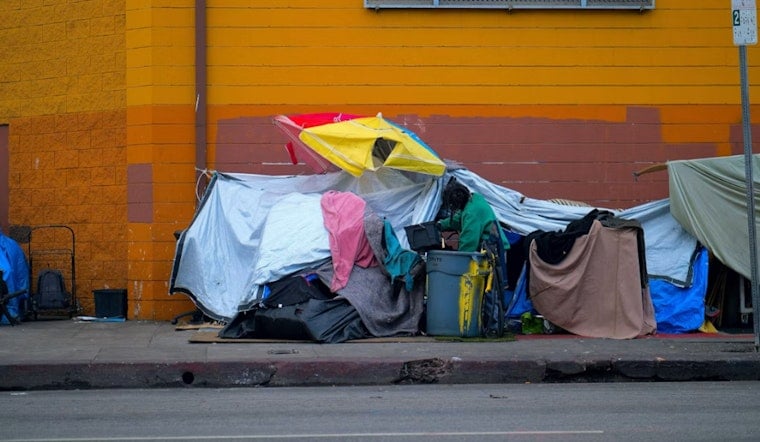
Tempe counted 280 unsheltered people during its July Point-in-Time homeless count, just three more than the 277 counted in summer 2025 and three fewer than the 283 tallied during the city's winter count in January. City officials say the number reflects a homelessness landscape holding roughly steady even as federal pandemic relief dries up and more residents lose healthcare and food benefits.
Tempe conducted its summer count on July 22, according to ABC15 Arizona, which reported that city staff and volunteers conducted questionnaires with people experiencing homelessness to identify how their homelessness began and how long they had been unsheltered. Tim Burch, Tempe's community health and human services director, told the outlet that sustained investment has helped keep the numbers flat since last summer's count, even though every person's path onto the streets looks different. Burch said officials look for patterns across those individual stories to shape strategy, and the same report notes Tempe is the only Arizona city that conducts a summer homelessness count in addition to the standard winter tally, giving officials a second seasonal snapshot to track trends.
A Slow Climb From 2022's Low Point
The current numbers stand well above summer 2022, when Tempe counted just 515 unsheltered people, per the same ABC15 account of the city's count history. Tempe has used the twice-yearly counts, described in the report as more than a simple census, to gather data that helps outreach and crisis workers direct resources where they are most needed. The city's HOPE team meets people experiencing homelessness on the streets daily, connecting them with shelter and other resources, and the same report states Tempe is on pace to house more than 3,200 people over three years.
That pace has grown sharply. The city connected 538 people to long-term housing solutions in 2023, a figure that jumped to 1,179 in 2025, with 615 more housed so far in 2026, according to the ABC15 report. The jobs program Tempe Works is part of that broader push, the outlet notes, giving unsheltered residents a pathway toward employment alongside housing placement.
Regional Numbers Paint a Mixed Picture
Tempe's flat local trend sits inside a more complicated regional picture. Maricopa County's January 2026 Point-in-Time count found 9,726 people experiencing homelessness across the county, with unsheltered homelessness falling 12% even as sheltered homelessness rose 14% compared with 2025, according to KTAR News. That shift suggests more people moved indoors as shelter bed inventory expanded across the region. Still, the county's homeless population has grown 31% since 2020, when it stood at 7,419 people, KTAR reported.
City housing data released in mid-2026 helps explain why the pressure hasn't let up. Fifty-two percent of Tempe renter households spend more than 30% of their income on rent, and a full-time worker in Arizona needs to earn $34.18 an hour to afford a standard two-bedroom home, according to figures from the City of Tempe. Those affordability gaps, combined with the loss of pandemic-era aid and rising healthcare losses cited in the ABC15 report, continue to push residents toward the streets even as the city expands its housing capacity.
Motel Purchases Expand Shelter Capacity
Tempe has leaned on real estate to grow its non-congregate shelter stock. The city purchased the 98-room Apache Inn motel on Apache Boulevard in April 2024 to convert it into transitional housing, following an earlier purchase of the Rodeway Inn, according to KTAR News. Those motel conversions give the city dedicated rooms for residents transitioning out of homelessness rather than relying solely on congregate shelter beds.
Enforcement has tightened alongside that investment. Tempe announced in December 2024 that it would strictly enforce its 1997 urban camping ordinance, City Code 23-90, shrinking compliance warning windows from several days down to just a few hours before officers issue citations or make arrests, per FOX 10 Phoenix. City officials pointed to two legal drivers behind the change: the U.S. Supreme Court's 2024 ruling in Grants Pass v. Johnson and Arizona's voter-approved Proposition 312, which lets property owners seek property tax refunds if local governments fail to enforce public nuisance and camping laws, according to reporting from Phoenix New Times.
Food-Sharing Lawsuit and Cleared Database Probe
The stricter enforcement climate has also drawn legal pushback from mutual aid groups. The Pacific Legal Foundation filed a lawsuit in October 2025 challenging Tempe City Code 5-2, which requires permits for public gatherings and food distribution, on behalf of community group AZ Hugs after it was cited for distributing food to unhoused people in city parks, according to Blaze Radio.
Separately, a criminal investigation by the Peoria Police Department found no evidence supporting allegations that Tempe officials misused confidential police databases to track unhoused individuals and homeless advocates, closing out a probe that began after a former Tempe police commander raised the claims. Tempe has maintained that all of its procedures were proper, and the city was formally cleared in the investigation, according to reporting cited in coverage tracked on journalist Nicole Grigg's Muck Rack profile. Hoodline previously covered the original whistleblower allegations when they first surfaced.
For residents seeking help or wanting to report someone in crisis, Tempe operates a 24/7 CARE & HOPE Line at 480-350-8004, which routes calls to human services workers, crisis counselors and HOPE specialists rather than emergency police dispatch, according to the City of Tempe. The line is part of the same outreach infrastructure Hoodline detailed in an earlier look at one resident's path from the streets into permanent housing through the city's HOPE program.





