

























































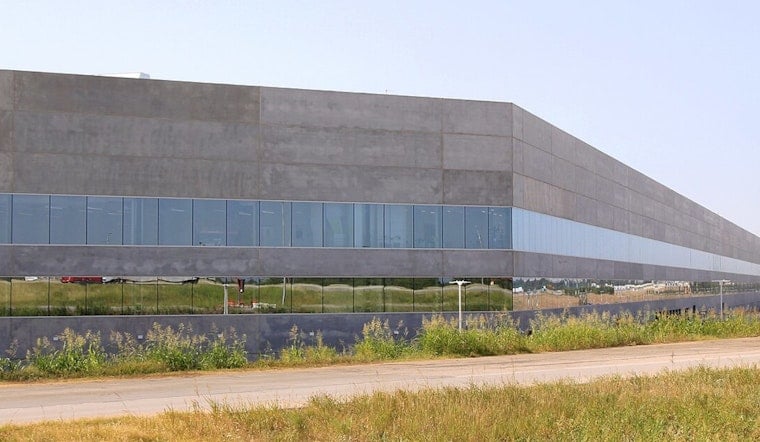
Tesla has begun large-scale operations at a battery cathode plant tucked inside Gigafactory Texas, processing the raw materials that go into its 4680 battery cells. The company says it is the first facility of its kind and scale in North America to process these key electric-vehicle battery materials on a large scale, a milestone that ties directly into the upcoming launch of the Cybercab and continued production of the Tesla Semi and Model Y.
What Happens Inside the Austin Plant
According to the Austin American-Statesman, the cathode-making process at Gigafactory Texas starts with mixing nickel, manganese, and cobalt precursor with lithium hydroxide. That mixture is then compressed and sent through a kiln, and the process finishes with the removal of magnetic impurities to produce the final cathode active material. Cathode manufacturing job listings are currently posted for the Austin site, and the plant is expected to accelerate production of Tesla's 4680 battery cell, the report notes.
Tesla has publicly framed the milestone in sweeping terms. Elon Musk posted that the operation represents the only large-scale lithium battery cathode production in the Americas, and the company has said the plant will move Tesla, and the country, closer to energy independence, per the Statesman's reporting. A Tesla cathode manufacturing team is expected to help commercialize a new cathode manufacturing process and will support a capital project worth more than $100 million, according to the same account.
The Technology Behind the Process
The dry-electrode approach powering this work traces back to Tesla's 2019 acquisition of San Diego-based Maxwell Technologies for roughly $235 million, a deal that gave Tesla the dry battery electrode process now enabling mass production of dry anodes and cathodes for 4680 cells, according to battery-tech.net. That method eliminates toxic solvents like N-Methyl-2-pyrrolidone used in traditional wet-slurry battery coating and could cut electrode manufacturing costs by as much as 50%, the outlet reports. Stefan, a member of Tesla's cathode team, described the material's importance plainly in comments carried by the Statesman: cathode is the lifeblood of an electric vehicle. Stefan also said high nickel-rich cathode chemistry helps maximize energy density and extend vehicle range.
The plant's operations connect to a broader Texas supply chain Tesla has built out in recent years. The company broke ground in May 2023 on a lithium refinery in Robstown, near Corpus Christi, that exceeded $1 billion in cost and reached full operational status earlier this year, according to BASENOR. That refinery targets an annual capacity of 50,000 tonnes of battery-grade lithium hydroxide, enough, the outlet notes, to supply roughly a million electric vehicles a year. Pairing that refinery with the Austin cathode line lets Tesla attempt to localize the battery value chain from raw lithium through finished dry-electrode cells.
A Federal Push Toward Domestic Supply Chains
The timing lines up with a federal regulatory push away from foreign-sourced battery materials. Under Section 45X of the tax code, enacted through the 2022 Inflation Reduction Act, U.S. clean energy manufacturers can claim a 10% production-cost credit for electrode active materials plus $35 per kilowatt-hour for domestically made battery cells through 2032, according to a summary from ERA Environmental. In February, the Treasury Department and IRS issued Notice 2026-15, establishing guidance that restricts clean energy tax credit eligibility when battery components or cathode materials are processed by covered entities in China, Russia, Iran, or North Korea, per the Tax Law Center.
Those rules matter because of how lopsided global cathode production remains. China controlled 87% of global cathode active material production capacity in 2024 and is projected to hold 84% by 2030, while North America produced less than 1% as of 2024, according to Benchmark Mineral Intelligence and McKinsey data cited by the research group. Tesla is not alone in racing to close that gap domestically. LG Chem is constructing a cathode plant in Tennessee with an annual production capacity of 60,000 tons that the company calls America's largest cathode plant, per the Statesman. LG Chem signed a cathode-materials supply contract with General Motors in 2023 that provides materials for vehicles with a range of about 310 miles on a single charge and could power 5 million electric vehicles, the Statesman reports.
Permitting Fights and Local Scrutiny
Getting the Austin plant built was not without friction. Tesla filed a permit application in 2022 for an industrial facility called Cathode, and environmental groups that same year asked Austin city leaders to withhold the permit until contamination and affordable-water questions were addressed, according to the Statesman's reporting. The city of Austin ultimately issued the permit, and Tesla filed another cathode project filing with the Texas Department of Licensing and Regulation in 2024 that included $50,000 worth of interior finishing work, the outlet notes.
State records show the Texas Commission on Environmental Quality approved an amendment to Gigafactory Texas's air permit in December 2024, formally incorporating roll cathode particle production along with selective catalytic reduction units and ammonia scrubbers into the facility's authorized emissions, according to TCEQ records. Separately, TCEQ issued Tesla a wastewater discharge permit in January 2025 authorizing up to 231,000 gallons per day of treated industrial wastewater flowing toward Petronila Creek near its South Texas refinery operations, as reported by KRIS 6 News.
Local accountability questions have followed Tesla's growth in Travis County as well. County commissioners approved a 10-year, $13.9 million tax rebate agreement for Gigafactory Texas back in 2020, contingent on a minimum $1.1 billion investment, 5,001 jobs created by year four, and a $15 hourly minimum wage. Just this April, Travis County withheld 9% of scheduled grant funds from Tesla over incomplete documentation and delays constructing the voter-approved Harold Green Road extension, according to FOX 7 Austin.
Feeding the Cybercab Launch
The cathode plant's output is aimed squarely at Tesla's next big vehicle push. The Tesla Cybercab is expected to launch on September 3, with an expected range of 418 miles, according to Environmental Protection Agency specifications cited by the Statesman. The 4680 cell produced with the new cathode material will be used to ramp up production of the Cybercab, the Tesla Semi, and the Model Y, the paper reports.
Gigafactory Texas itself spans 2,500 acres along the Colorado River in unincorporated Travis County, with more than 10 million square feet of floor space serving as Tesla's global headquarters and main production site, according to Sendero Industries. Hoodline has previously covered the site's expanding footprint, including Cybercab staging efforts and Tesla's push to deploy thousands of robotaxis in Las Vegas, as well as an Austin welder's injury lawsuit tied to workplace safety concerns at the plant.





