

























































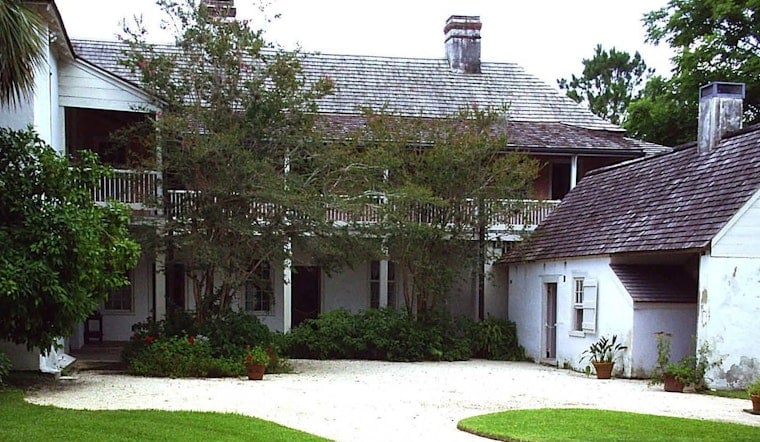
Sword-wielding reenactors, flamenco dancers, and a royal court will take over St. Augustine's oldest street on Saturday, September 5, as the Third Annual Aviles Street Festival runs from noon to 9 p.m. along the brick corridor lined with museums, art galleries, and restaurants. The daylong celebration marks the 461st year since St. Augustine's founding and leans hard into the city's Spanish colonial roots, with living history performances stacked back to back at some of the street's oldest landmarks.
The festival is co-hosted by the Ximenez-Fatio House and the Aviles Street Merchants Association, according to St. Augustine, Florida on Facebook, which laid out the day's packed schedule. Built in 1798 from native coquina stone, the Ximenez-Fatio House at 20 Aviles Street was added to the National Register of Historic Places in 1973 and named a Florida Heritage Landmark in 2012, giving the festival's centerpiece venue its own deep well of preservation credibility.
Programming there runs almost the entire event window. The museum hosts an artisan market from 4 to 9 p.m. and live plein air painting from noon to 9 p.m. featuring Linda Sperruzzi, described in the festival listing as a national award-winning painter. Flamenco de la Costa performs two short sets of dancing at the house, from 6:15 to 6:30 p.m. and again from 8 to 8:15 p.m., while Spanish Military Hospital Museum re-enactors stage sword dueling there from 6:30 to 7 p.m. Flagler College students give presentations at the house from 7 to 8 p.m., and the St. Augustine Royal Family makes appearances on the street and in the Ximenez-Fatio courtyard at 5 p.m.
Beyond the Courtyard: Bingo, Tattoos and Treasure
The rest of the street gets in on the action too. The Bart hosts Zaza Flamenca performing from 3 to 6 p.m. and offers Spanish temporary tattoos all day, while Forgotten Tonic pours a Founders Day cocktail from 11 a.m. to midnight. The Trinity Goldsmith runs a sifting-for-Spanish-treasure activity from noon to 4 p.m., Acacia Tree Gallery hosts artist Linda Sperruzzi from 1 to 4 p.m., and participating merchant locations run bingo throughout the day. St. Augustine Experiences offers a mini history tour of Aviles Street starting at noon.
That history runs deep even by St. Augustine standards. Archaeological digs beneath the street's brick paving have turned up 17th-century pottery shards, glass bottles, and pipe stems, evidence cited by Visit St. Augustine establishing Aviles Street as the oldest continuously used street in the contiguous United States. The street was known as Hospital Street, or Calle del Hospital, during Spanish colonial rule before being renamed Aviles Street in 1924, after a St. Augustine delegation traveled to Avilés, Spain, to reinter the remains of city founder Pedro Menéndez de Avilés, according to News4JAX.
A Sister-City Bond Still Visible Today
That naming decision cemented a century-old friendship with St. Augustine's Spanish sister city that still shows up physically on the street. A decorative Spanish tile mosaic at the entrance of Aviles Street, originally created by Spanish artists and gifted by the City of Avilés in 2002, was rededicated in 2024 alongside a new interpretive marker marking the relationship's 100th anniversary, per the City of St. Augustine. The street also carries a more modern legacy: it became the city's first designated arts district in the 1930s, after the former Hamblin Hardware warehouse at 11 Aviles Street was converted into artist studios and gallery space.
Not every building along the route has survived the centuries intact. The 1885 former jail structure at 7 Aviles Street sits directly along the festival corridor, and city officials approved an emergency partial demolition there in March after structural engineers warned its brick facade was buckling and posed a collapse hazard to pedestrians, Hoodline previously reported. As recently as earlier this month, the city's Historic Architectural Review Board continued its decision on demolishing the building's remaining coquina walls, asking for a survey and salvage plan before moving forward.
A Quiet Season Turned Into a Draw
The festival also fits into a broader shift in how St. Augustine treats the early fall calendar. September was once considered the slowest tourism month in the city, but local business leaders told News4JAX in 2025 that festivals and heritage events have since turned it into a high-occupancy season for area hotels and restaurants. That matters locally: tourism in St. Johns County generates roughly $3.8 billion in annual economic impact, supports more than 30,000 jobs, and brings in about $24 million a year in tourist development bed taxes, per the same News4JAX reporting.
St. Augustine was founded on September 8, 1565, by Spanish Admiral Pedro Menéndez de Avilés, making it 461 years old in 2026. With the festival landing just three days ahead of that anniversary, organizers are framing the September 5 event as both a neighborhood block party and a nod to the city's founding week, set against a street whose brick, coquina, and buried pottery shards have been there for most of that history.



